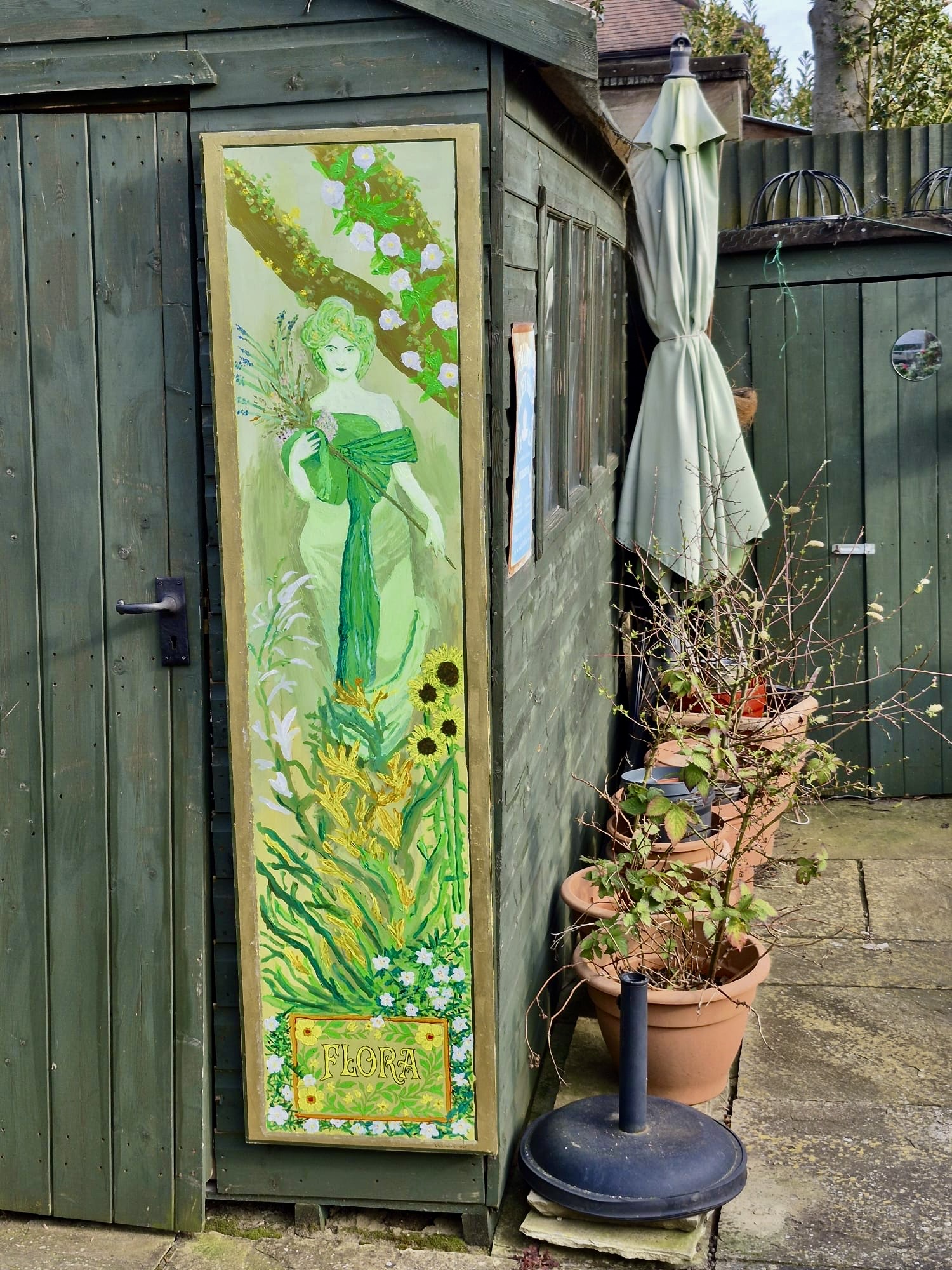
I did a painting for the garden shed. This is acrylics on a hardboard panel that was once half the back of a wardrobe (I glued wooden battens to the back for rigidity). The gold frame is done with a gilding paste, and I gave the whole thing a couple of coats of yacht varnish to protect it from the rain.
The figure of Flora is based on one of Mucha’s ladies, but it completely lacks the sharp precision and firm outlines that you find in his stuff.
I have updated my list of competitions… Rather slim pickings in April, but there are quite a few coming up in May. Surprisingly, there are no competitions for writing a good April Fool story. Someone should organise that.
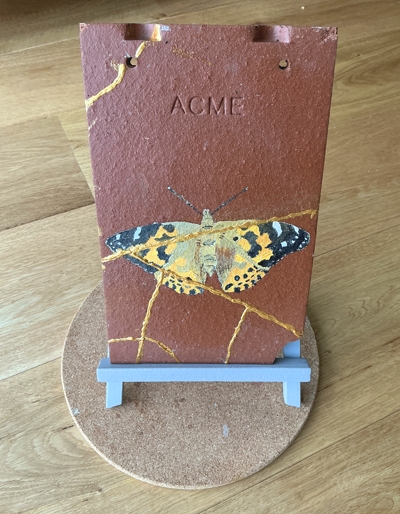
One of the roof tiles I painted butterflies on fell off our fence the other day and broke. I thought this was an opportunity to try kintsugi, the Japanese art of repairing ceramics with visible gold joints. Sort of OK for a first attempt, I think. However, it probably can’t go back outside which leaves me with a decision about whether I should paint a replacement, and if so whether it should be the same butterfly (a Painted Lady) or a different one?
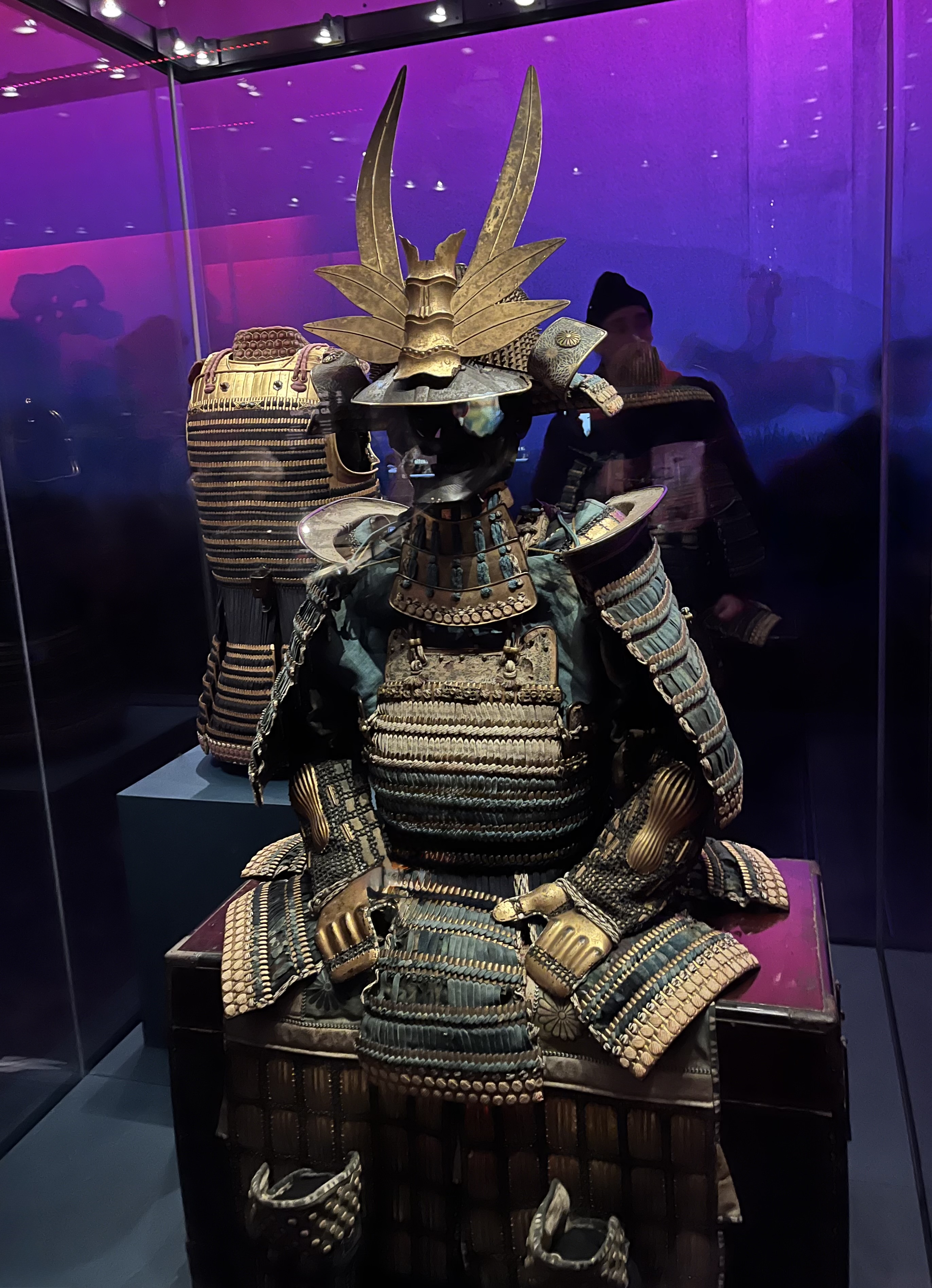
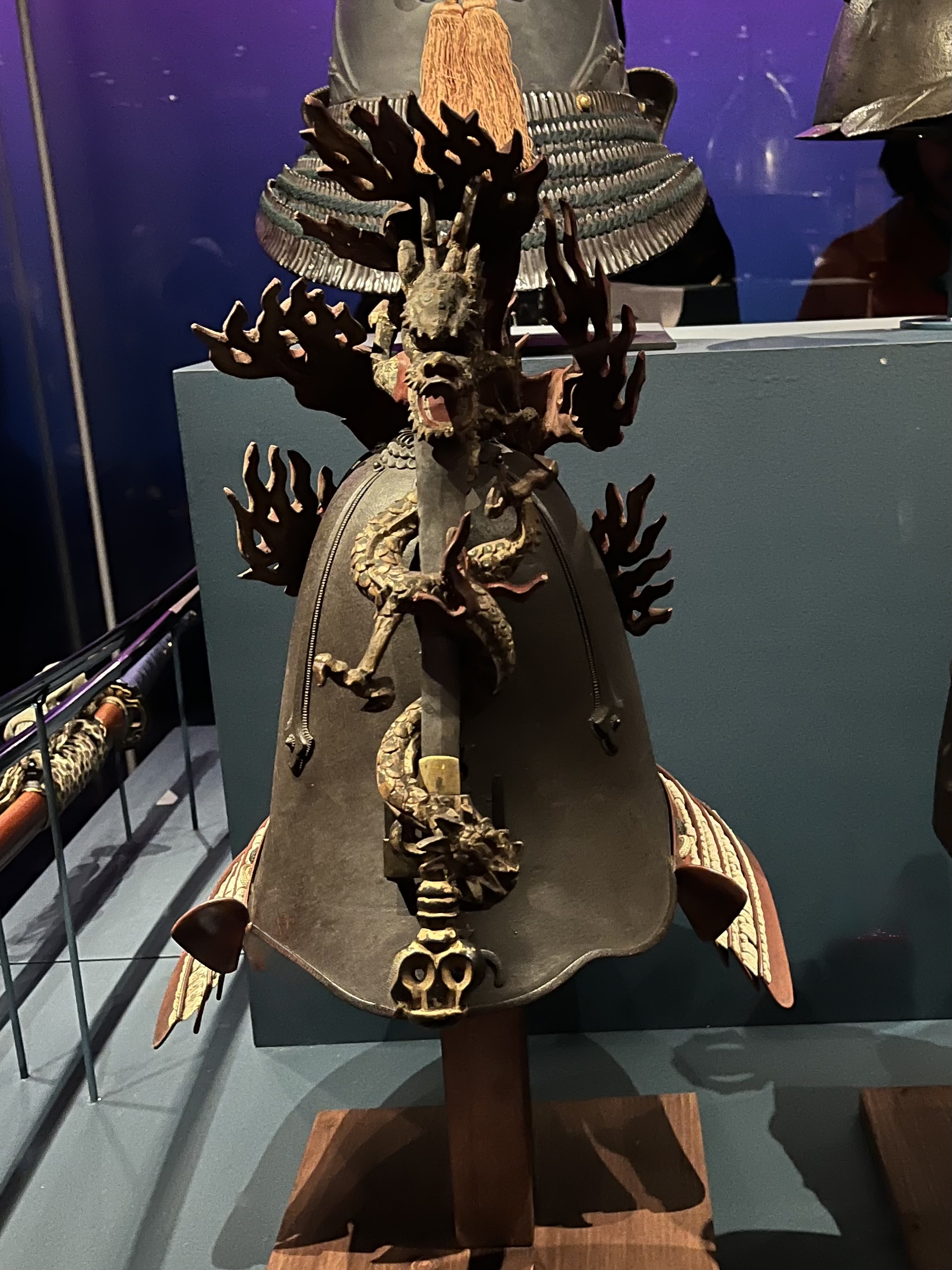
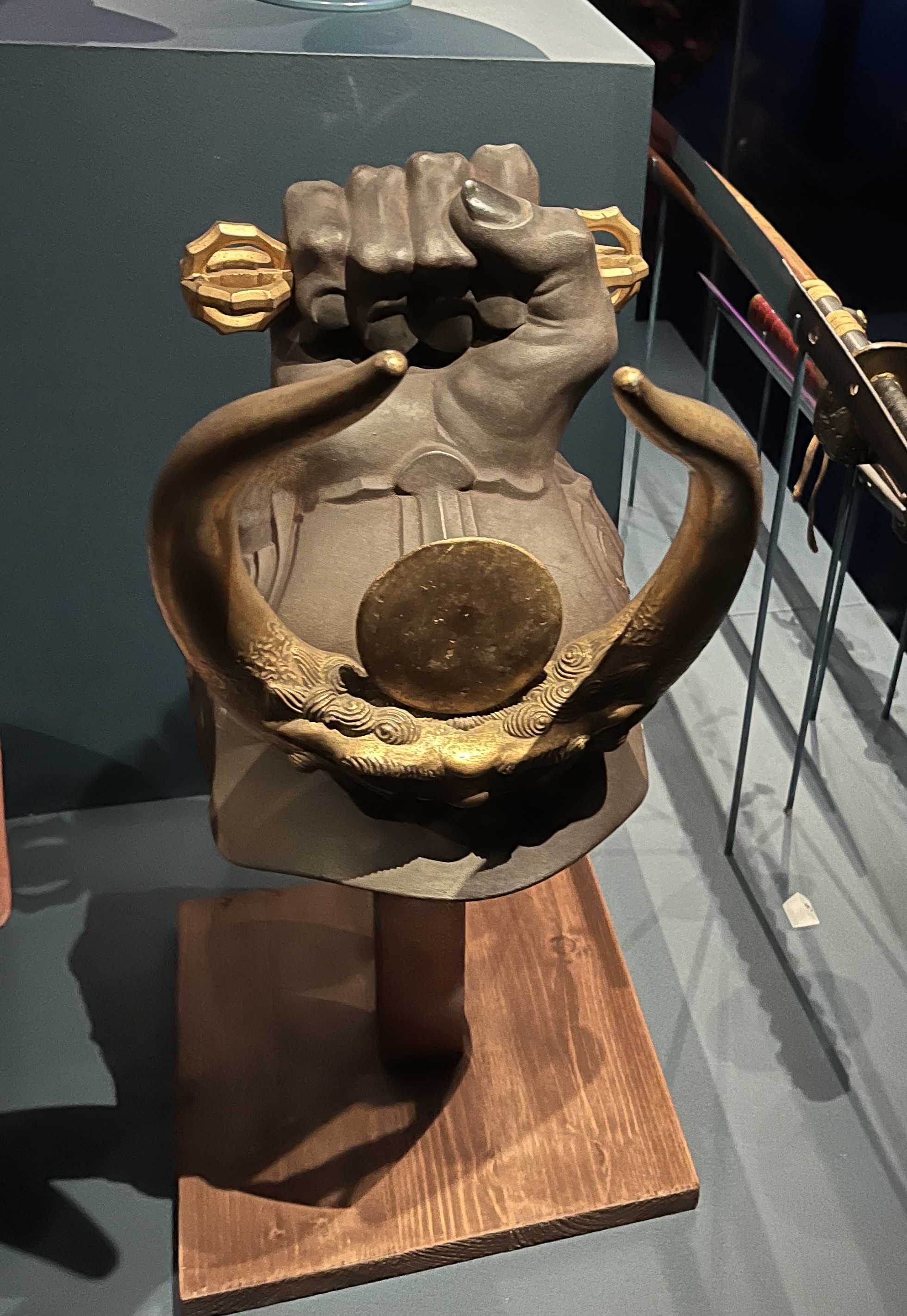
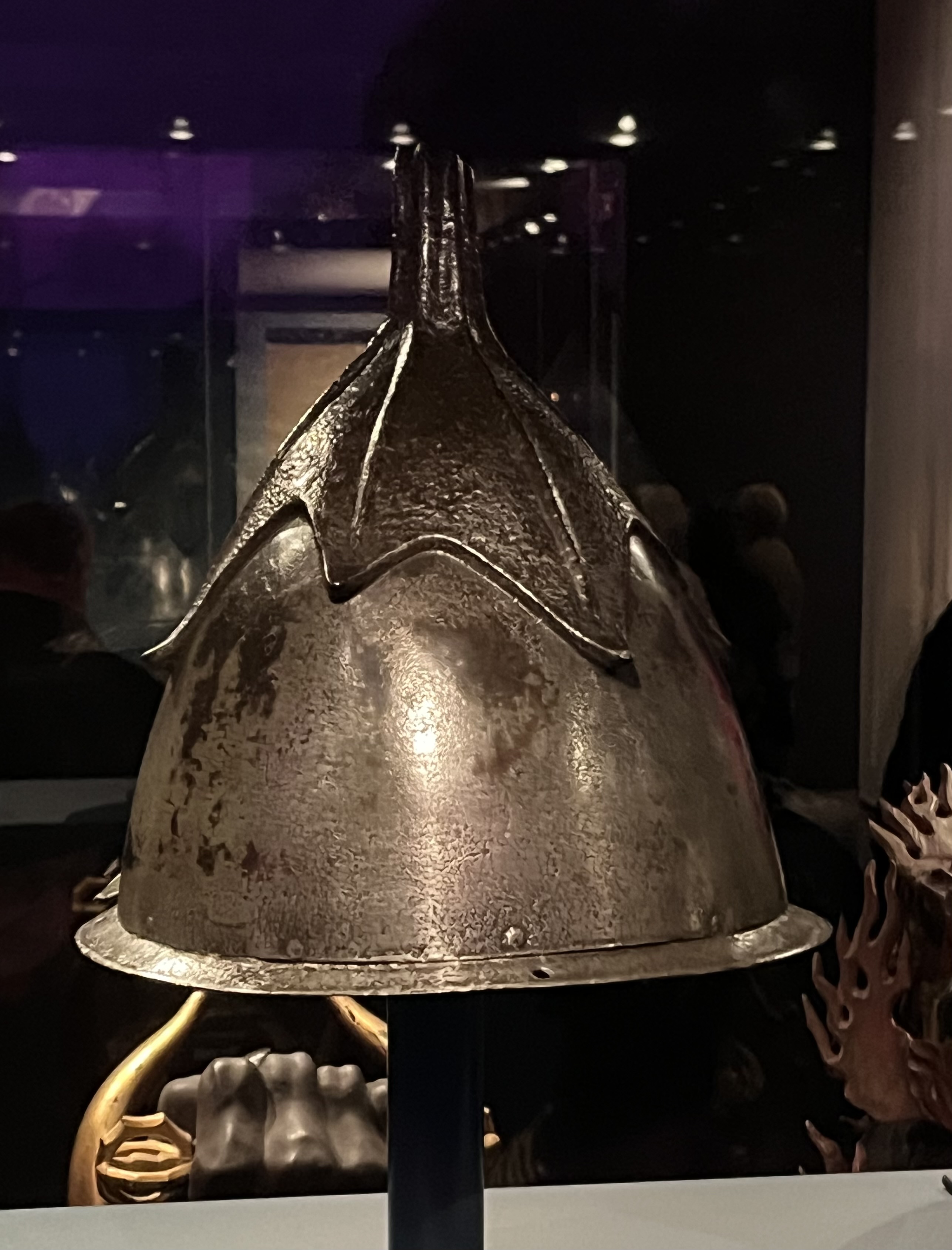
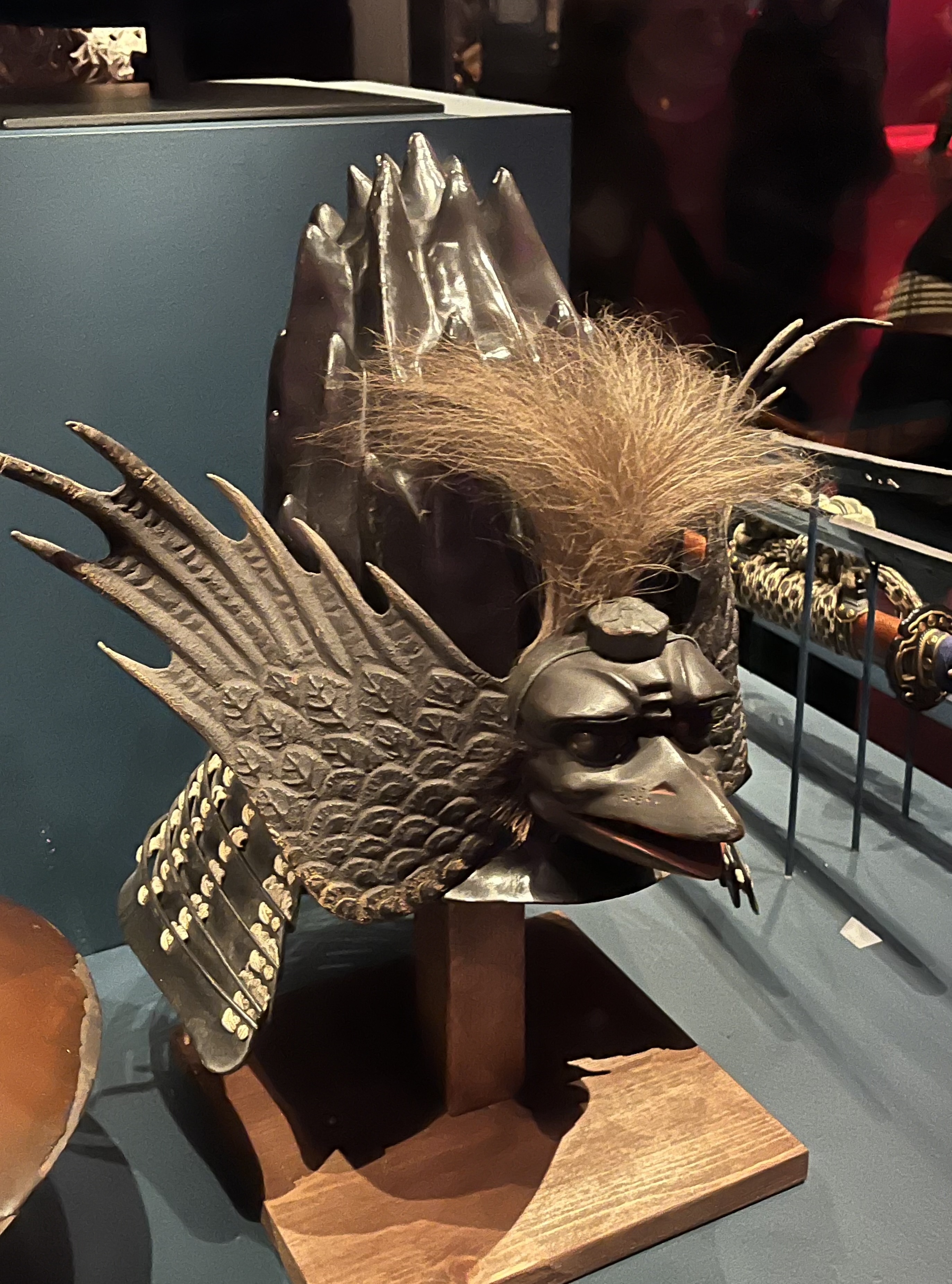
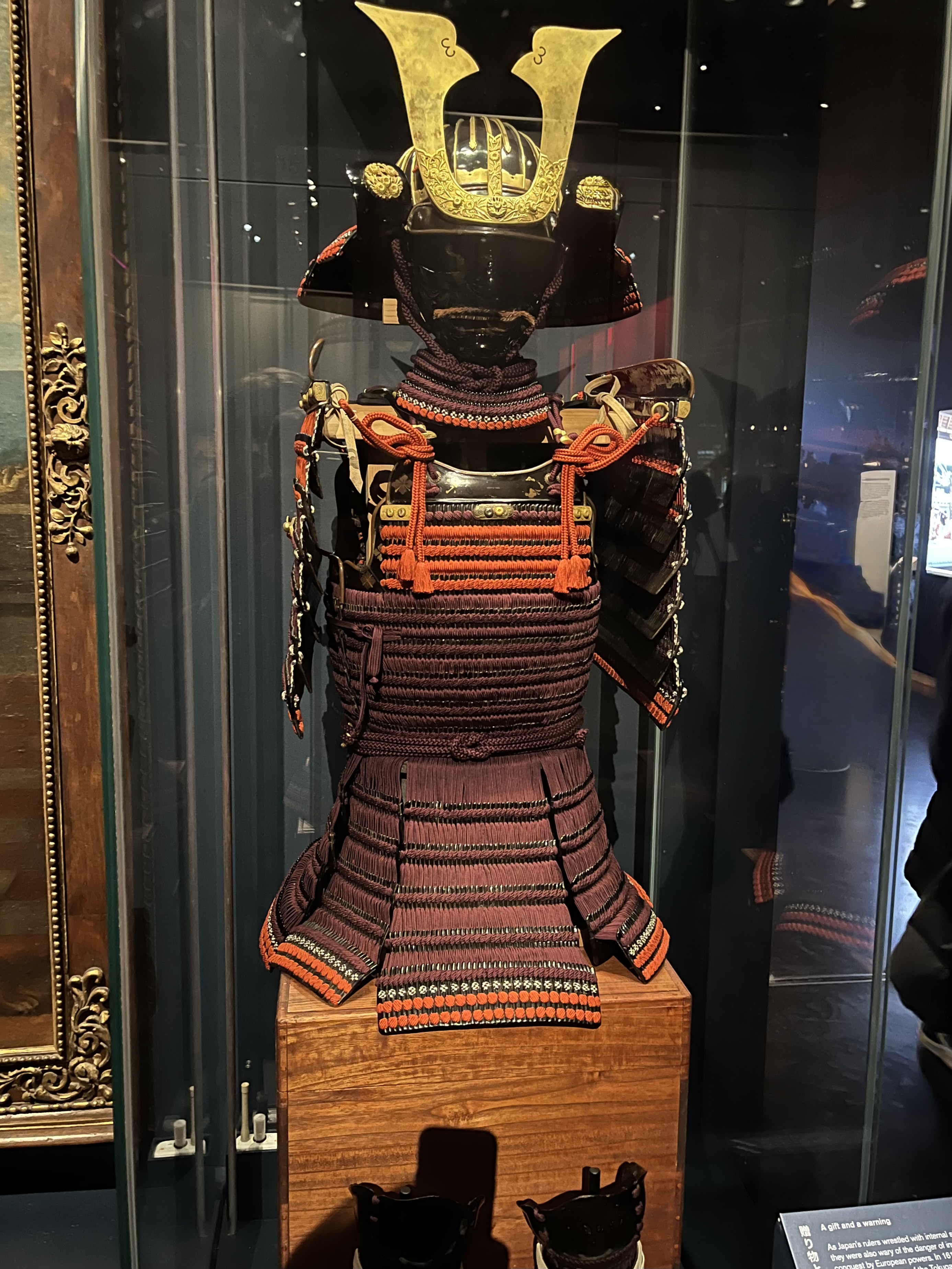
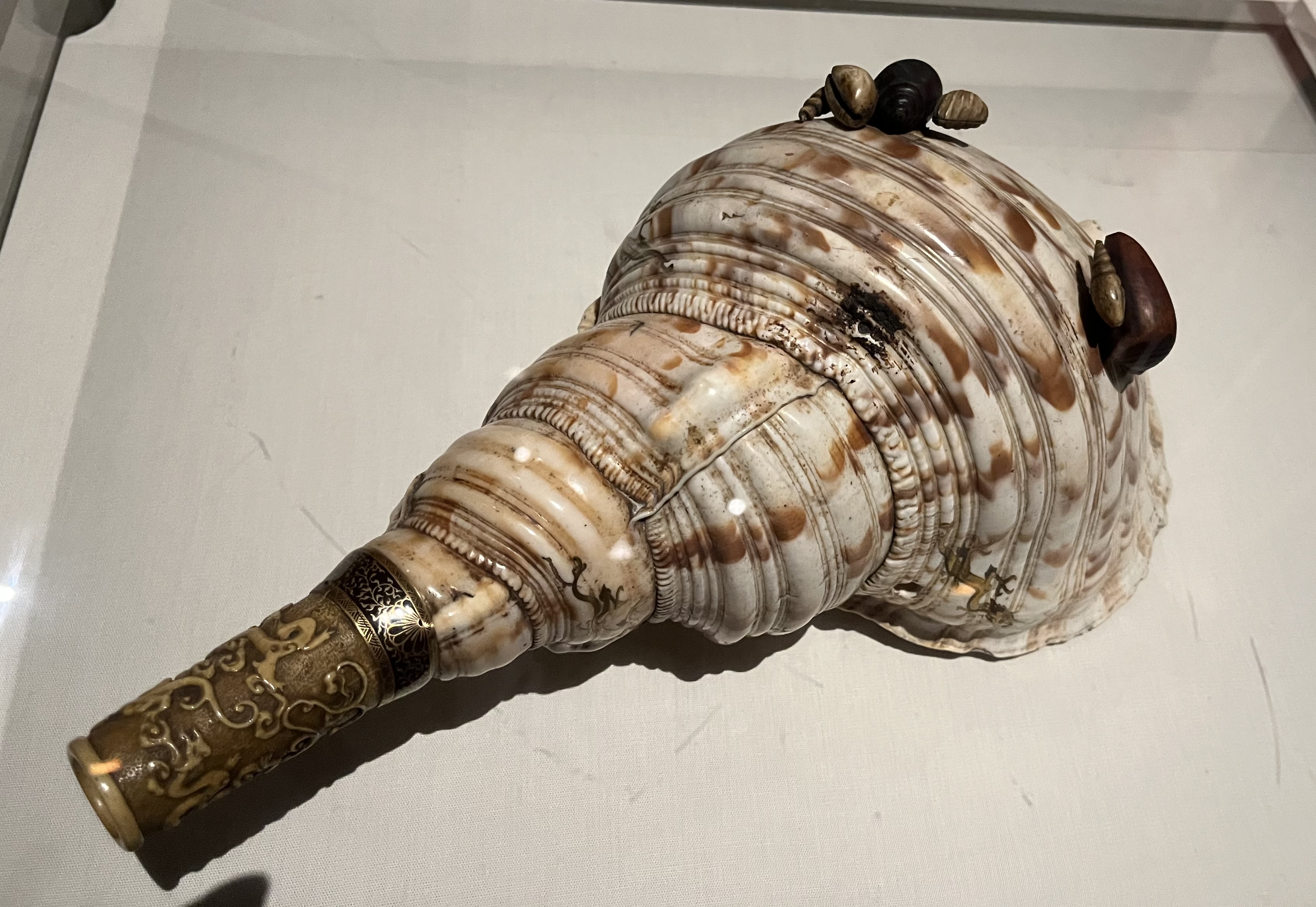
Apparently they are more commonly referred to as Bushi in Japan? We went to see the British Museum’s exhibition which explains the long history of the Samurai. Beginning as medieval warriors, they effectively became the Japanese upper class until their abolition in the late nineteenth century, when the rule of the Emperor was restored and the Shogunate brought to an end.
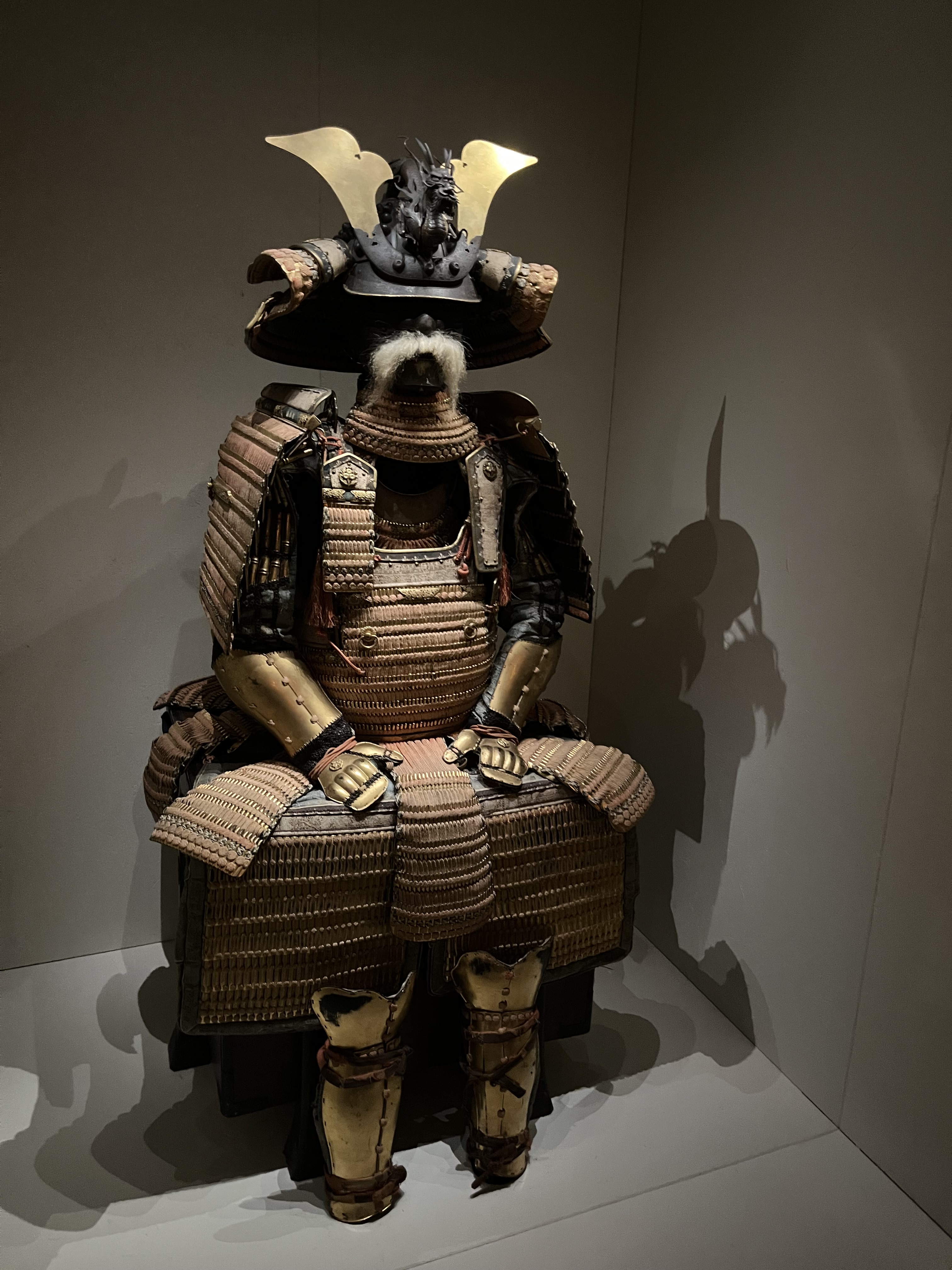
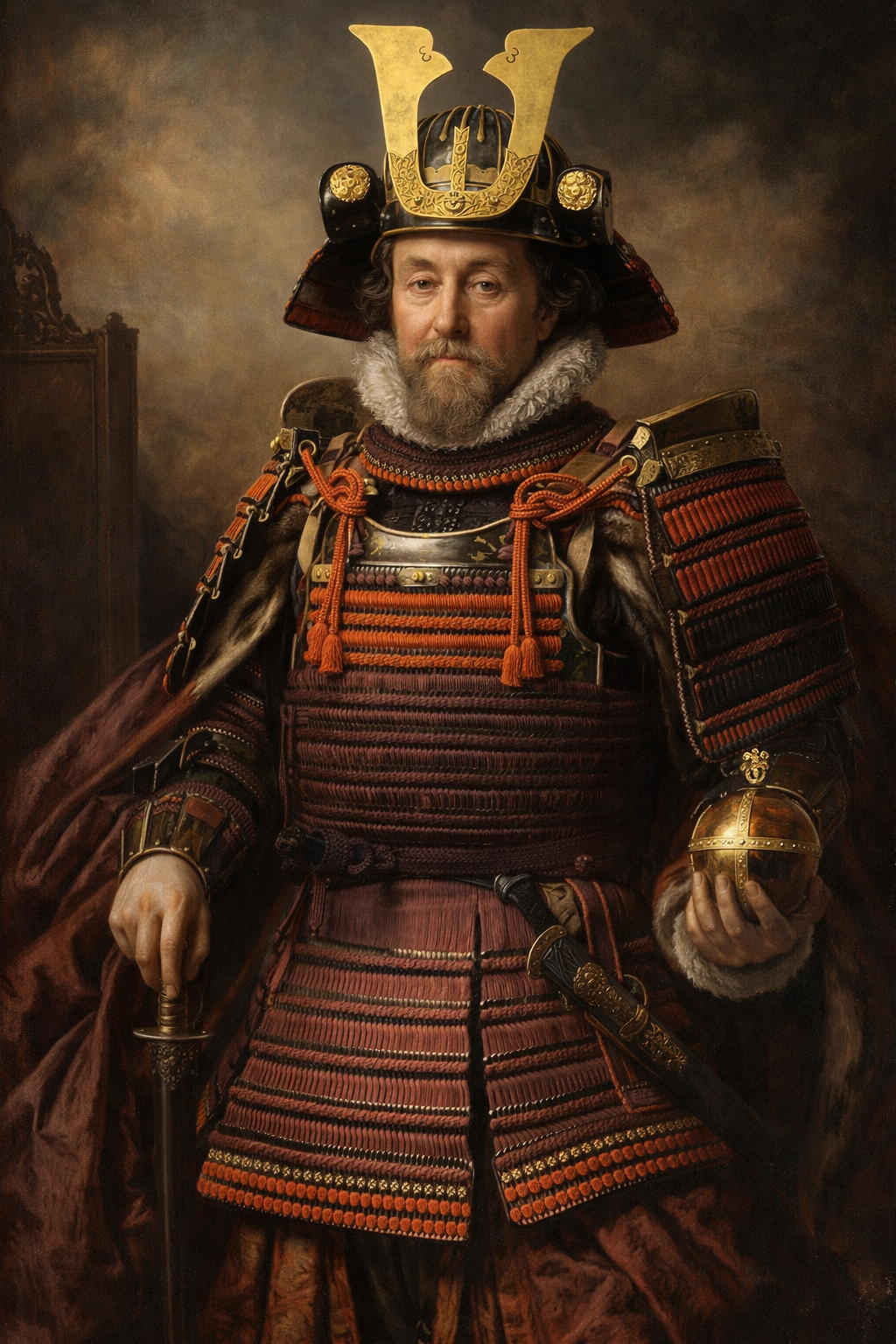
Like their aristocratic counterparts in Europe, the Samurai retained an affection for swords and suits of armour. One set of Samurai armour here was sent to King James (I and VI) who would surely have understood the double significance of the compliment and warning it embodied. Another suit was later sent to Queen Victoria. While they retained a sense of themselves as warriors, the Samurai developed an interest in drama and culture generally, which may have helped while away the days they were required to attend the court at Edo (rather the way Louis XIV made the French nobility come to Versailles?) As a whole social class they naturally included valiant women, and it seems gay and/or cross-dressing young men were not unknown.
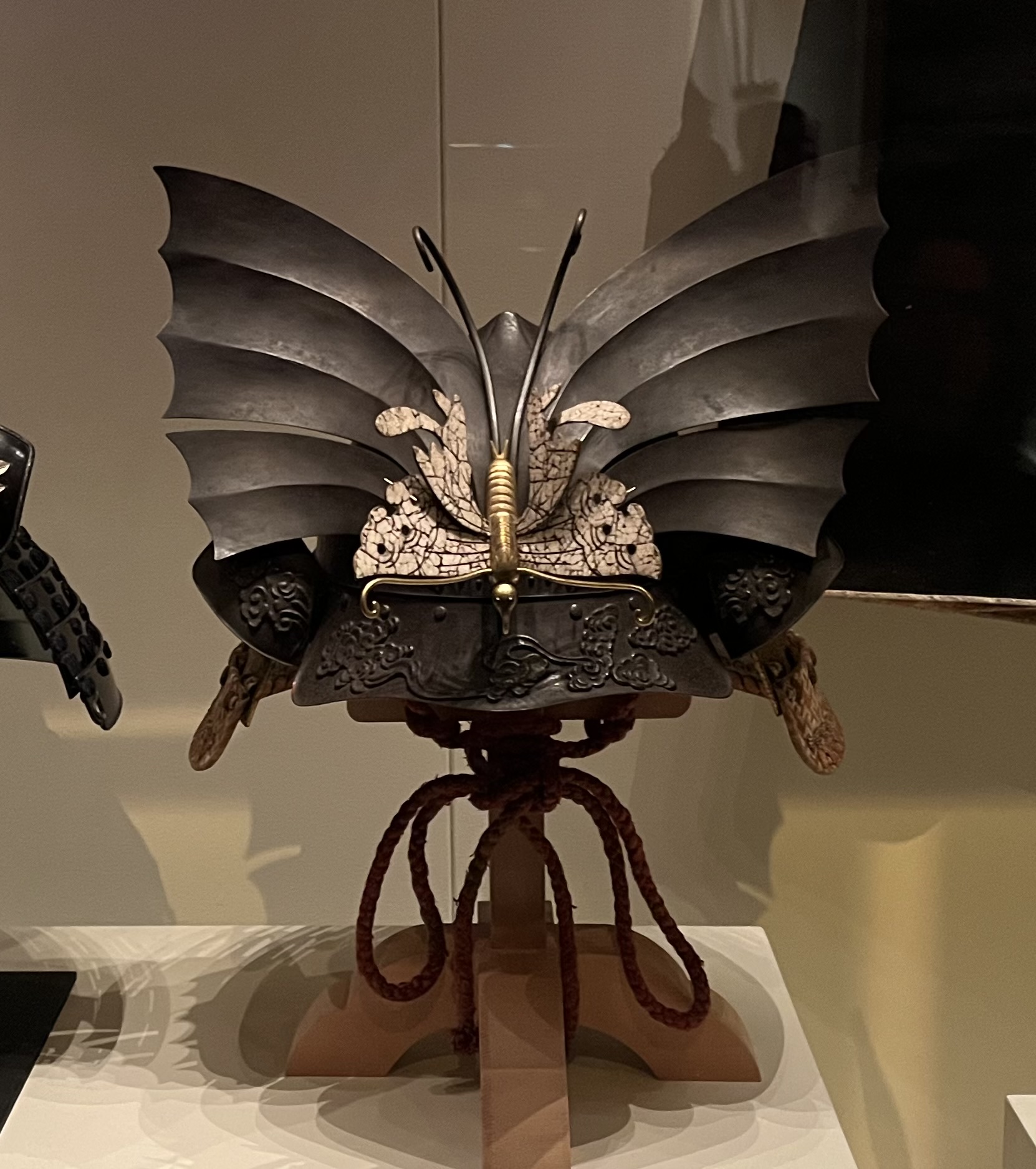
The exhibition features a wide range of fabulous and illuminating artefacts, but it is those extraordinary helmets that are really the stars. They are elaborately decorated with dragons, birds, and a finely worked butterfly, and there is one with leaves that Katharine said resembled a pixie hat. One Samurai seems to have been unable to decide between horns and a massive fist – so he got both. These all seem rather impractical: European knights had fancy tournament armour with decoration and crests, but when it came to an actual fight they were inclined to switch to the plain, streamlined steel that best deflected blades and points. It seems that in Japan being visible and showing high status was more important than guiding weapons away from your cranium. The followers of each Daimyo (top Samurai) had a different style of cover for the heads of their spears, and apparently there were actually spotter’s reference books, so you could identify which great lord was passing by on the weary trip to or from Edo.
Very interesting. Here is King James wearing his Samurai armour (this never happened).
I read Vincenzo Latronico’s book Perfection, about a young Italian couple who move to Berlin, where they live a highly fashionable life, working as web designers, going to trendy bars and restaurants, making friends with an international community of highly mobile young professionals, and above all, owning a series of beautiful objects that help create stunning pictures for their Instagram feed. It’s inspired by Georges Perec’s Things. The book is clever and very readable, and I recommend it – it was shortlisted for the International Booker and received well-deserved praise.
It’s a very believable account set in a specific time and place which Latronico must surely have experienced, full of neat, exact references. The theme, lightly but clearly outlined, is the contrast between a life that looks perfect ‘in the pictures’ but as lived falls a little short of ideal and becomes subtly unrewarding in a way the couple find hard to address.
Stylistically, it is highly unusual, consisting entirely of generalised descriptions of the sort of thing the couple do, the kind of meals they eat, what types of people tend to become their friends (few Germans) and so on. There is no dialogue or directly described action, and we are frequently told about feelings and moods they often felt. The narrative stays at this high level of generality throughout. It works fine, but I can’t help thinking how the tutor on a creative writing course, or some publisher offering feedback would respond. Why not have someone murdered, they might suggest, then the reader has a story to draw them through all this lovely description? Could you relate an argument they have over soft furnishings or something, just to bring these brand references to life? Have you ever heard of Joseph Campbell and the Hero’s Journey?
This is a very successful, celebrated book, but you and I could never get away with writing like this. You have to ask, how did Latronico ever get a literary agent to take this on? The answer seems to be – he married one.


 Seen and Done