Merry Olympics
May 12, 2024
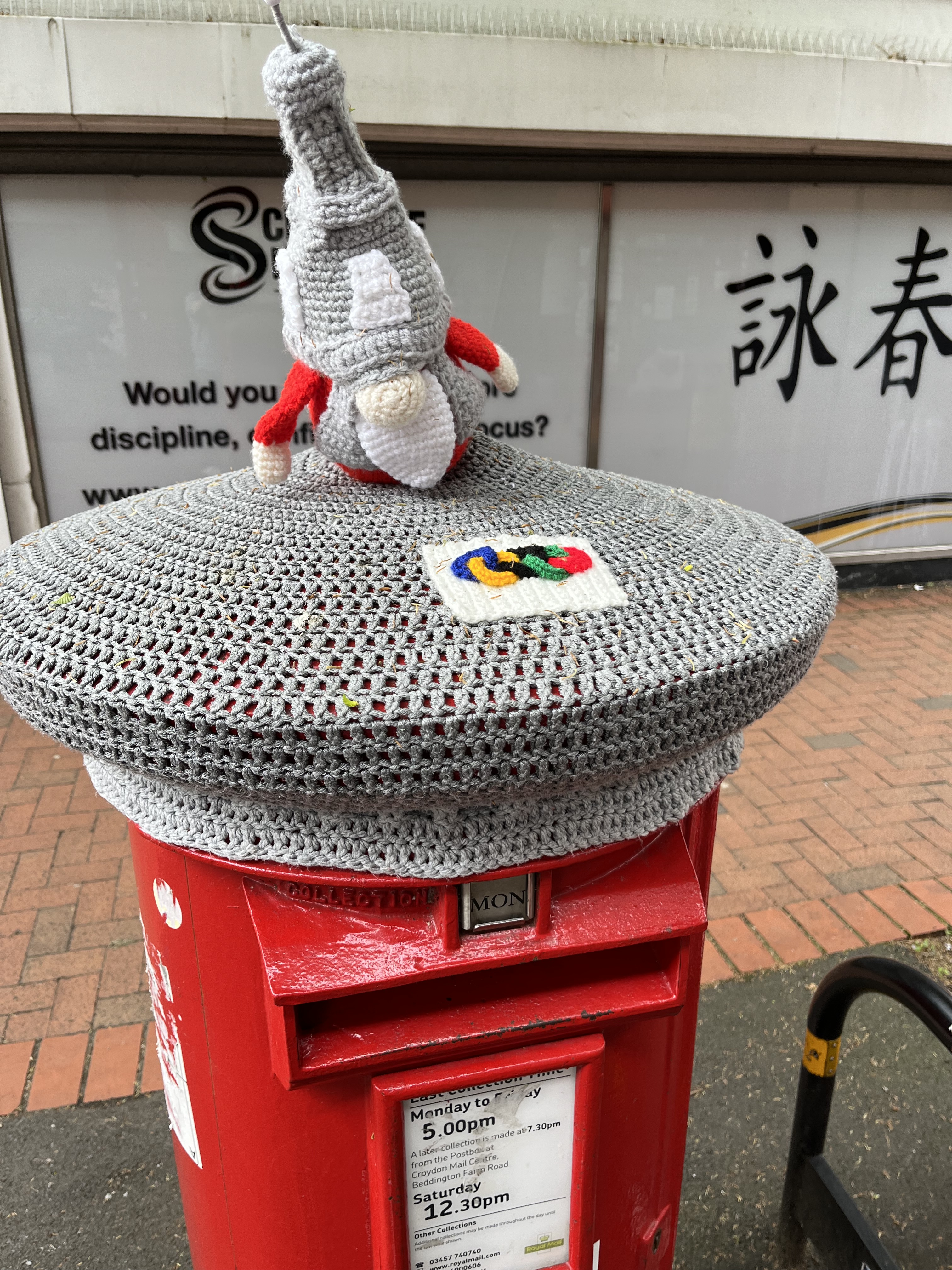
Can’t help thinking this fan in the Eiffel Tower hat might be moonlighting from his winter job.
I'm a retired civil servant in Surrey, UK and long-time blogger. These days I'm spending more time writing stories and doing other creative stuff
Can’t help thinking this fan in the Eiffel Tower hat might be moonlighting from his winter job.

We’ve had a go at setting up a mini pond in an old Belfast sink. We’ve started with a little water lily, water crowfoot and a pickerelweed. We’ll see how it goes.
Looking through my late mother’s papers I found a souvenir of the Peterborough Labour Party’s Bazaar of 1926: a reminder that my grandparents were keen supporters in the early days. I should hate to introduce any politics here, but it is an interesting document.
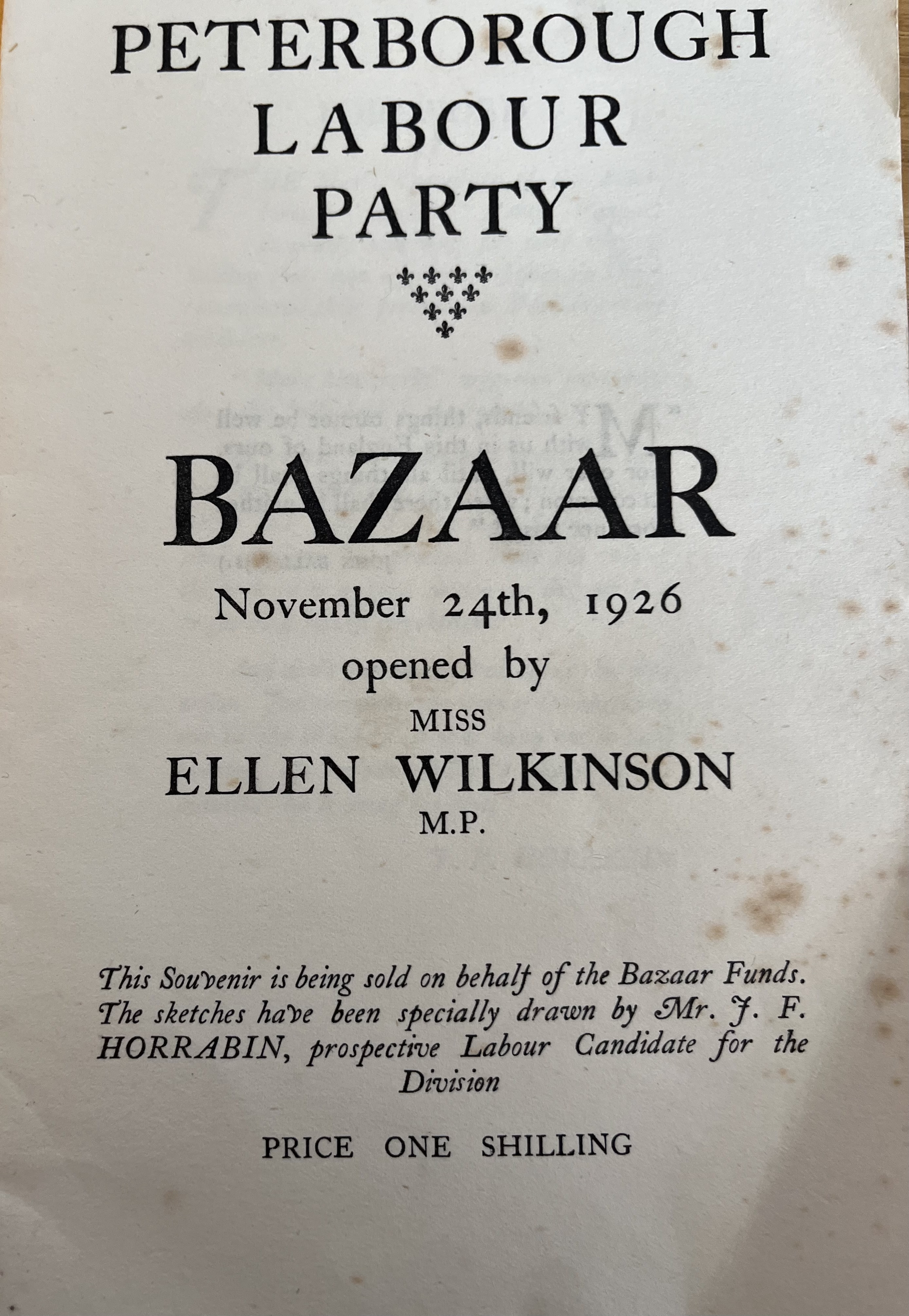
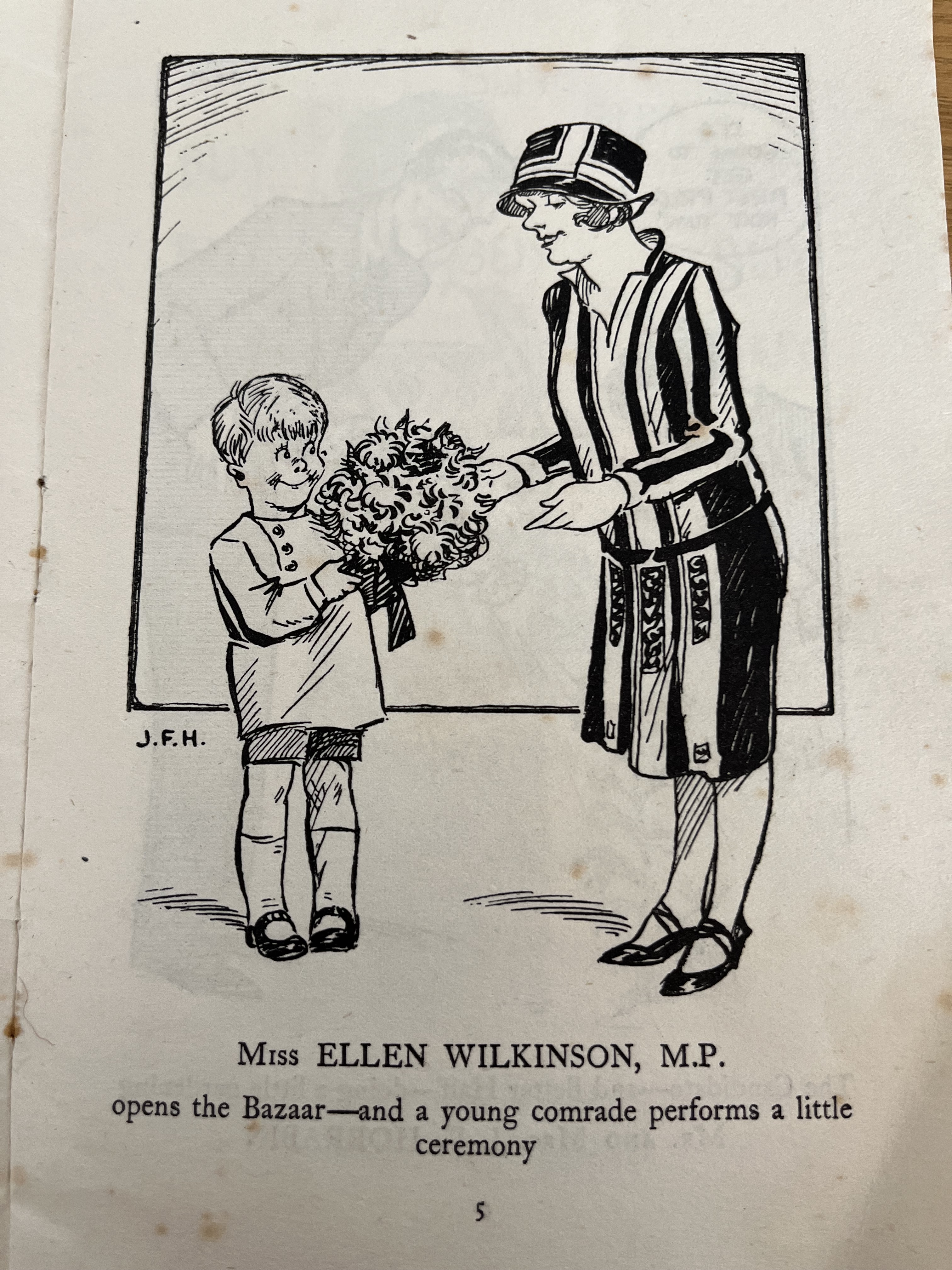


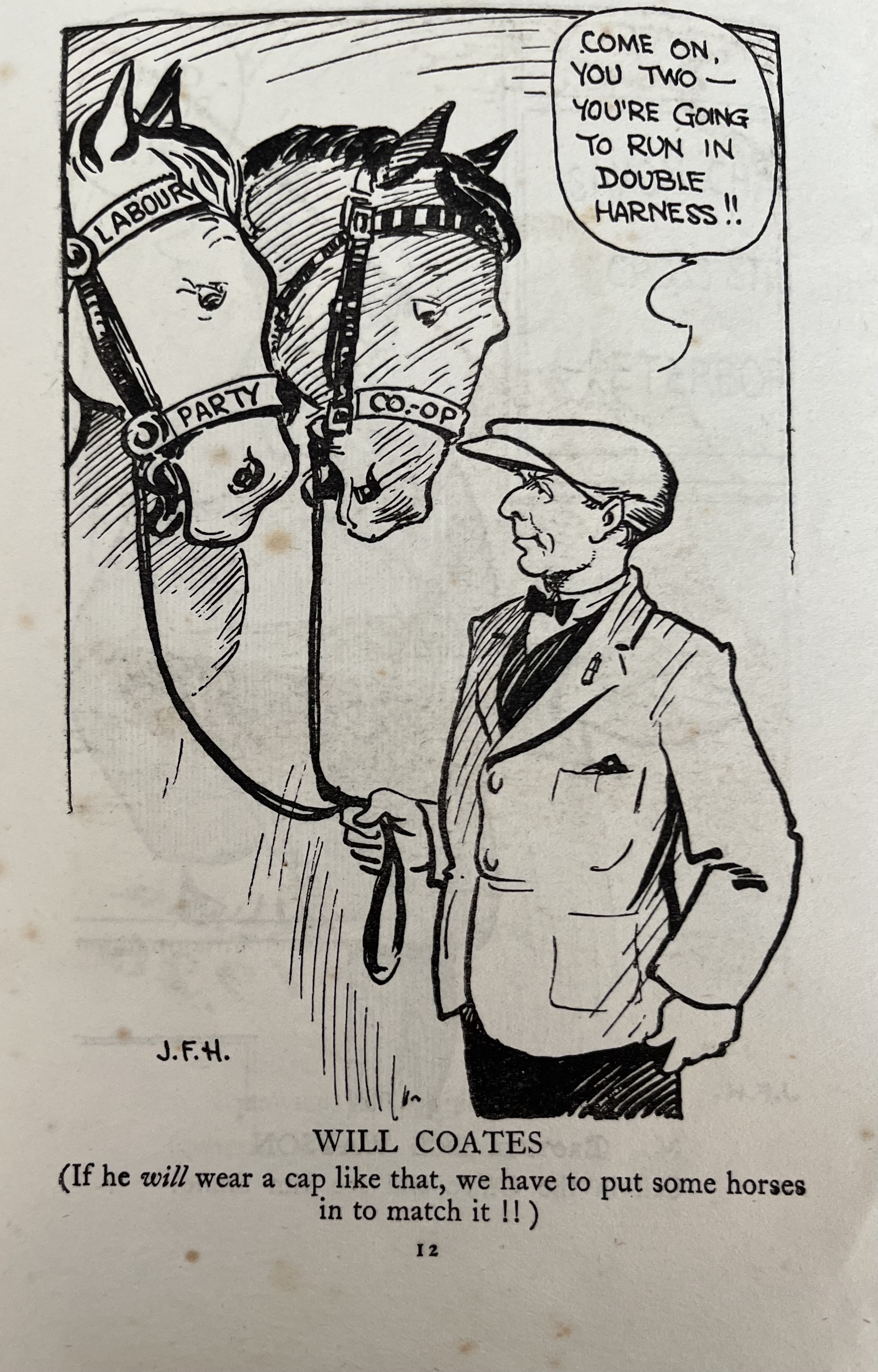
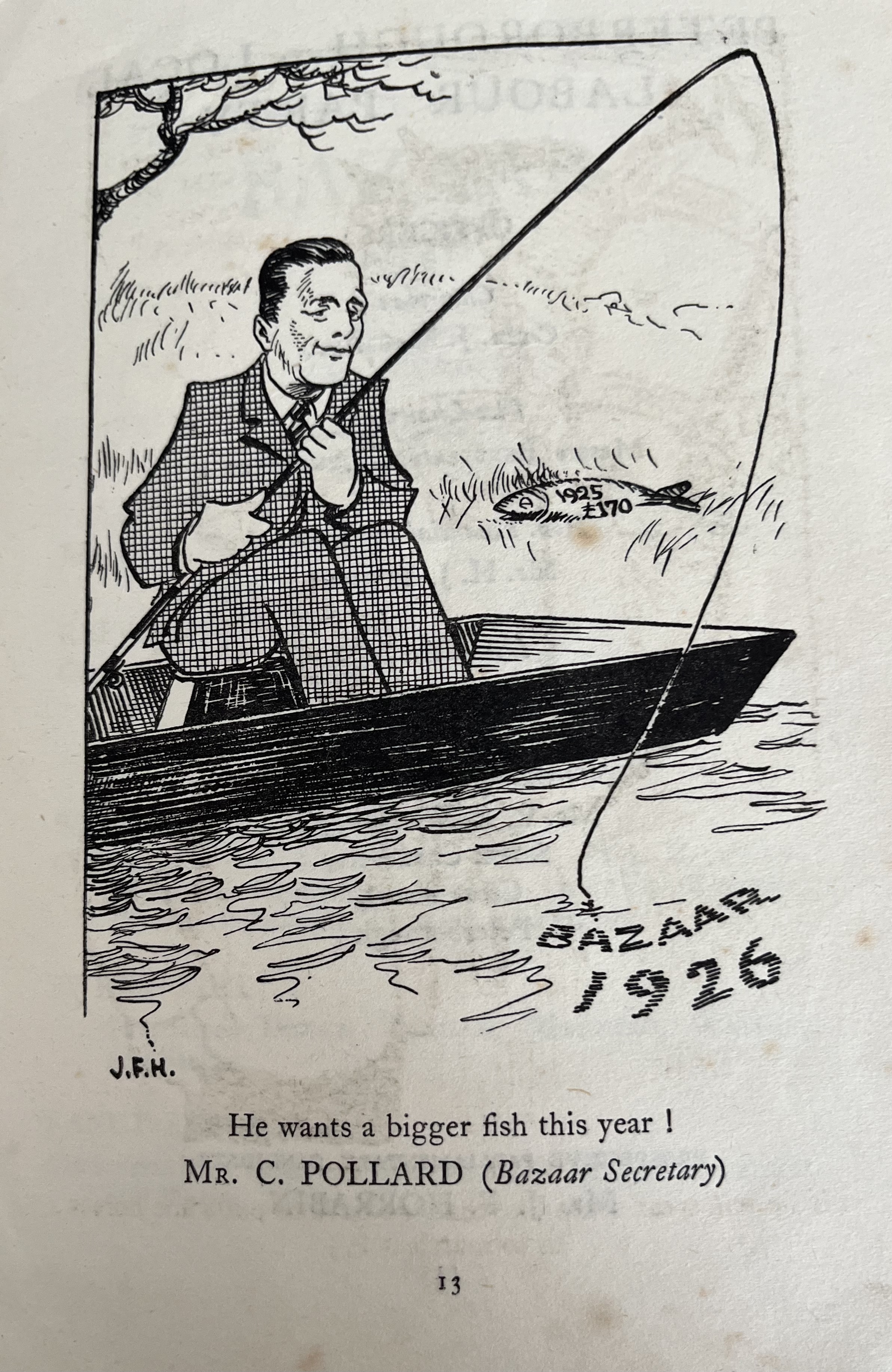


It consists of a series of rather flattering cartoons of prominent local party members, drawn by the prospective parliamentary candidate J.F.Horrabin. It is no surprise that they are rather good, because Horrabin was a professional newspaper cartoonist, responsible for the largely forgotten strips ‘Adventures of the Noah Family’ (later known as ‘Japhet and Happy’) and ‘Dot and Carrie’, a cartoon about two secretaries. He went on to win the next election and was MP for Peterborough for two years under the leadership of Ramsay MacDonald.
In 1926 the Peterborough party was only eight years old. Labour had overtaken the Liberals and was slowly growing into its future role as one of the two main parties. The Bazaar looks very respectable, which may reflect the party’s nervousness about seeming Communist or revolutionary. The General Strike had happened only months before, but without Labour’s official support, and there are no echoes of it here. (Interestingly, Ellen Wilkinson, who opened the Bazaar, had worked tirelessly in support of the strike.)
One little detail that slightly puzzles me is that in the list of stall-holders and helpers, a distinction is drawn, not just between Miss and Mrs, but also the ‘Mesdames’. I conjecture that ‘Madam’ meant you were a widow?
I must say I also wonder what Messrs Doodson and Perkins had on the ‘Men’s Stall’.

So here I am, back again with a list of competitions I might enter during May. I’ve included ones with a deadline of 30 April, since I didn’t do an April list. Here they are first.
Moving on into April…
Good luck – if you get anywhere with these, do let me know!
We finally went to the British Museum’s highly-praised exhibition about life as a Roman soldier. It is illuminating, giving an insight into what was in many ways the heart and epitome of the Empire. Clearly on display here are some of the well-known features that made the Roman army so successful. It recruited anyone who met the height requirement without bothering about where they came from: it taught them basic Latin and sent them all over the place, turning them into loyal, well-off citizens who would settle and stabilise the provinces. There were only so many Greeks or Egyptians, but anyone could become Roman and enjoy the substantial opportunities that went with it.

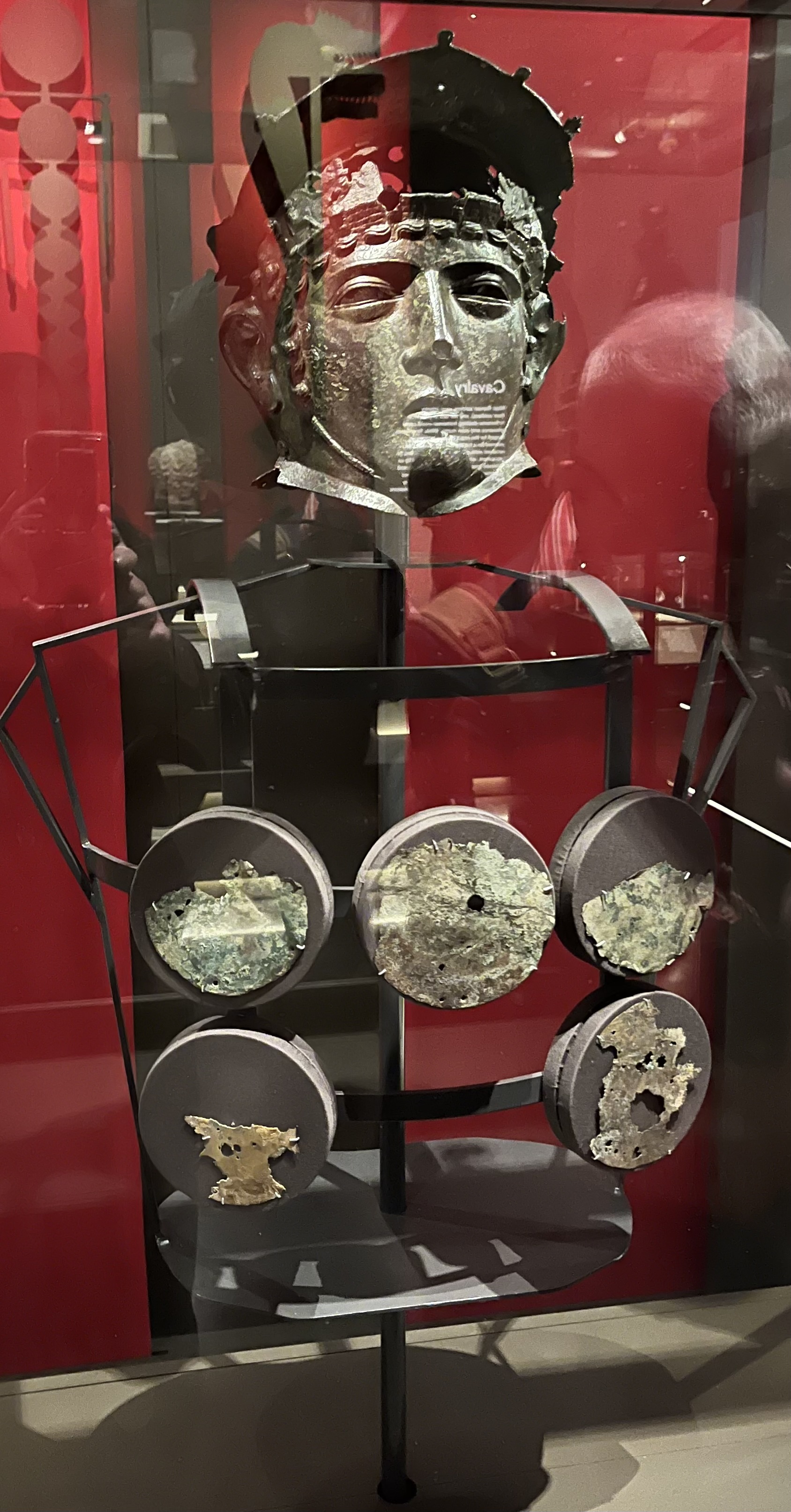

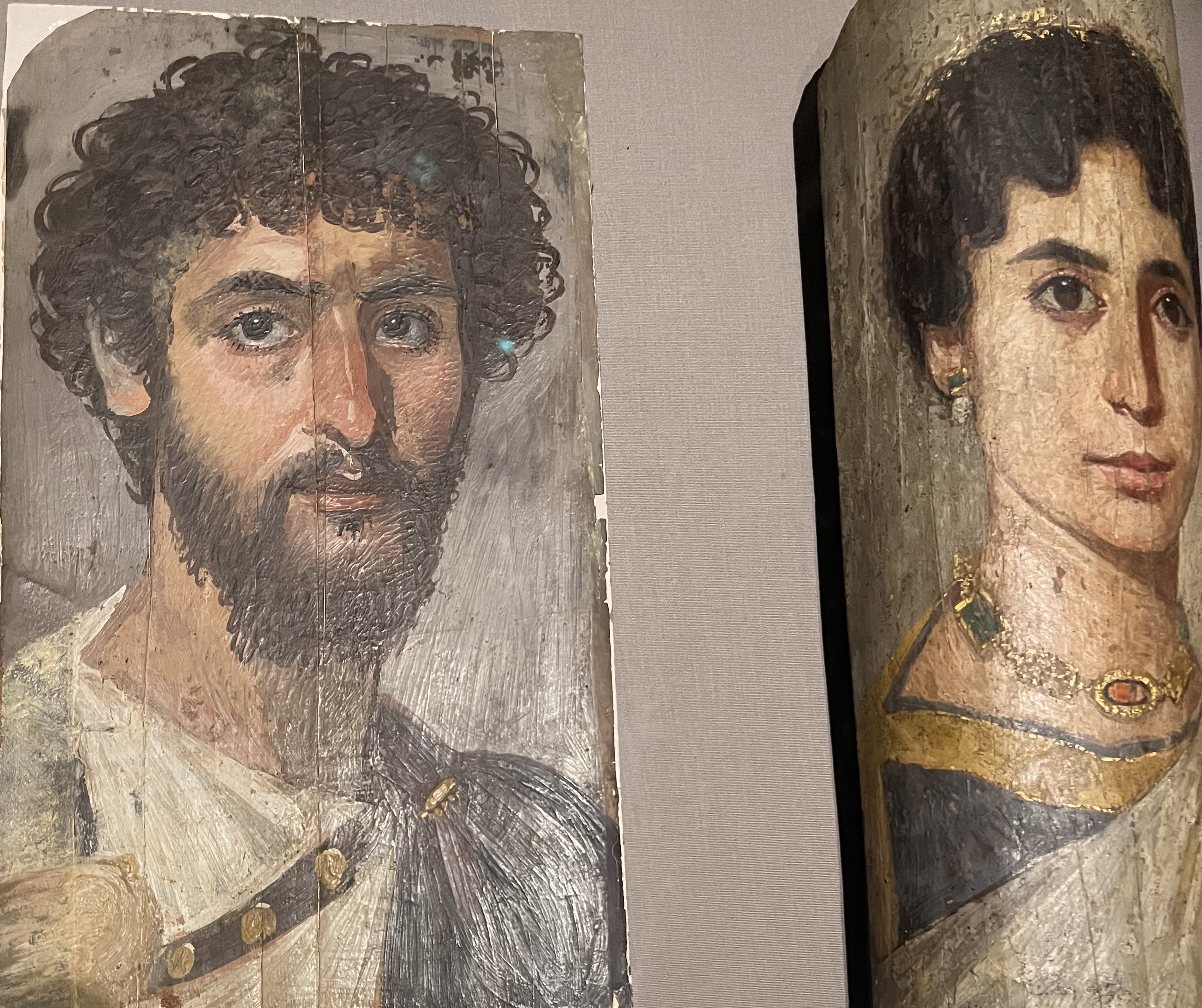
The exhibition makes considerable use of soldier’s gravestones. One interesting thing about them is that they were often paid for by the dead soldier’s slaves, set free on his death. This reinforces the sense I picked up from the Pompeii exhibition, that Roman house slaves were often treated almost like family: better than the free servants at Downton Abbey.
The exhibition includes many unique and remarkable items, including the only surviving legionary’s shield and some extraordinary cavalry parade helmets which include masks, one of which was supposed to make the rider look like an Amazon. The suit fashioned from a crocodile’s body is probably more weird than representative, though you can see why the curator couldn’t resist it.
It’s a very child-friendly exhibition: so many large cartoons and features with Rattus the cartoon character you almost begin to wonder whether adults are welcome.
I’ve been longlisted in the Parracombe competition! The announcement is a bit late, and I had put them down in my spreadsheet (oh yes, I have a spreadsheet) as a ‘no’, but there we are. The shortlist and winners should be announced in about a week.
Update: I’m on the shortlist! This means my story will be in the anthology.
I’m dealing with a combination of things at the moment that are taking up all my attention, and I’m afraid I won’t be able to focus on writing or other creative stuff for a few weeks. But I’ll be back!
Here once again is a selection of writing competitions I might enter with deadlines in February.
All the rest have a deadline of 29 February.
Good luck – if you get anywhere with these, do let me know!

Some writing competitions I might enter with deadlines in January. No pretence of being a comprehensive list..
The rest all have a deadline of 31 January.
If you get somewhere with one of these, do let me know!
I was shortlisted in the Letter Review competition! In this case it’s a definitive list, so no chance of winning, but still nice.
 Seen and Done