Speckled Candles
March 28, 2025
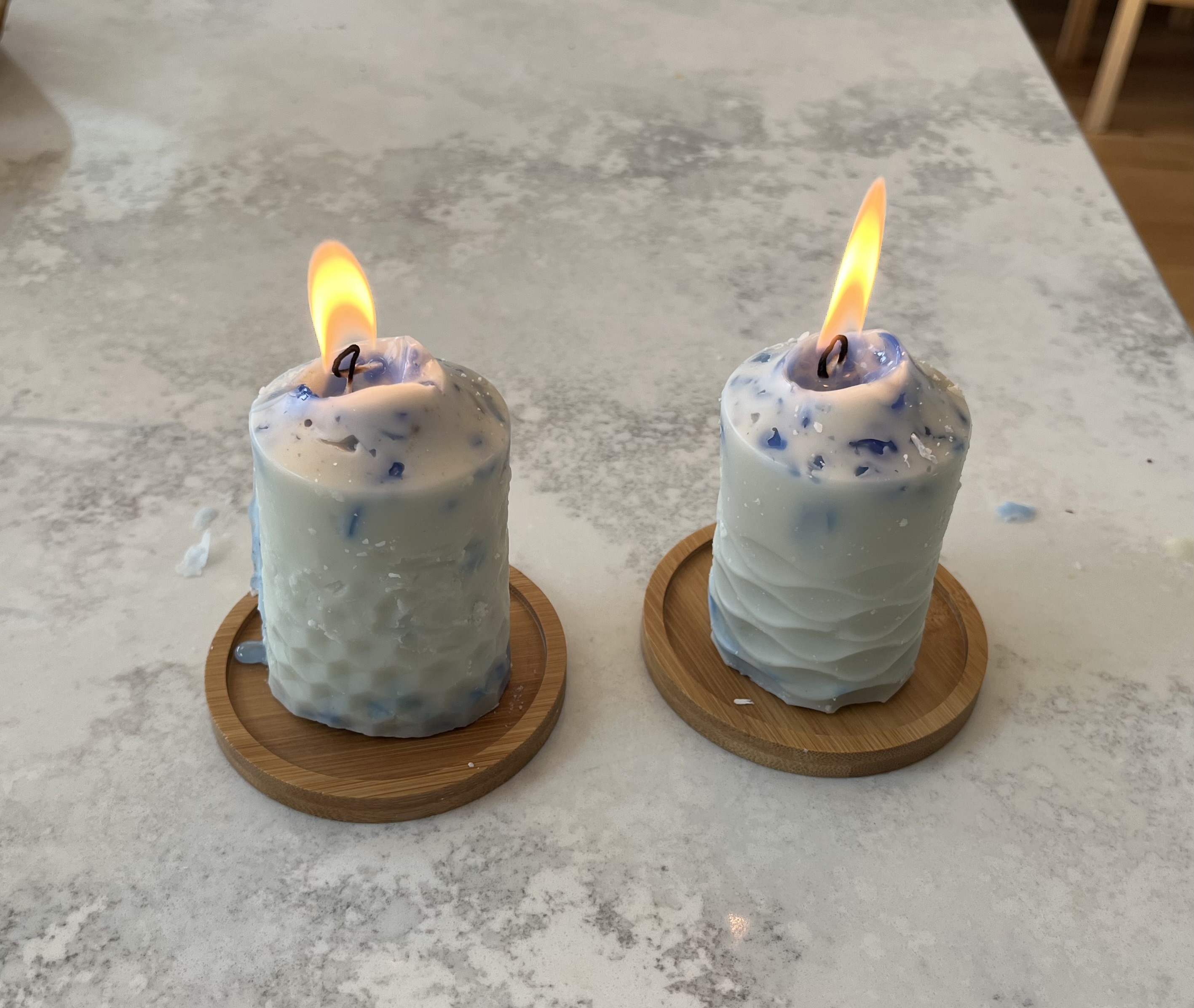
The blue and white candles I made didn’t come out quite the way I intended, but speckled is also good.
I'm a retired civil servant in Surrey, UK. and long-time blogger at Conscious Entities. These days I'm spending more time writing stories and doing other creative stuff
The blue and white candles I made didn’t come out quite the way I intended, but speckled is also good.

The porridge was made from Scandinavian black oats. It baked rather quickly, and another time I would go for something lighter – but it tastes pretty good.

Another look at writing competitions I might enter during the coming month (so no poetry or competitions that are not open to UK writers, for example).
If you enter any of these and win (or get anywhere), do let me know.

Here is another look at writing competitions I might enter which have deadlines in the coming month.
· The Weatherglass Novella prize looks for 20 to 40,000 words: it’s £20 to enter. The winner(s) will be published and receive an advance of £500. The deadline is 1 March.
· For the Tennessee Williams short story contest, your piece must have some sort of connection with A Streetcar Named Desire, and be between 1,500 and 4,000 words. $10 to enter, with a $300 prize. The deadline is 11 March.
· The organisers of the Phoebe competition say there is no actual word limit, but that if your story is more than 4,000 words it will need to be extraordinary. $7 to enter, a $500 prize and the deadline is 15 March.
· The Brick Lane Bookshop competition will accept up to 5,000 words: £10 entry for £1,000 prize: get your entries in by 17 March.
· It’s festival time in Fowey again: they want a maximum of 1,500 words on the theme ‘Making Waves’. £10 entry and just £250 as top prize. The deadline in 28 March.
All the rest have a deadline of 31 March.
· The Clay Reynolds Novella prize requires 20 to 50,000 words – $20 entry and $1000 as an advance plus publication for the winner. Looks like slightly better value for money than Weatherglass?
· I don’t often do poetry, but the Plaza Prizes have a contest specifically for prose poetry – which I take to be laid out like prose but reading sort of like poetry? The limit, however, is specified as 60 lines. £10 entry, £250 prize.
· The good old Henshaw contest is still going: 2000 words, £6 entry, £750 prize.
· Speaking of value for money, the Deborah Rogers Foundation award appears to be free but offers a prize of £10,000! You will need 15 to 25,000 words, however.
· The Bath Short Story award is back: 2,200 words, £9 entry and a prize of £1,000.
· The Letter Review competition accepts up to 5,000 words: entry is $20 and you get a share of $1,000, so the final sum depends on how many winners they pick – most likely it will be 2-4 so maybe $333.33?
· Just outside the month (deadline 1 April) you might want to be aware of the Alpine Fellowship competition. The prize is sadly reduced these days, but still £3,000: this year the word count has been halved, to 1,250, on the theme ‘fear’. The good news is, it’s free.
Good luck if you enter any of these; if you get anywhere, please do let me know.
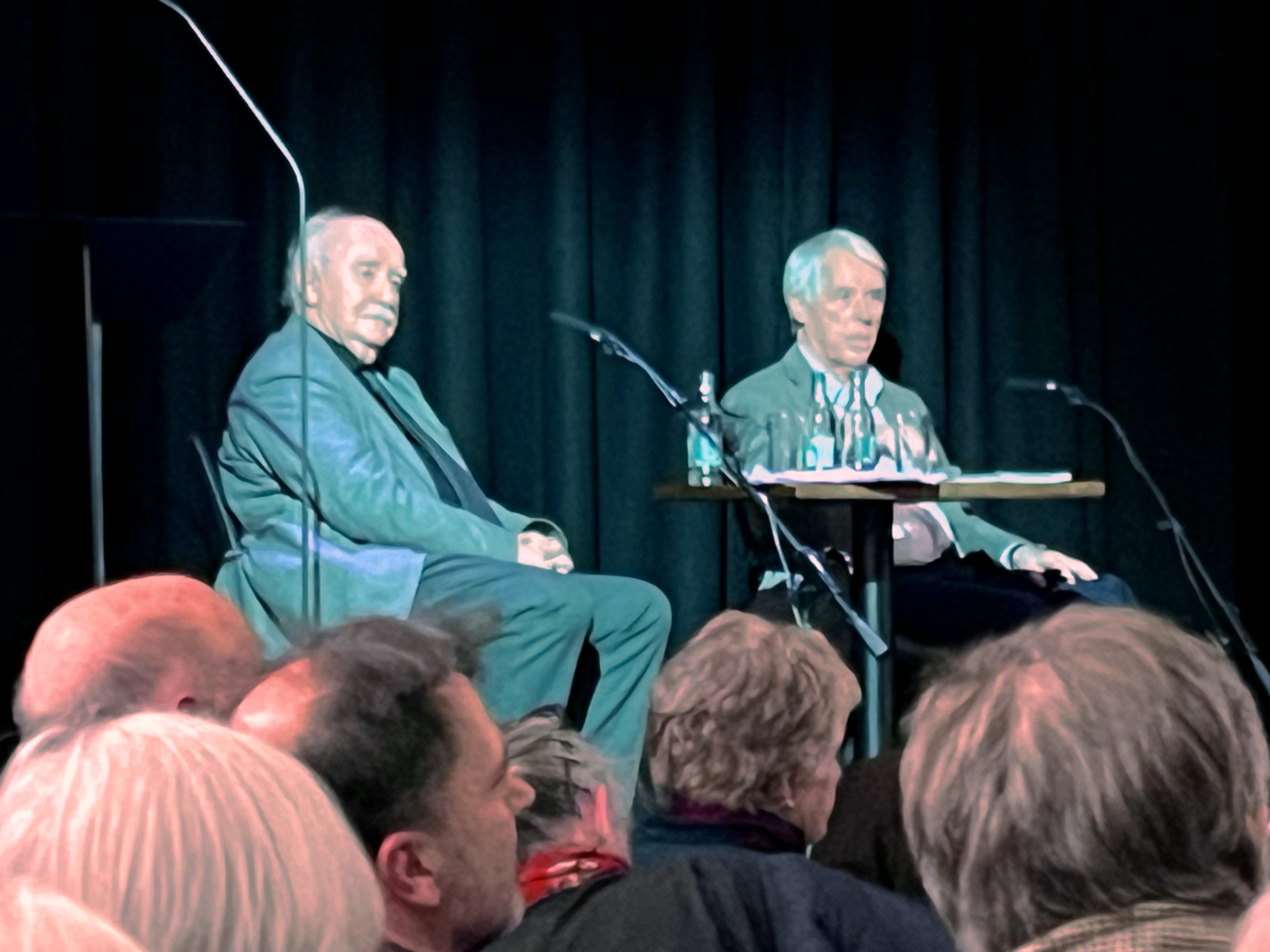
Went to the Irish Cultural Centre in Hammersmith for the launch of Brian O’Connor’s new book Wave, a translation with parallel texts of poems by Aogán Ó Rathaille (c.1670–1729). Brian (on the right of the picture) was joined by Declan Kiberd to talk about Ó Rathaille and read some of the poems. There was also some traditional music.
Ó Rathaille considered himself the last of the traditional bards of Ireland, and among other things developed the poetic form of the Aisling, where the poet meets a female spiritual embodiment of Ireland who laments the country’s misfortunes. Displaced from his poetic post after the Battle of the Boyne, which led to a general purge of the Catholic nobility, Ó Rathaille found his hopes of restoration were cruelly disappointed and he was reduced to poverty (he is the beggar referred to in Yeats’ The Curse of Cromwell). His misery did at least provoke some of his finest poetry.
As a master of form, alliteration, and verbal music, Ó Rathaille is a particular challenge to translators. I can’t assess their technical accuracy, but Brian’s versions are a very good read.
Here is a look at writing competitions I might enter which have deadlines in February.
All the rest have a deadline of 28 February.
If you get anywhere with any of these, please do let me know!
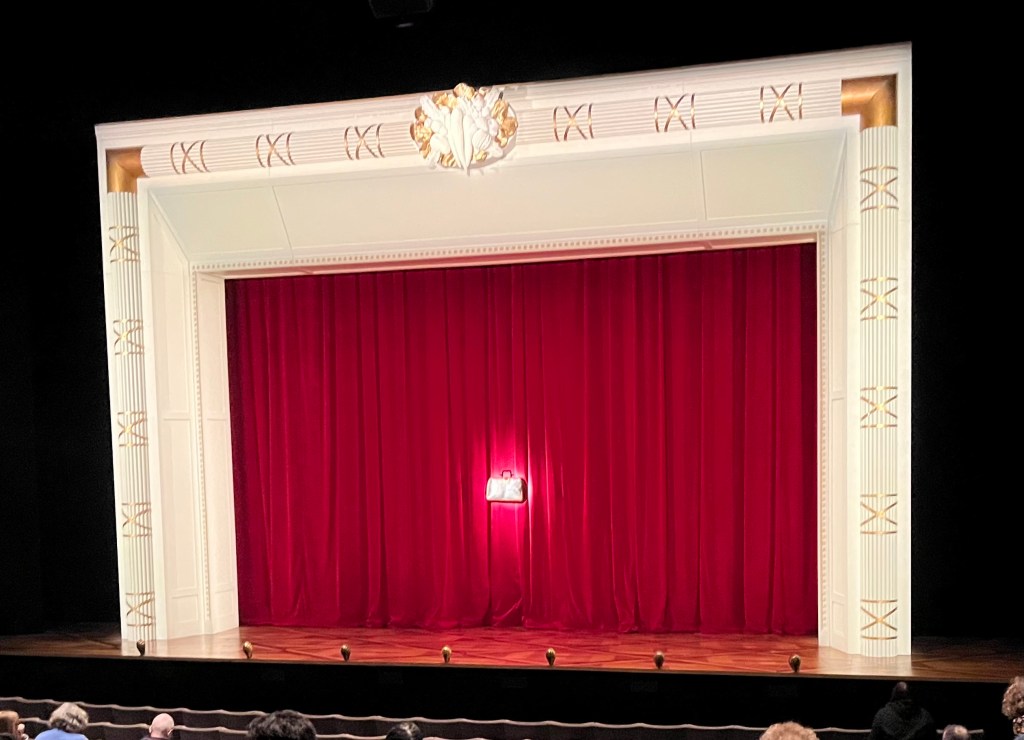
A handbag
Reviews had led me to believe that The Importance of Being Earnest with Ncuti Gatwa at the National Theatre featured so much gay behaviour that the plot was seriously distorted. This was a huge exaggeration. Yes, the subtle gay hints in the text kind of get pointed out with a nudge and a wink: some extra references are put in, and the whole thing is framed with two dances in which the cast camp it up. But the play itself is delivered pretty straight, and actually very well. No-one who loves the play need fear that this version is a travesty.
Casting is obviously colourblind in this case. Lady Bracknell is nevertheless allowed to be West Indian, which is slightly confusing but allows for a performance by Sharon D Clarke which we wouldn’t have wanted to miss.
The cast also add the kind of reactions that could not have featured originally: punching the air, muttering ‘Oh fuck’ and so on. But really none of these little quirks is a problem.
Arguably a bigger difficulty would face any production: the fact that the play is one of the best-known texts in the English language. The audience knows the script almost as well as the actors. We might almost feel like the lady who said Hamlet was a disappointment – it turned out to be just a lot of popular quotes strung together.
Anyway, there is a film of the performance coming out, and I recommend it.

I’ve been shortlisted in the Ink of Ages Fiction Prize! Final results expected 24th February.
What a wealth of intriguing artefacts at the British Museum’s Silk Road exhibition! The title is slightly misleading: the Silk Road is being used here as a central part and symbol for something wider: namely the far-reaching and complex exchanges of goods, ideas, art and religion that went on during what we used to call the Dark Ages, roughly the latter half of the first millennium. The exhibition is laid out geographically from Japan to Britain (both of which were well beyond the ends of the Silk Road, but as I say, this is broader). Hard to pick out the best, but I loved the cheery ancient Chinese picture of a horse and camel, and the flagon brought back from Syria by an English mercenary who went to fight for the Byzantines.
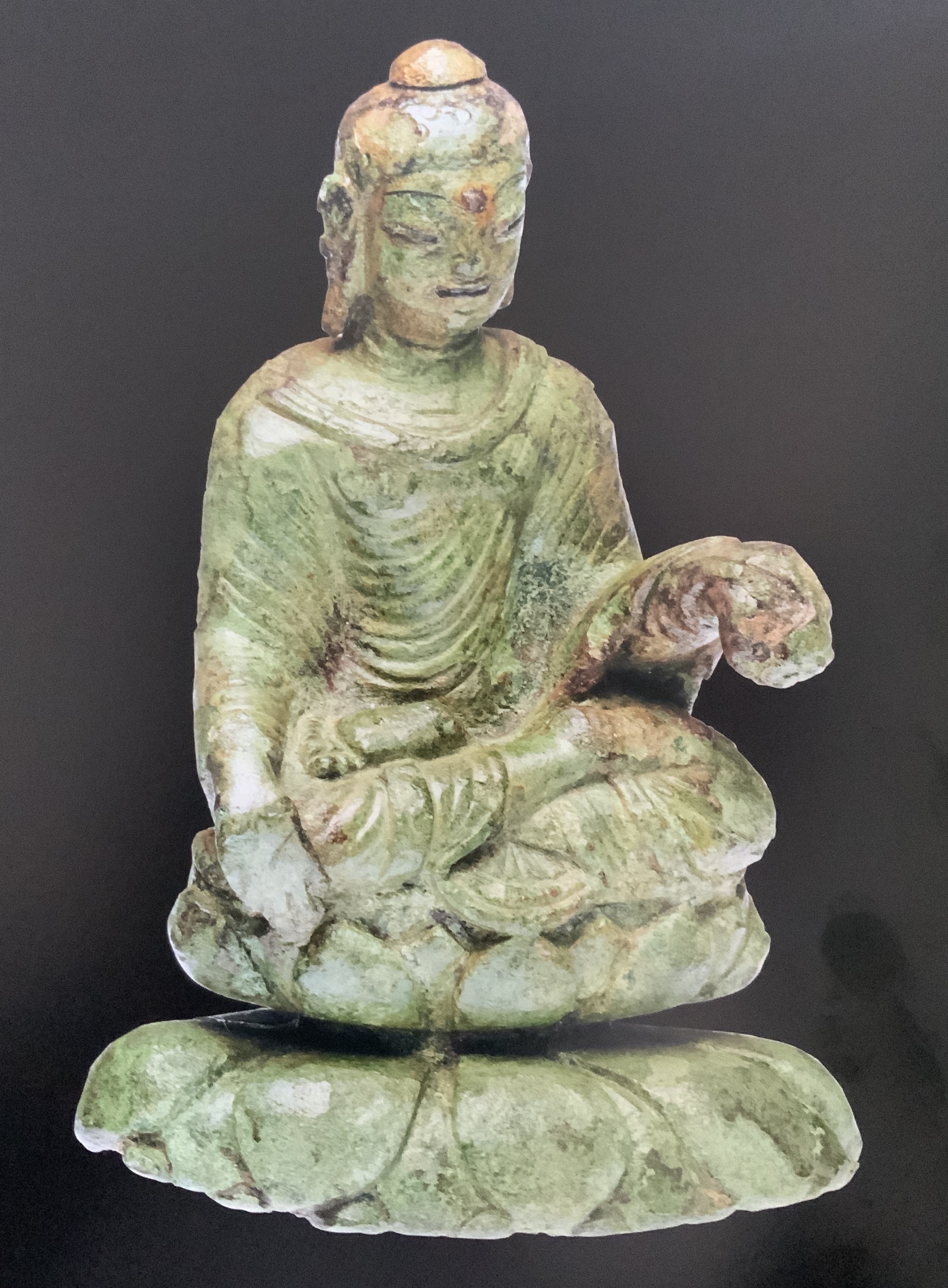
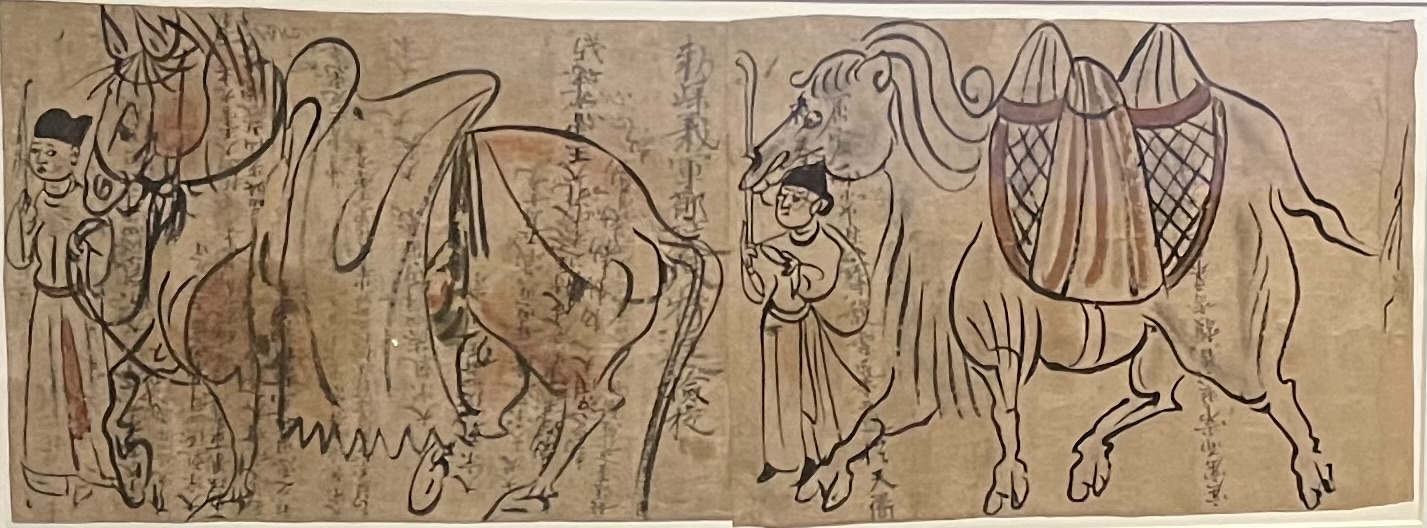

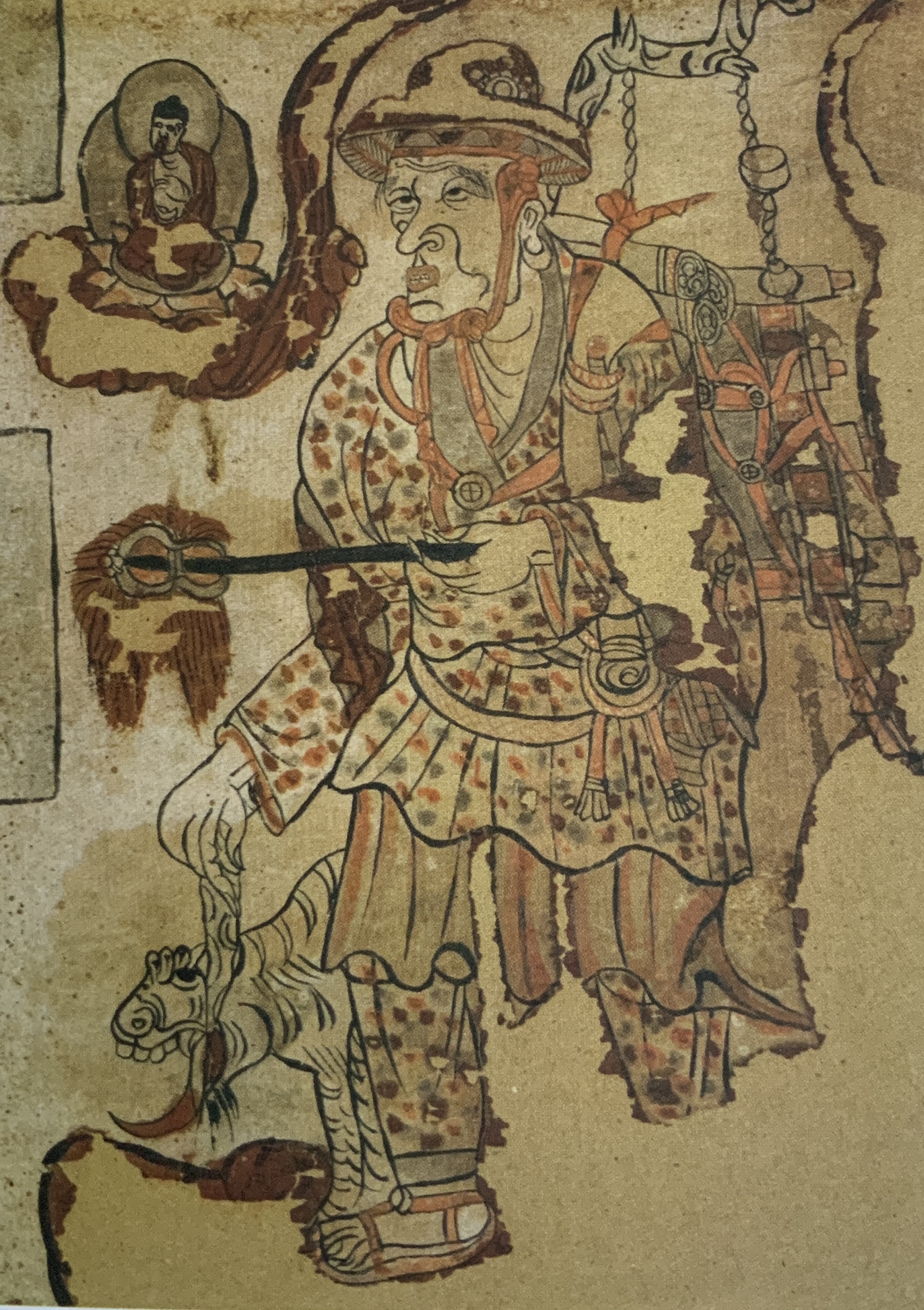


The geographical layout perhaps sidelines the chronology a bit, so it can feel as if all these artefacts are contemporary, whereas they cover several centuries of change (not that that isn’t very much spelt out within each location). But all these niggles are minor: this has at worst been a fantastic opportunity to show some marvellous things.

Fourteen writing competitions I might enter with deadlines in January.
All the rest have a deadline of 31 January
If you get somewhere with one of these, do let me know!
 Seen and Done