Woman In Mind

We went to see the new production of Woman In Mind, the Alan Ayckbourn classic, staring Sheridan Smith as Susan and with Romesh Ranganathan as Bill Windsor. It’s a great show and I recommend it: funnily enough my only reservations are about the play itself. There are some spoilers in what follows.

The story is in essence about a woman losing her mind. In the early stages her delusional and at first ideal life contrasts with the depressing reality, as she switches between the two. I would have liked a neat resolution to all this, but we don’t get one: instead the delusions get stronger, less controllable and less pleasant and eventually swallow her up.

I said one side of the story is the depressing reality of her life, but in fact our faith in the reality of even the ‘real’ parts is gradually undermined (or at least, mine was). Bill Windsor seems to move across gradually from sensible reality to florid delusion. Muriel the sister-in-law seems like a caricature, too completely awful to be a real person. The behaviour of Susan’s son is not depressing in normal ways but bizarre, and seems to revolve around her, even if in a most negative way. So perhaps in the end we are to realise that the entire play is the record of a set of growing delusions that reflect reality only in a distorted way. That can still be interesting, but I think a little less than a play that does engage with real life effectively.

Grayson Perry Delusions

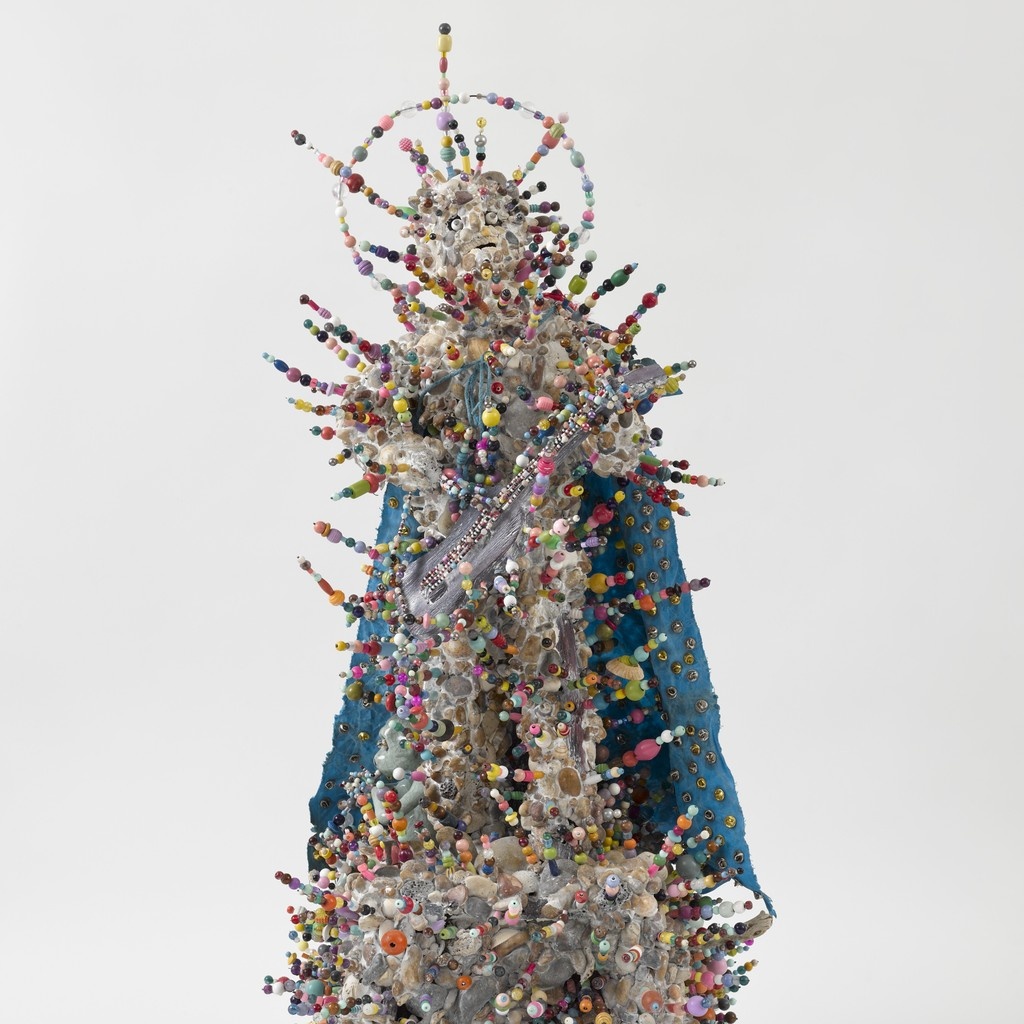
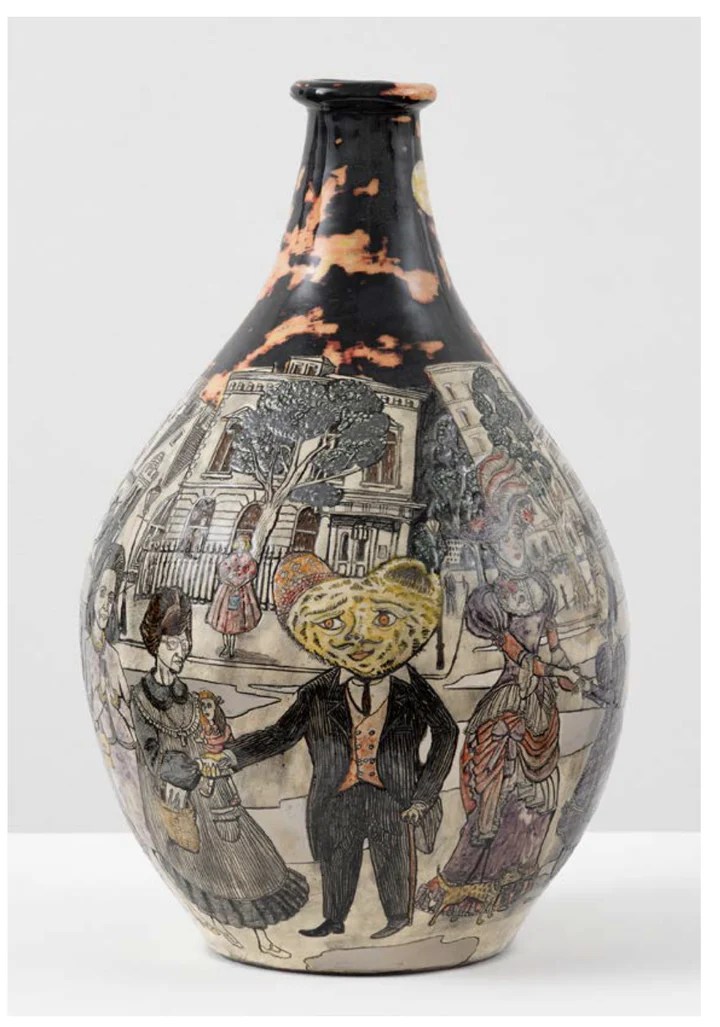
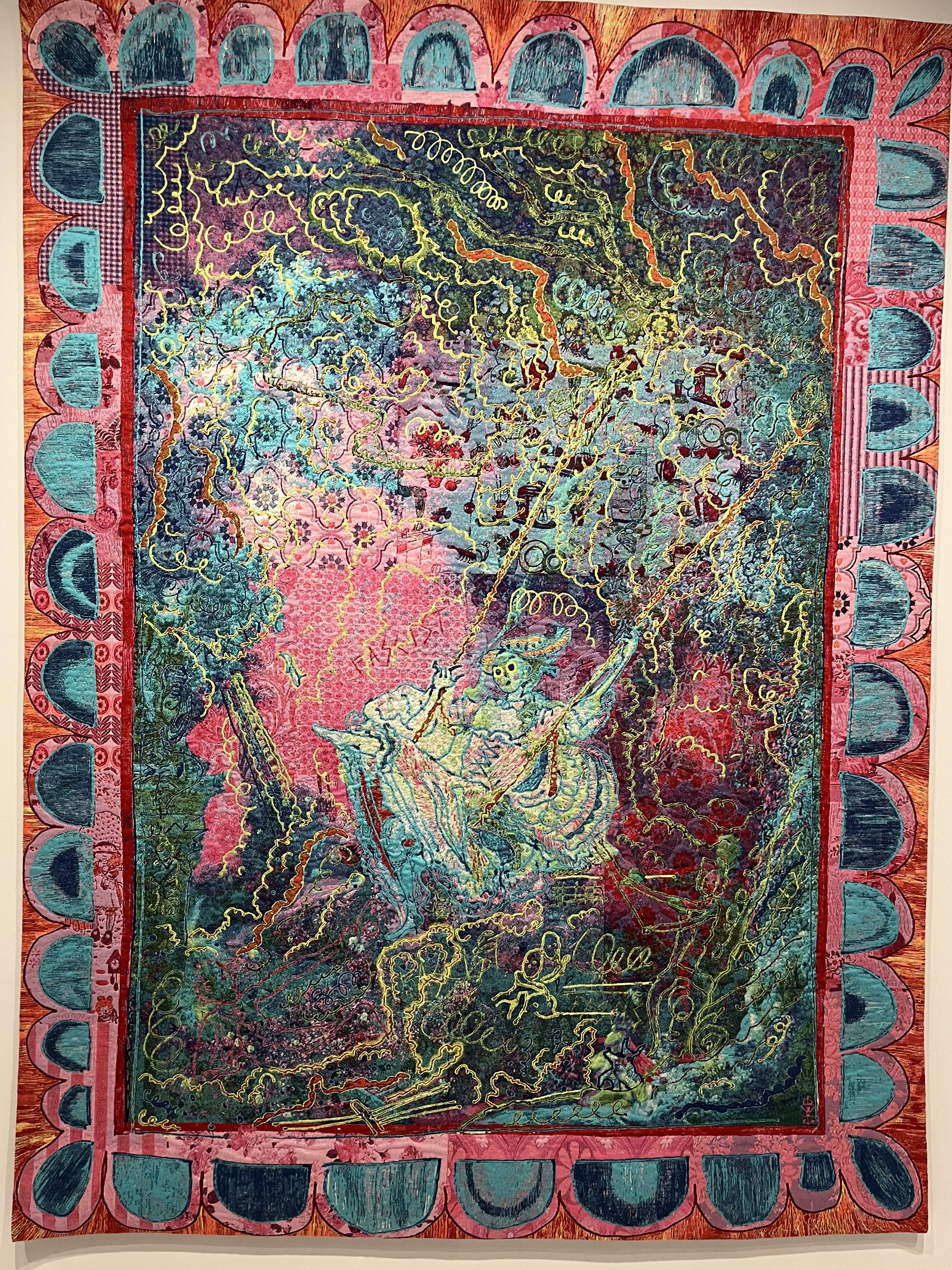
Delusions of Grandeur at the Wallace Collection is an exhibition in which Grayson Perry reacts to the items in the museum. It got lukewarm reviews when it opened, perhaps because of a lack of coherence. Certainly Perry makes things complicated. We know that context changes the significance and even the value of art, and he likes to control that context by inventing new artists to be the ‘creators’ of some of his work – arguably even ‘Grayson Perry’ is one. Here apart from personas we have seen before he introduces the artist Shirley Smith, also the deluded Honourable Millicent Wallace who believes herself to be the true heir to the Wallace Collection. This opens the way to many reflections on the palatial and the ladylike. He complicates things further by bringing in the work of two real outsider artists, Madge Gill (whose stuff was exhibited here in its own right when the galleries had been emptied in WWII) and Alois Corbaz. So there is no simple story to the exhibition: but how could there be? The collection is complex and so is Perry, and this is the shadow thrown by the former on the latter (or vice versa, or both). This unmanageable complexity is acknowledged right at the beginning by a figure of a Man of Stories who has narrative threads literally bursting out of him.

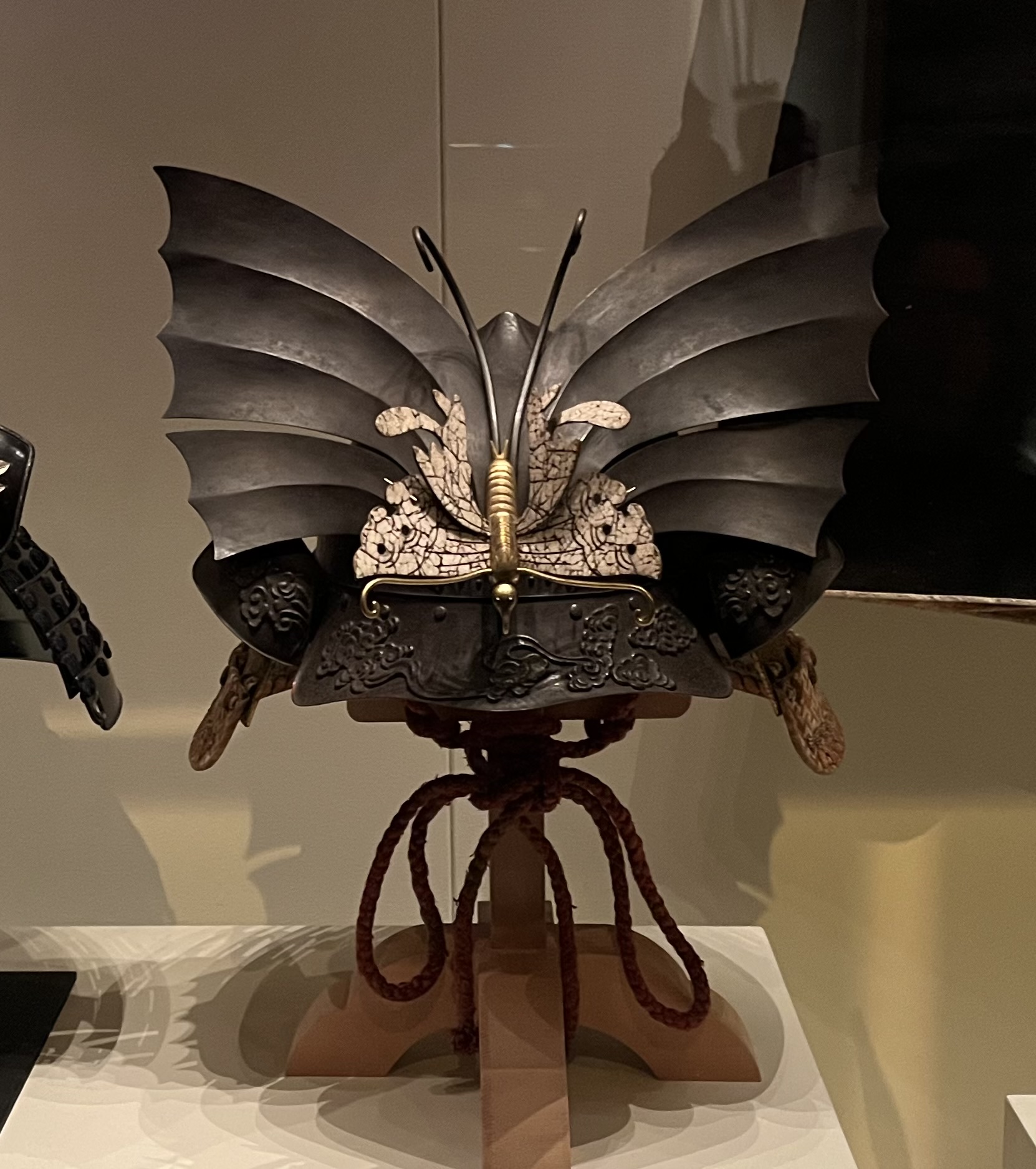
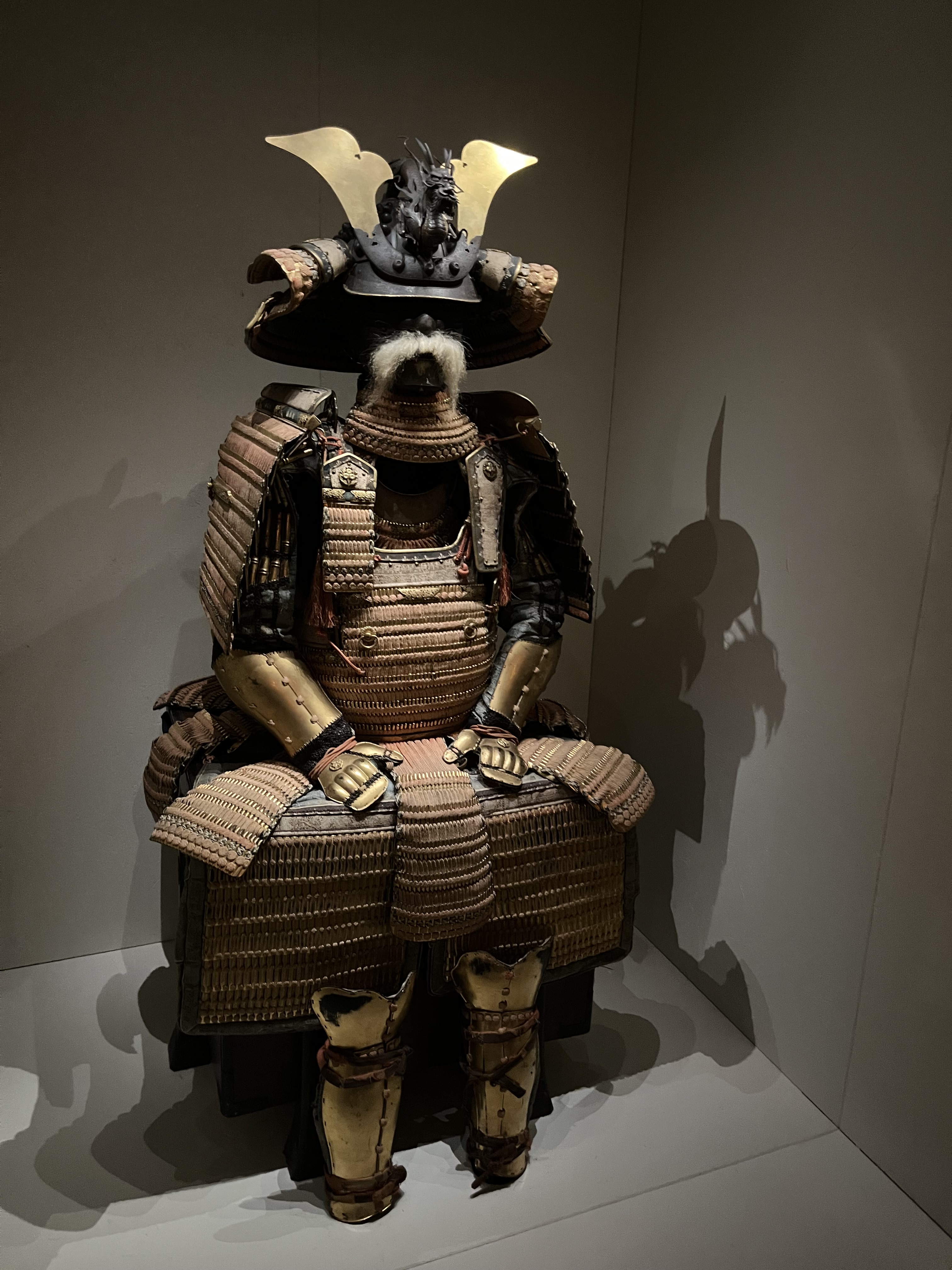
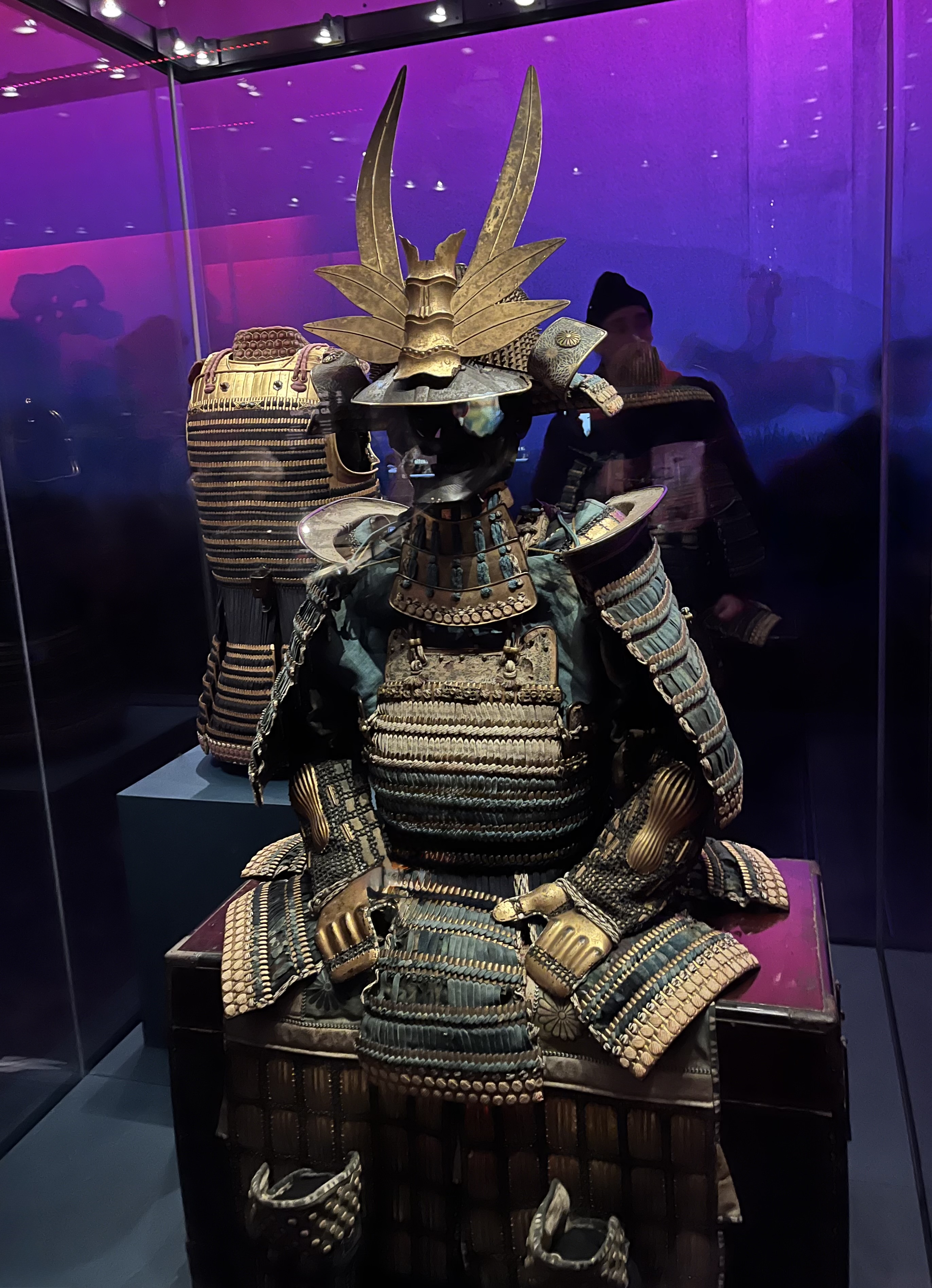
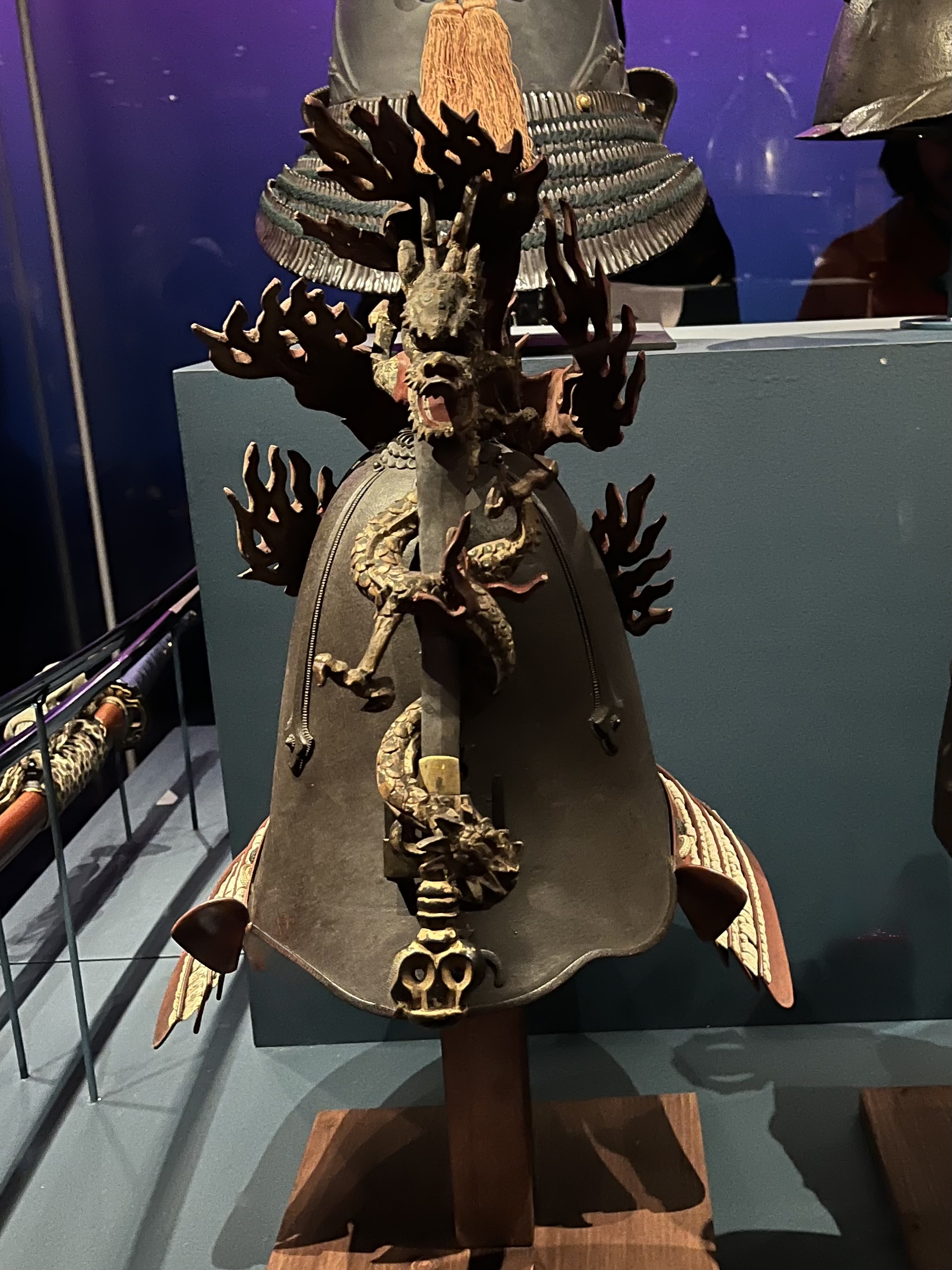
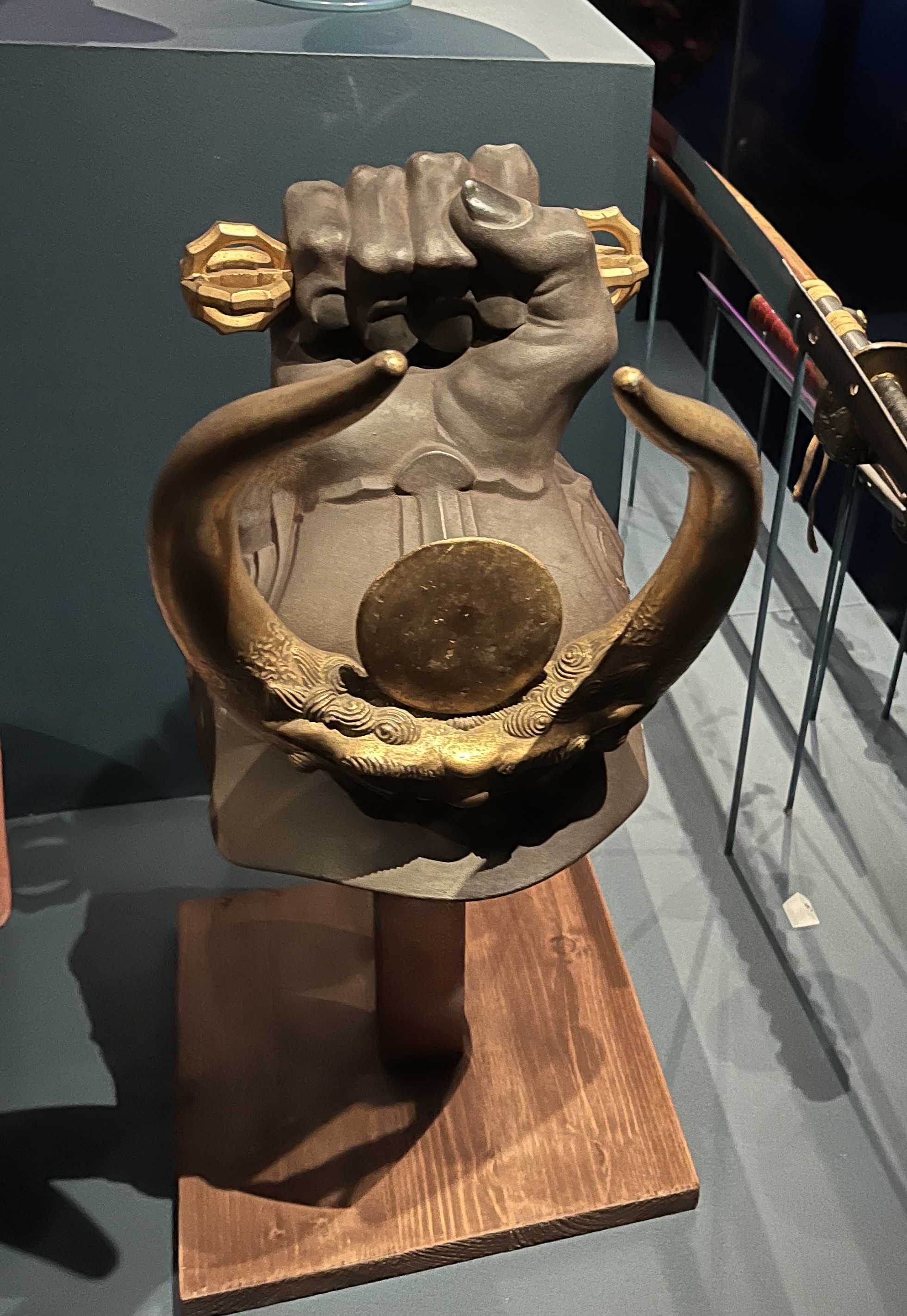
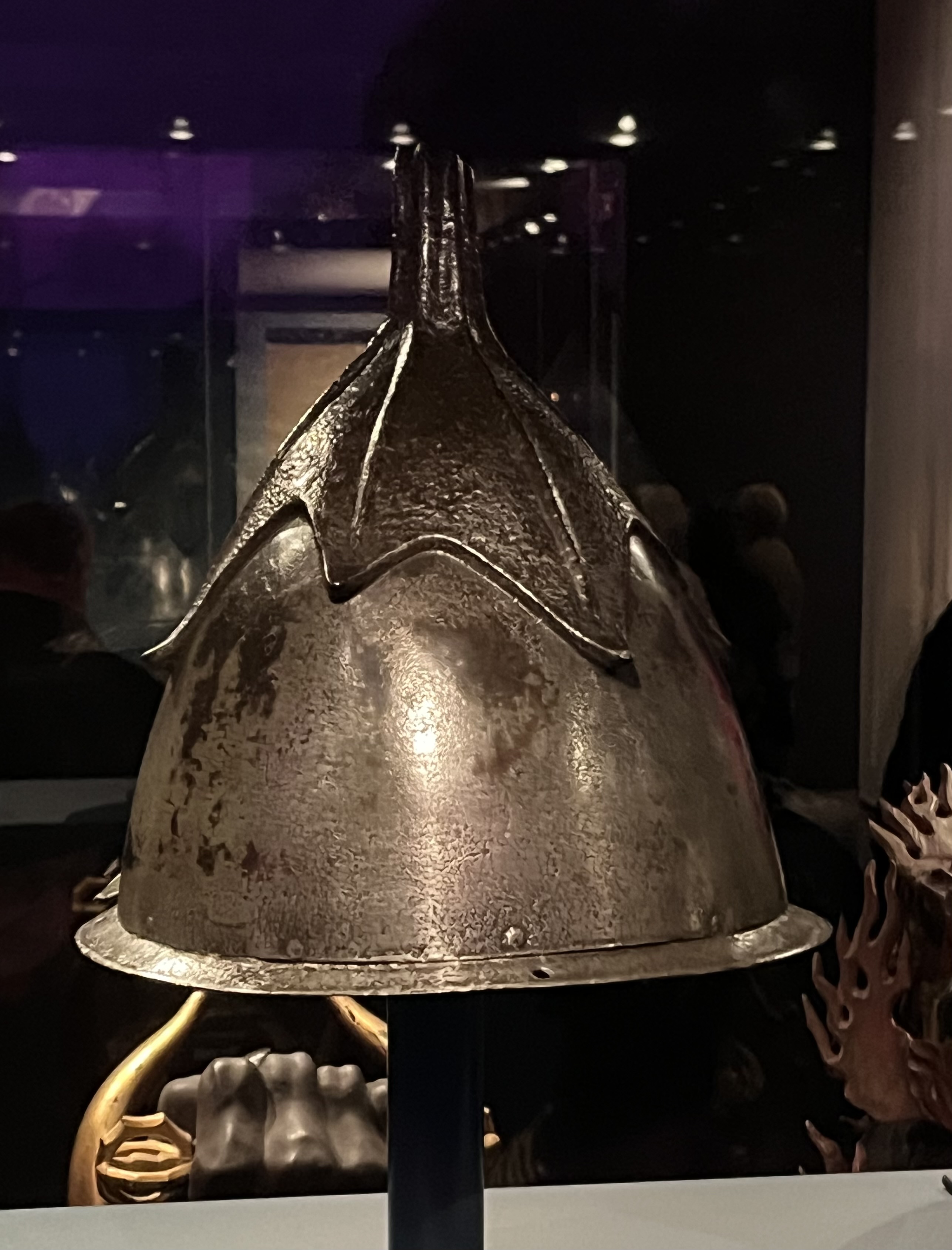
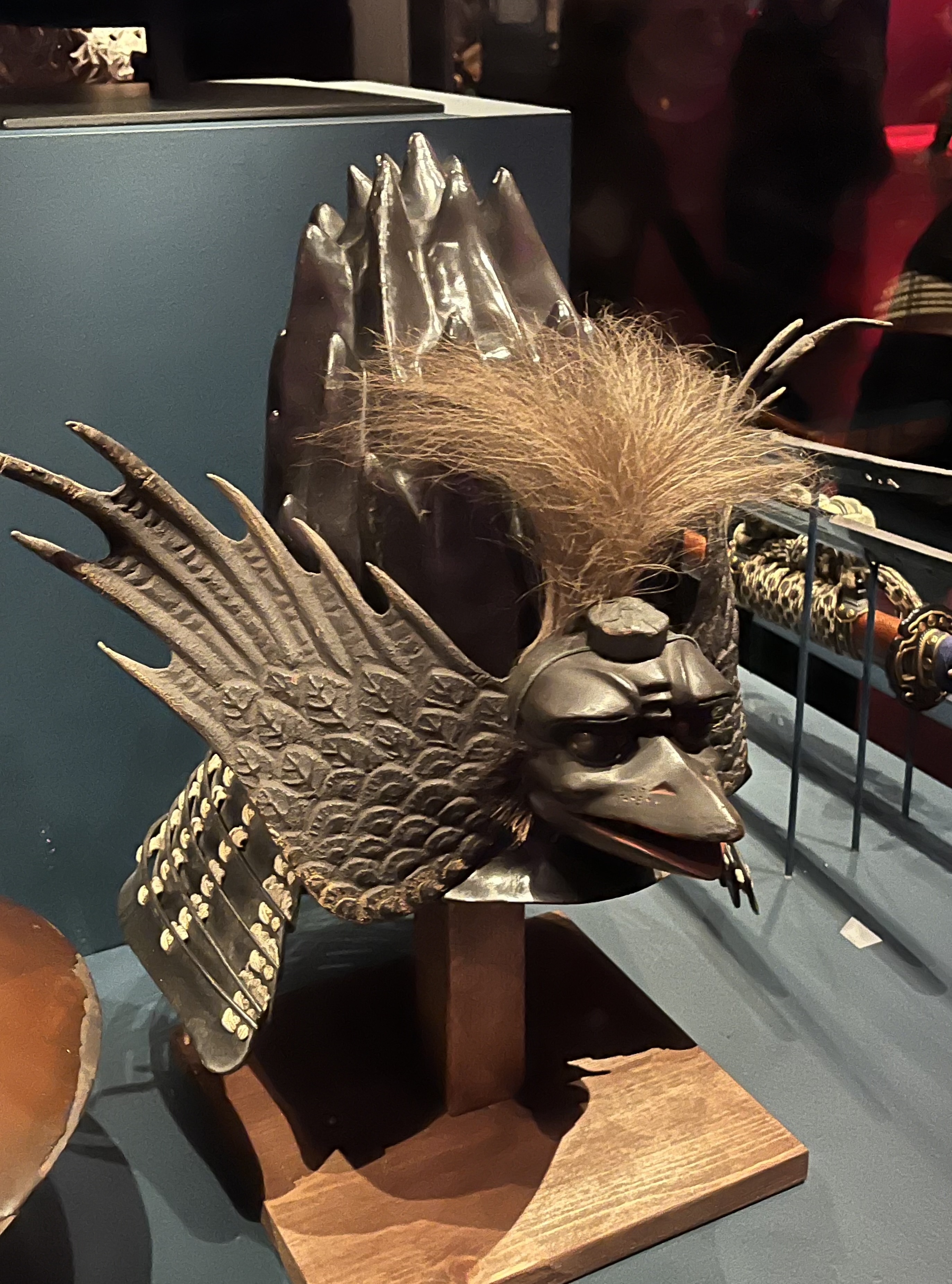
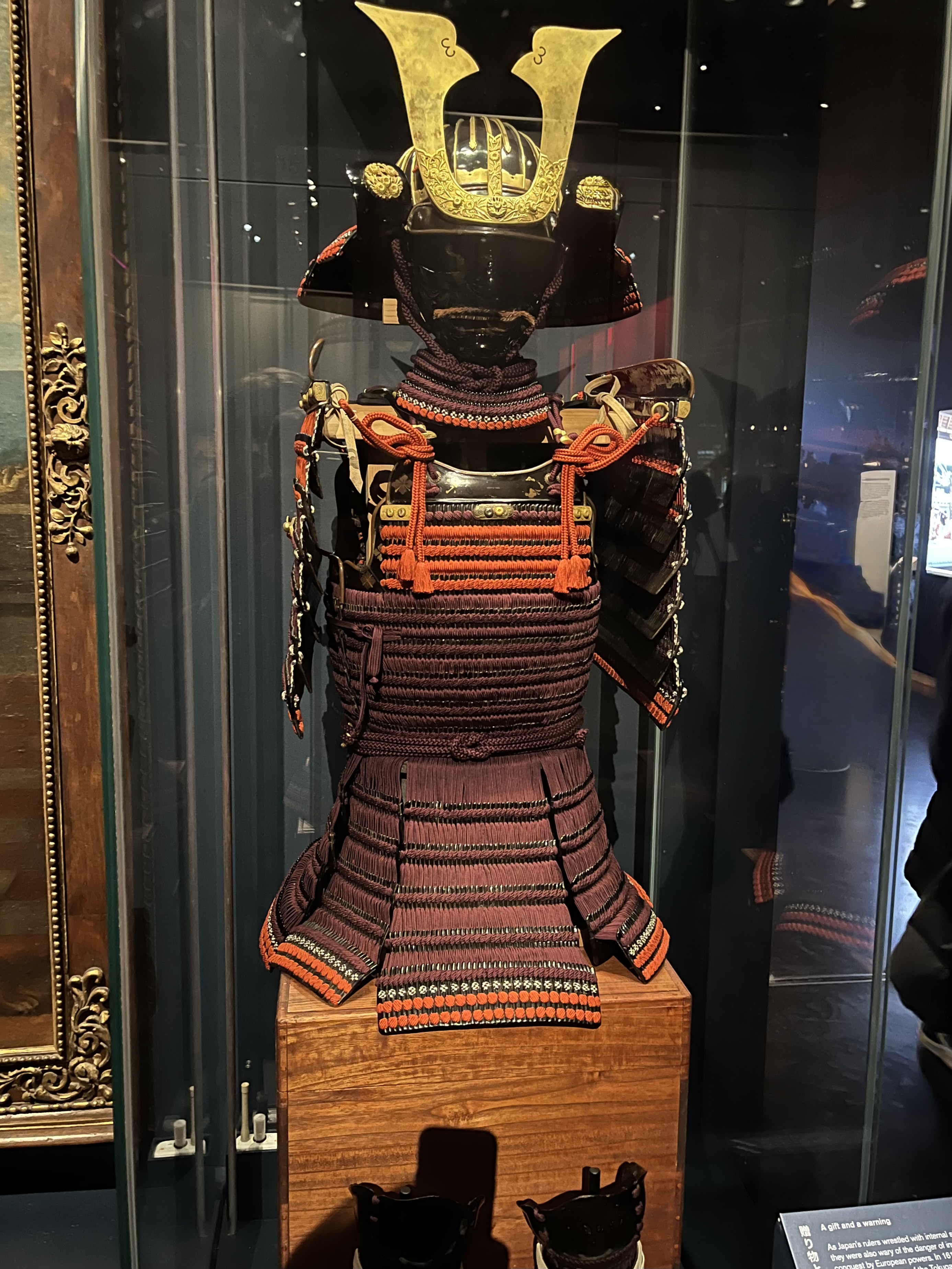
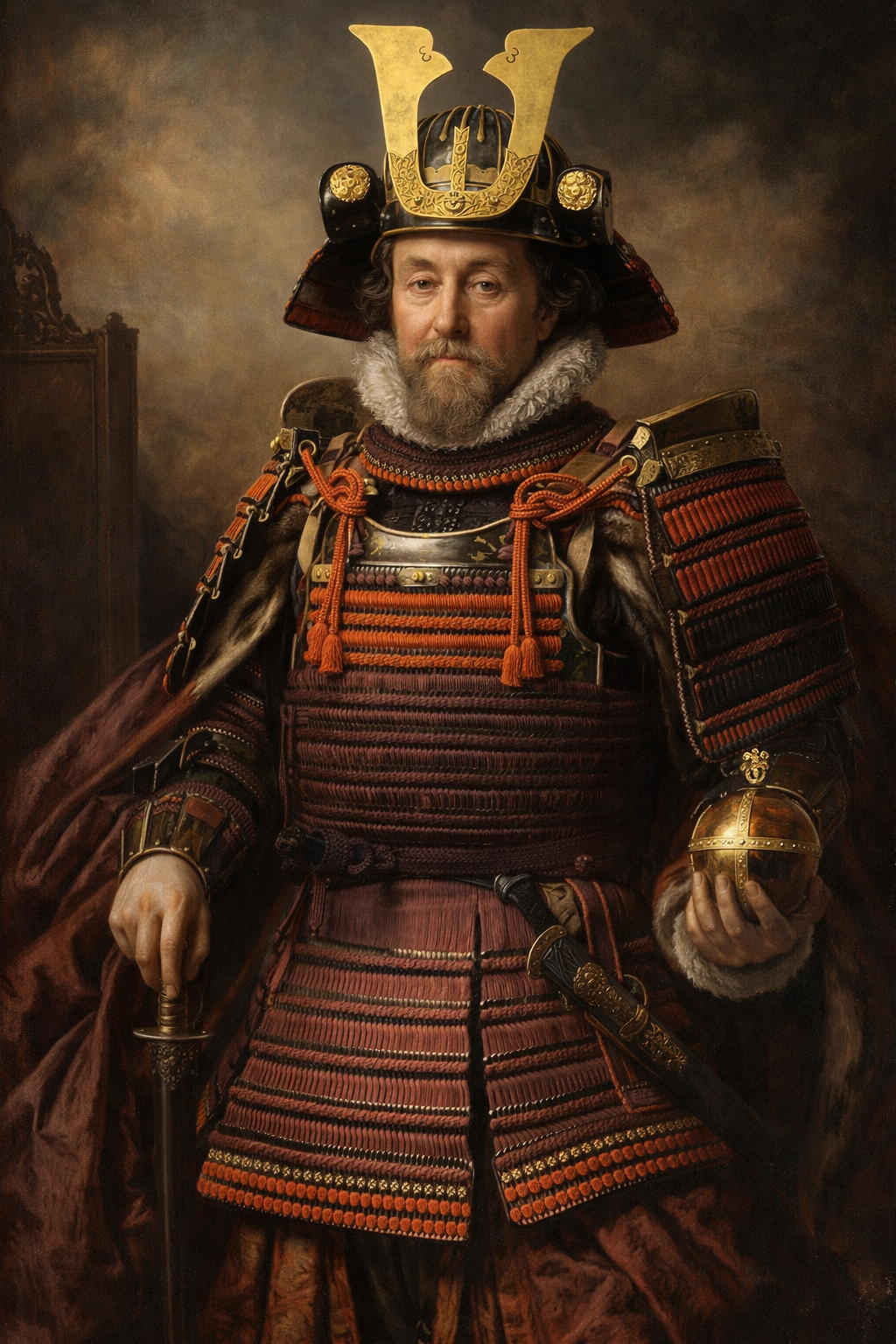
Coherent or not, Perry is never uninteresting, and there are some nice things here, notably a helmet and figure in armour that are a tribute to the Wallace’s formidable collection of arms and armour, but also great objects in themselves. The ‘tapestries’ Perry goes in for these days are less successful in my eyes. Whisper it quietly, but perhaps the best stuff is the pots.

Not for everyone – you probably know already whether you like Perry’s stuff or not – but I enjoyed it.

Hiroshige

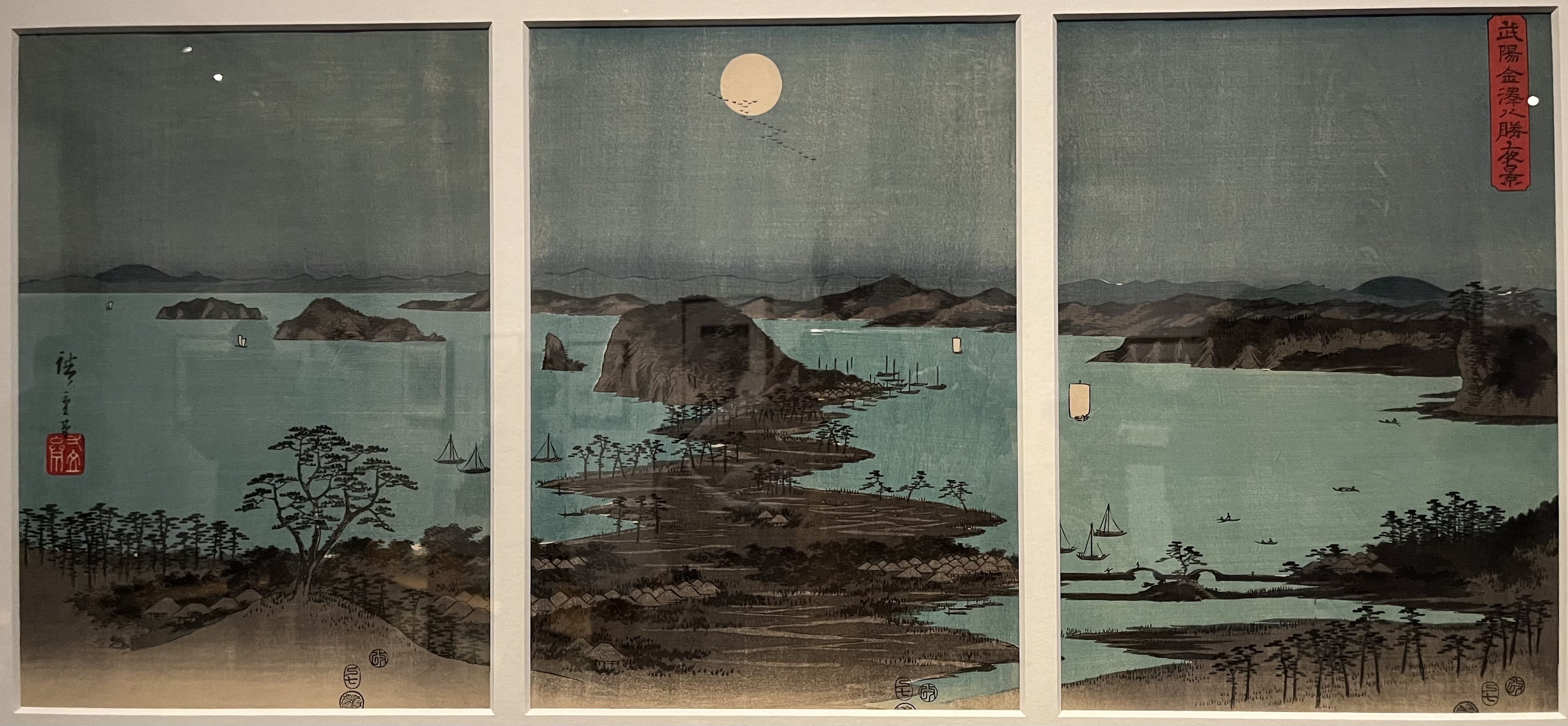
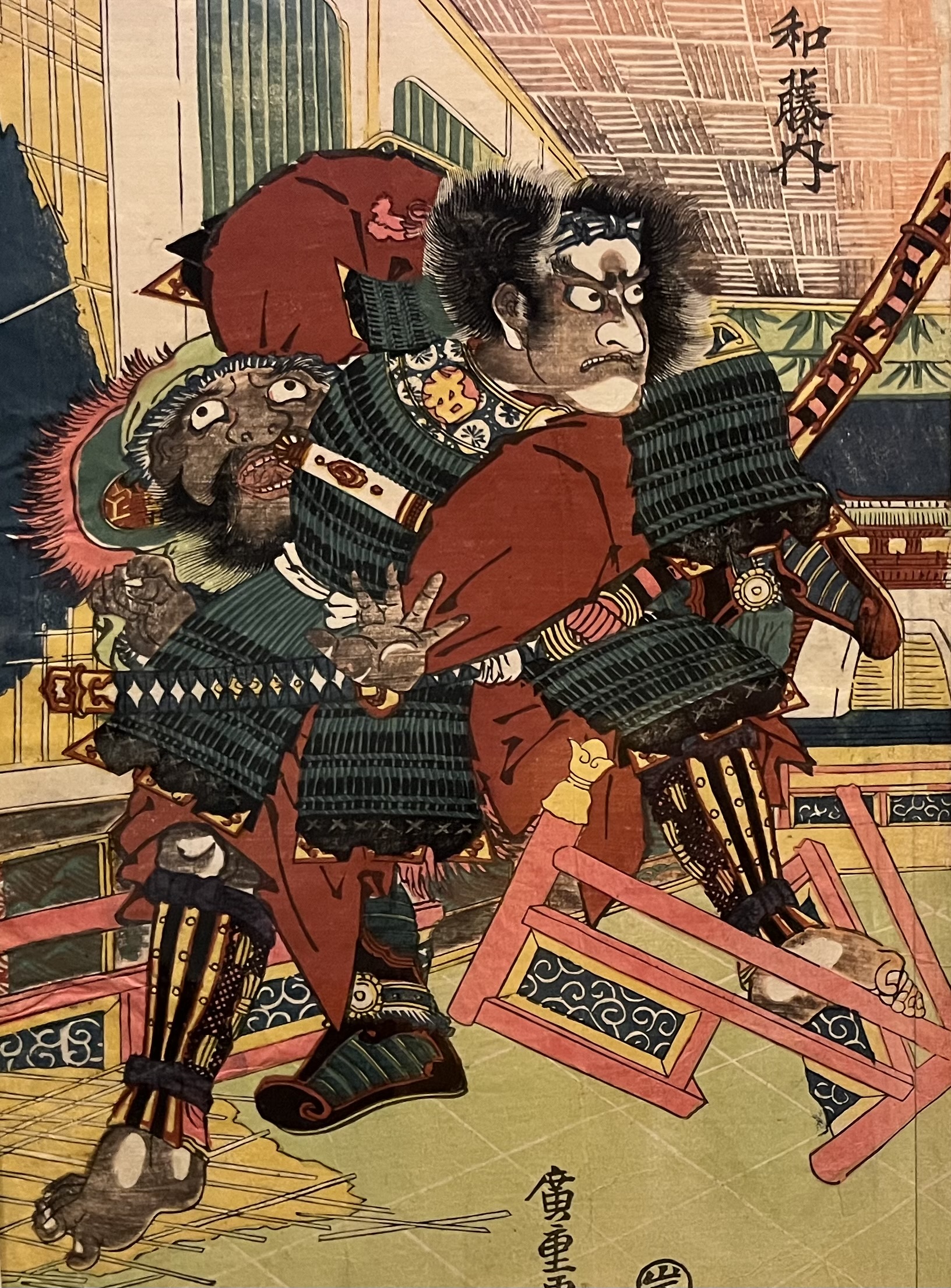
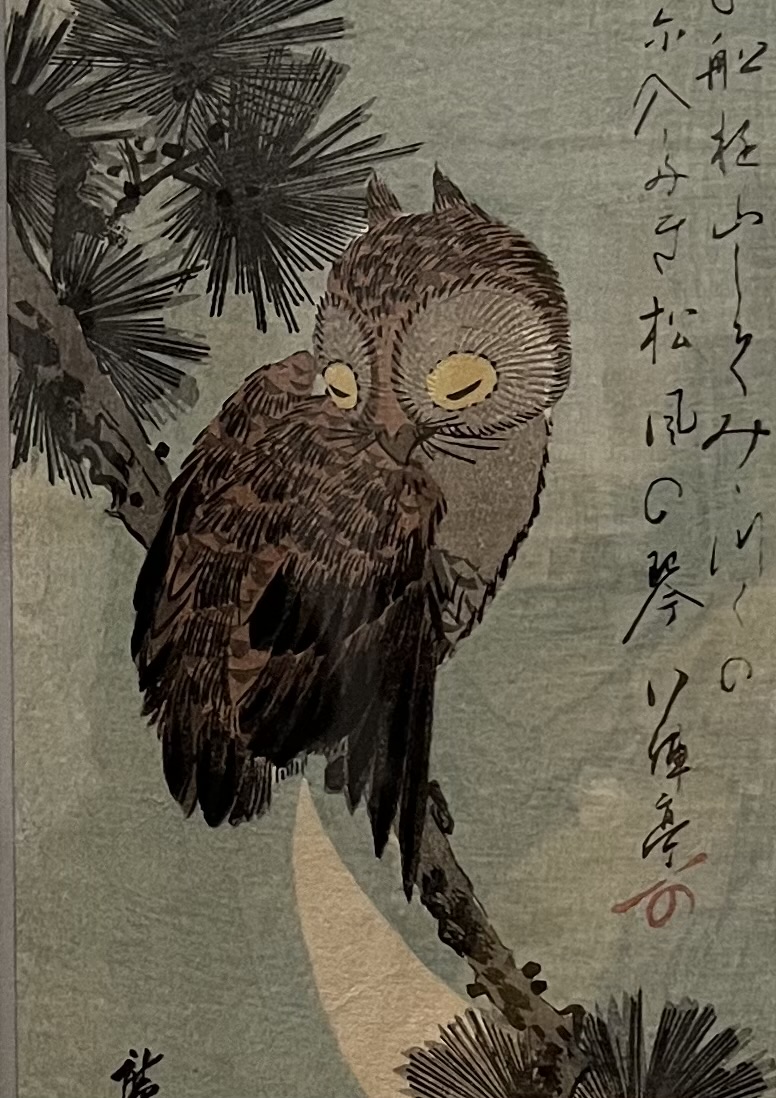
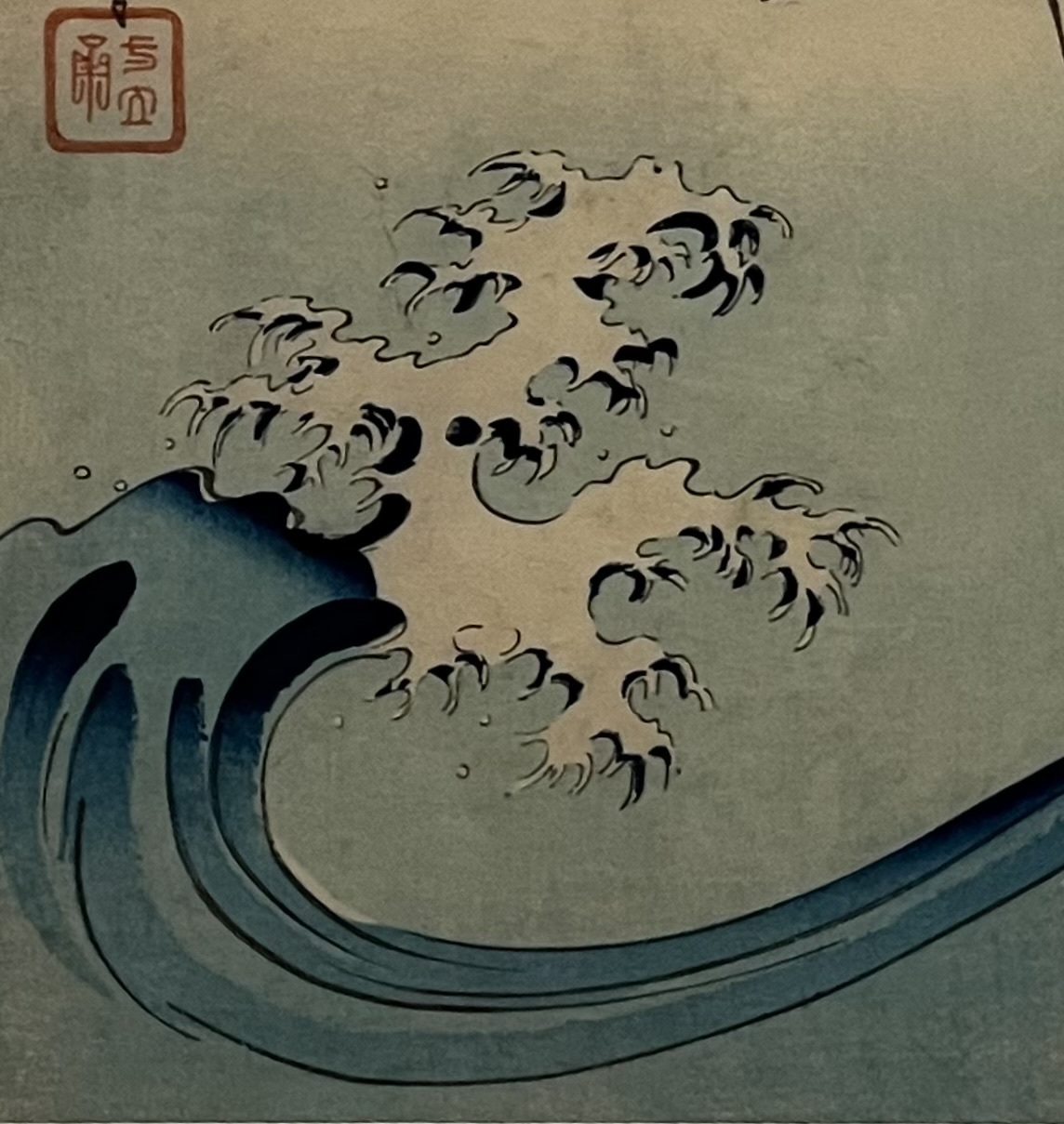
I suppose Hiroshige is the second name that comes to mind when you think of Japanese artists. I had him down mentally as a pretty straight landscape man. However, the current show at the British Museum is amazing and shows him to have been the creator of pictures of huge originality and impact, really second to none. His animals are terrific, and those landscapes are powerfully evocative. He has a particular gift for misty distances which provides a great complement to the hard outlines of printmaking.

Not to be missed if you like ukiyo-e at all.

Here We Are

Went with Elizabeth (thanks to her) to see Sondheim’s last work Here We Are, currently at the National Theatre. For Sondheim’s many fans, this last musical, left in draft form at his death, is a must-see, but it’s an entertaining evening for anyone.

It’s based on two Bunuel films: The Discreet Charm of the Bourgeoisie and The Exterminating Angel, but transplanted to America and infused with a New York sense of humour. In the first part the characters just can’t seem to get brunch: in the second they somehow cannot leave the room. Meanwhile they are covertly involved in a drug cartel and a revolution is brewing.

Bunuel’s originals, though surreal, had a dream-like logic which is missing here, but in compensation you get the wisecracking humour. You don’t expect to come out of a late Sondheim show humming the big melodies, but if you’re not a grouch you’ll enjoy the singing.

To me Sondheim represents the pinnacle of the curious trend that briefly saw the Broadway musical turn away from its song-and-dance razzle-dazzle roots towards something much more intellectual. That all stopped when Andrew Lloyd Webber put strong stories and popular tunes back in place, but we were left with some interesting works – and this is a decent final addition to the portfolio.

Restoration of Anne Boleyn

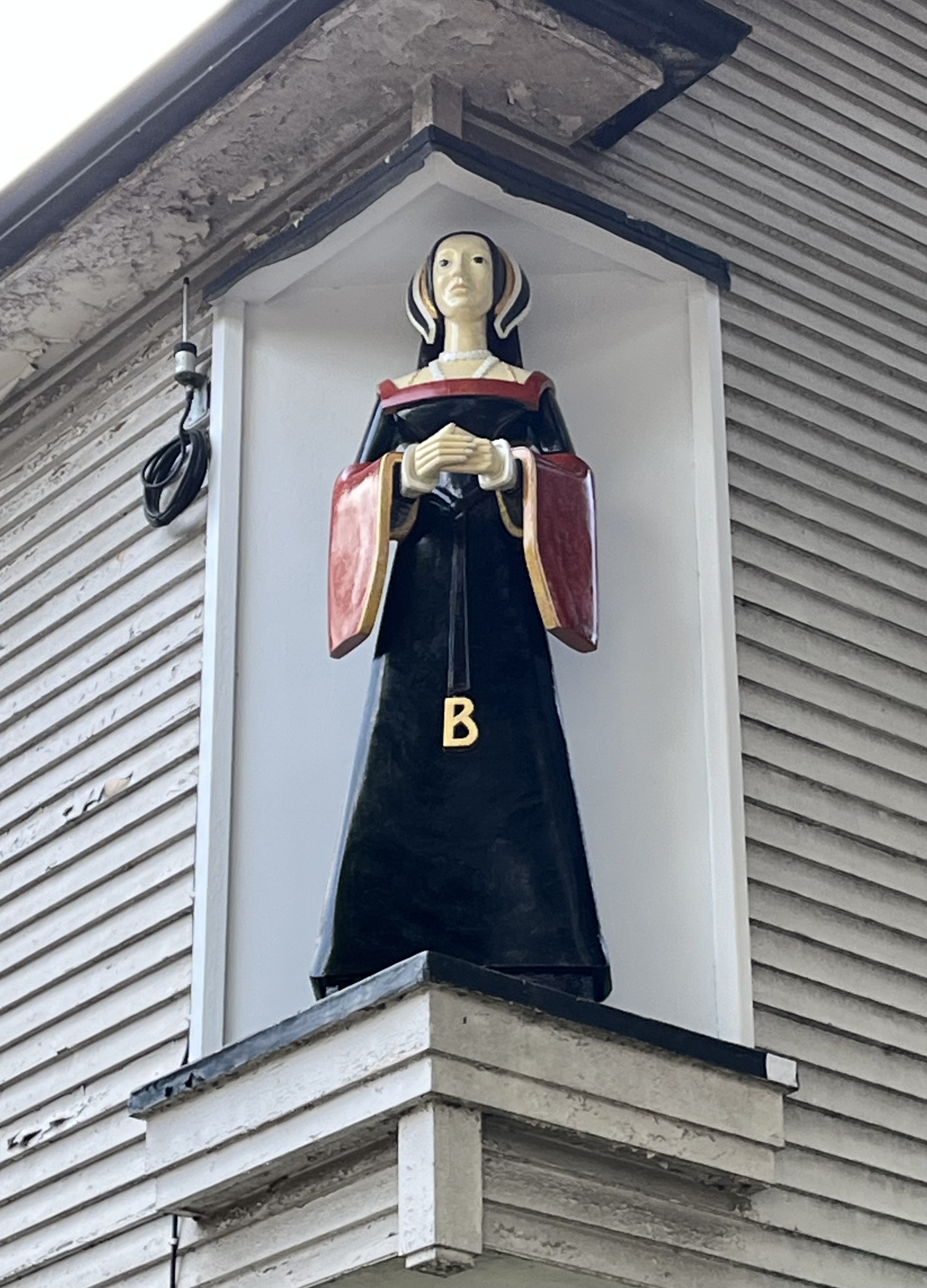
This figure, a modern carving on a modern house, became a bit of a landmark in Carshalton. It was removed for restoration a long time ago, but today Anne is back!

Why Anne Boleyn? She stands opposite ‘Anne Boleyn’s Well’ by All Saints’ churchyard, but in fact the history is garbled: the well was originally associated with the local Boulogne family, not connected with the Boleyns (or Bullens as they were more prosaically known).

Nice to see her back, though.

The Score

Brian Cox gives a masterly performance as J.S.Bach in The Score at the Theatre Royal Haymarket (whose opulent interior provides a suitably baroque background). The play, by Oliver Cotton and directed by Trevor Nunn, centres on the true story of Bach’s visit to the court of Frederick the Great, where he was challenged to improvise a three-part fugue on an ‘unfuguable’ theme – which he did, a feat of mental musicianship that seems hardly credible.

Here though, Bach rather implausibly uses the opportunity to denounce Frederick’s military ‘interventions’ and the horrors they bring with them. The King is portrayed as a precursor of later German belligerence, but Bach’s musical insights reveal the complexes that motivate him, rooted in an unhappy childhood. The play is neatly constructed and works pretty well apart from sometimes getting just a little bogged down.

The weakest part, in my view, is Voltaire, who appears as a secondary character but is written, not as the sharp and witty sceptic we know, but as a over-demonstrative French stereotype. He is allowed only one characteristic witticism (‘murderers are severely punished, unless they kill thousands, to the sound of trumpets’). If Voltaire had written this play it would have been shorter and funnier, but that’s a tough benchmark, and Cox’s bravura turn helps make it a well-spent evening.

The Seagull

We were lucky enough to get really good tickets at a reasonable price for The Seagull at the Barbican with Cate Blanchett. This is a modern, rather innovative (some might say gimmicky) production by Thomas Ostermeier. Most of the additions, changes and updates are OK, I think. Some, like regularly breaking the fourth wall, are intended to highlight a kind of dialogue about the relation between performance and reality: modern music and references are either irrelevant or legitimately funny. Probably the most uneasy thing imo is the way the character Semyon Medvedenko is changed from a poor schoolteacher into a ‘factory worker’ (how is a factory worker hanging around this country estate all the time?) who drives around on a quad bike and sings Billy Bragg songs – though of course we are made well aware that it is not Medvedenko singing, but the actor Zachary Hart.
The cast is terrific, by the way though obviously Cate Blanchett’s amazing performance as the famous actress (see what they did there) and attention-hogging narcissist Irina Arkadina outshines everything else. The tap-dancing and doing the splits are the least of it, I promise you.

It’s a terrific show, and the fact that it is so clever, funny and profound is largely due to the fact that none of the fancy tricks is ultimately allowed to get in the way of Chekhov’s classic play, which is delivered pretty well intact. I would strongly recommend it, but I think it’s sold out.

Earnest


A handbag

Reviews had led me to believe that The Importance of Being Earnest with Ncuti Gatwa at the National Theatre featured so much gay behaviour that the plot was seriously distorted. This was a huge exaggeration. Yes, the subtle gay hints in the text kind of get pointed out with a nudge and a wink: some extra references are put in, and the whole thing is framed with two dances in which the cast camp it up. But the play itself is delivered pretty straight, and actually very well. No-one who loves the play need fear that this version is a travesty.

Casting is obviously colourblind in this case. Lady Bracknell is nevertheless allowed to be West Indian, which is slightly confusing but allows for a performance by Sharon D Clarke which we wouldn’t have wanted to miss.

The cast also add the kind of reactions that could not have featured originally: punching the air, muttering ‘Oh fuck’ and so on. But really none of these little quirks is a problem.

Arguably a bigger difficulty would face any production: the fact that the play is one of the best-known texts in the English language. The audience knows the script almost as well as the actors. We might almost feel like the lady who said Hamlet was a disappointment – it turned out to be just a lot of popular quotes strung together.

Anyway, there is a film of the performance coming out, and I recommend it.

The Silk Road

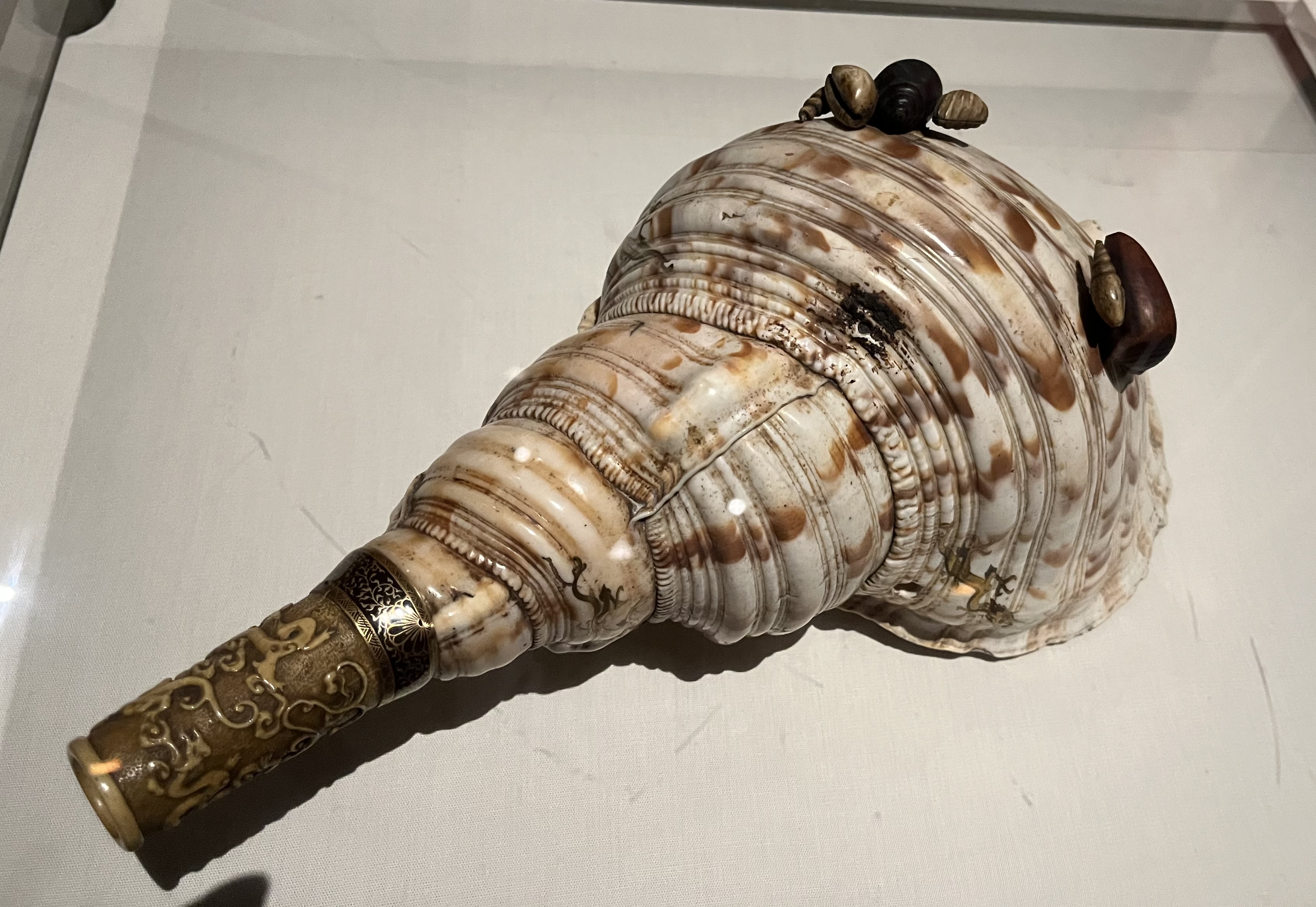
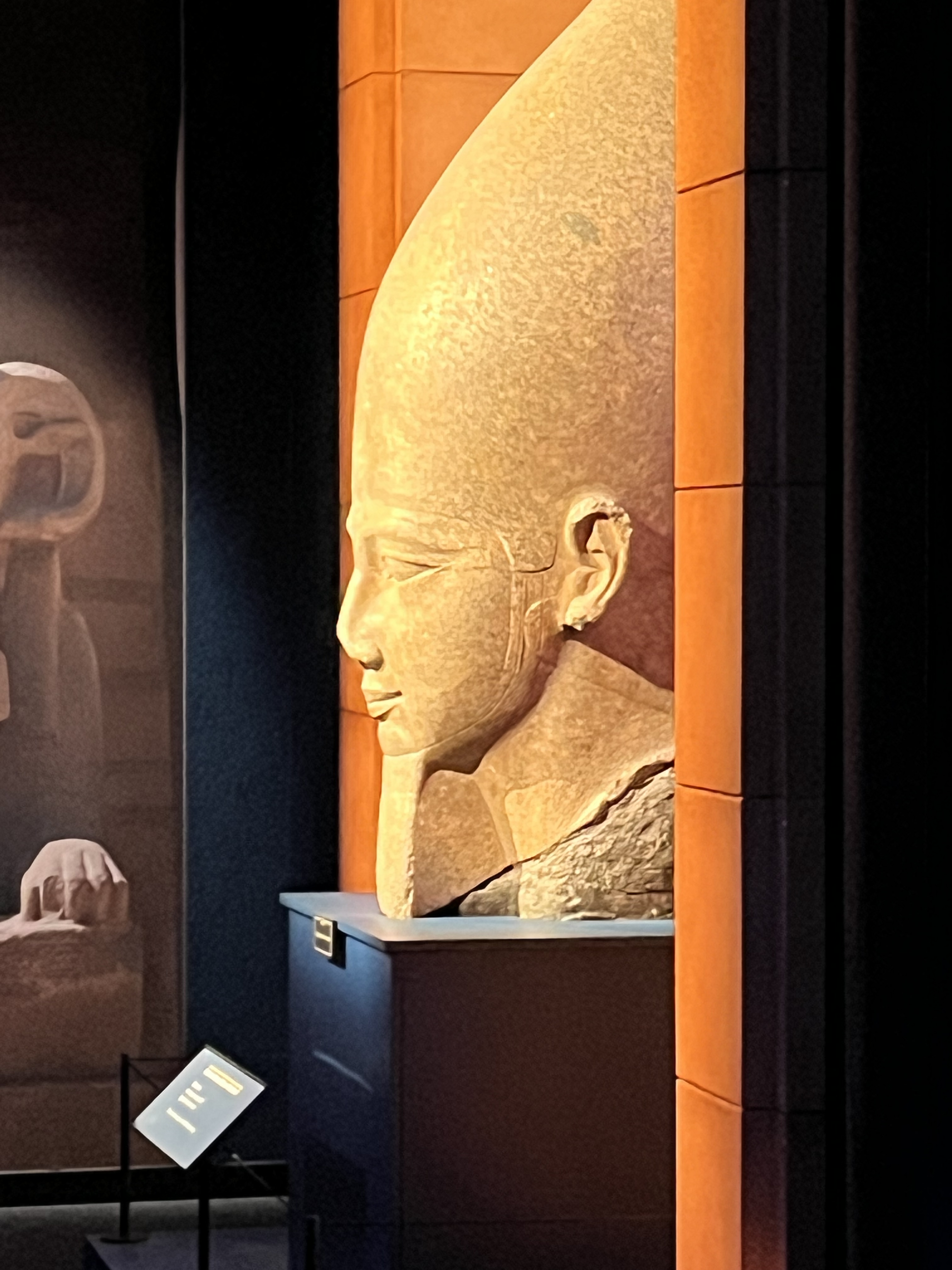
What a wealth of intriguing artefacts at the British Museum’s Silk Road exhibition! The title is slightly misleading: the Silk Road is being used here as a central part and symbol for something wider: namely the far-reaching and complex exchanges of goods, ideas, art and religion that went on during what we used to call the Dark Ages, roughly the latter half of the first millennium. The exhibition is laid out geographically from Japan to Britain (both of which were well beyond the ends of the Silk Road, but as I say, this is broader). Hard to pick out the best, but I loved the cheery ancient Chinese picture of a horse and camel, and the flagon brought back from Syria by an English mercenary who went to fight for the Byzantines.

The geographical layout perhaps sidelines the chronology a bit, so it can feel as if all these artefacts are contemporary, whereas they cover several centuries of change (not that that isn’t very much spelt out within each location). But all these niggles are minor: this has at worst been a fantastic opportunity to show some marvellous things.

Francis Bacon: Human Presence

We went to the current exhibition at the National Portrait Gallery. People sometimes see a problem with the NPG’s remit – are they meant to collect paintings by famous artists or of famous people? But this show is unimpeachable, foregrounding an important aspect of a major artist’s work.

Bacon’s work never stopped being figurative, but he smooshes views in a way that combines and gives a sense of observer motion. It seems he often put one person’s head on a body painted from photographs of someone else. There’s also often a sense of horror, with the screaming heads and internal body parts.

The exhibition tellingly brings out his enthusiasm for certain great painters of the past: Velasquez, Rembrandt, Van Gogh, which helps situate an innovative painter within the great tradition.