Spanish Treasures

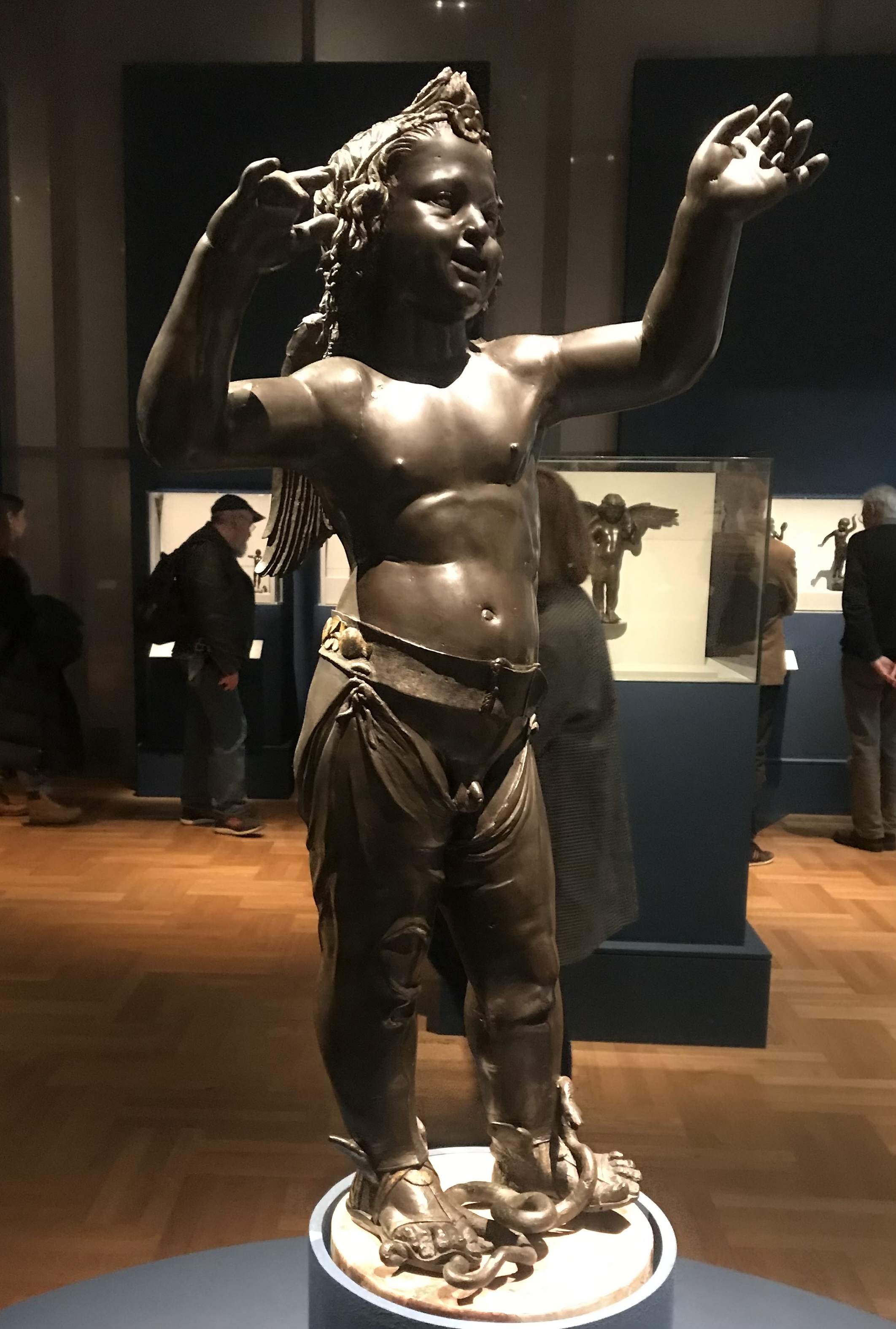
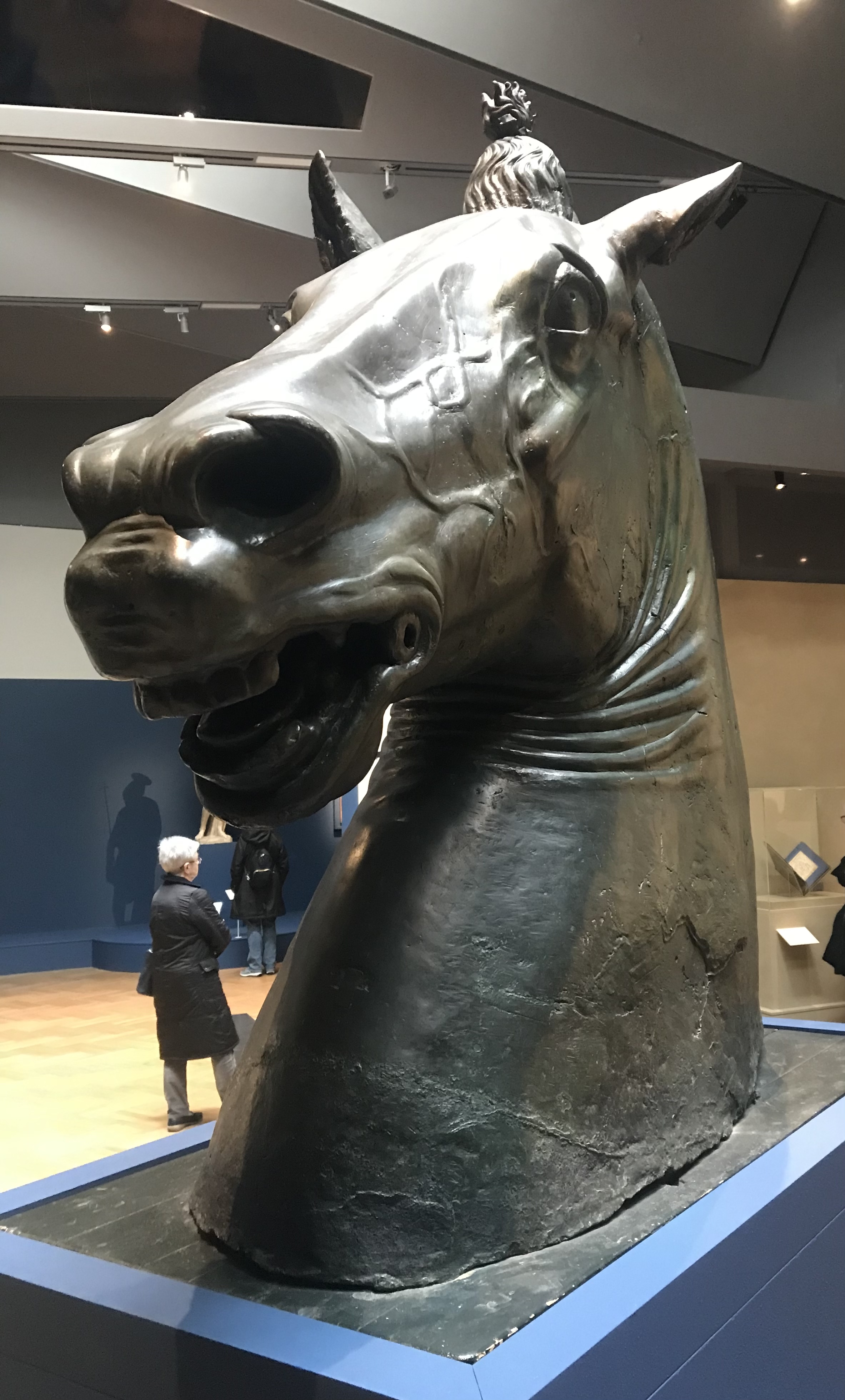
‘Spain and the Hispanic World’ at the Royal Academy is a mixed bag which doesn’t really aim for a coherent view but presents a large selection from the American Hispanic Society’s collection (I believe their building is being refurbished at the moment). There are works by El Greco, Velasquez and Goya as well as other items whose interest is more historical or even ethnographic. There are fascinating maps and they also have a fine set of knockers on display (thank you, I’m here all week).

Goya’s large painting of the Duchess of Alba (‘The Black Duchess’ – he also did a white one), used on posters for the exhibition, is interesting. You notice she is pointing down, and at first I thought she was drawing attention to the remarkable shoes she is wearing, which are silver and sharply pointed. In fact, there is a message written in the sand at her feet: ‘Only Goya’ it says. Goya treasured this picture and kept it for himself. Hmm.

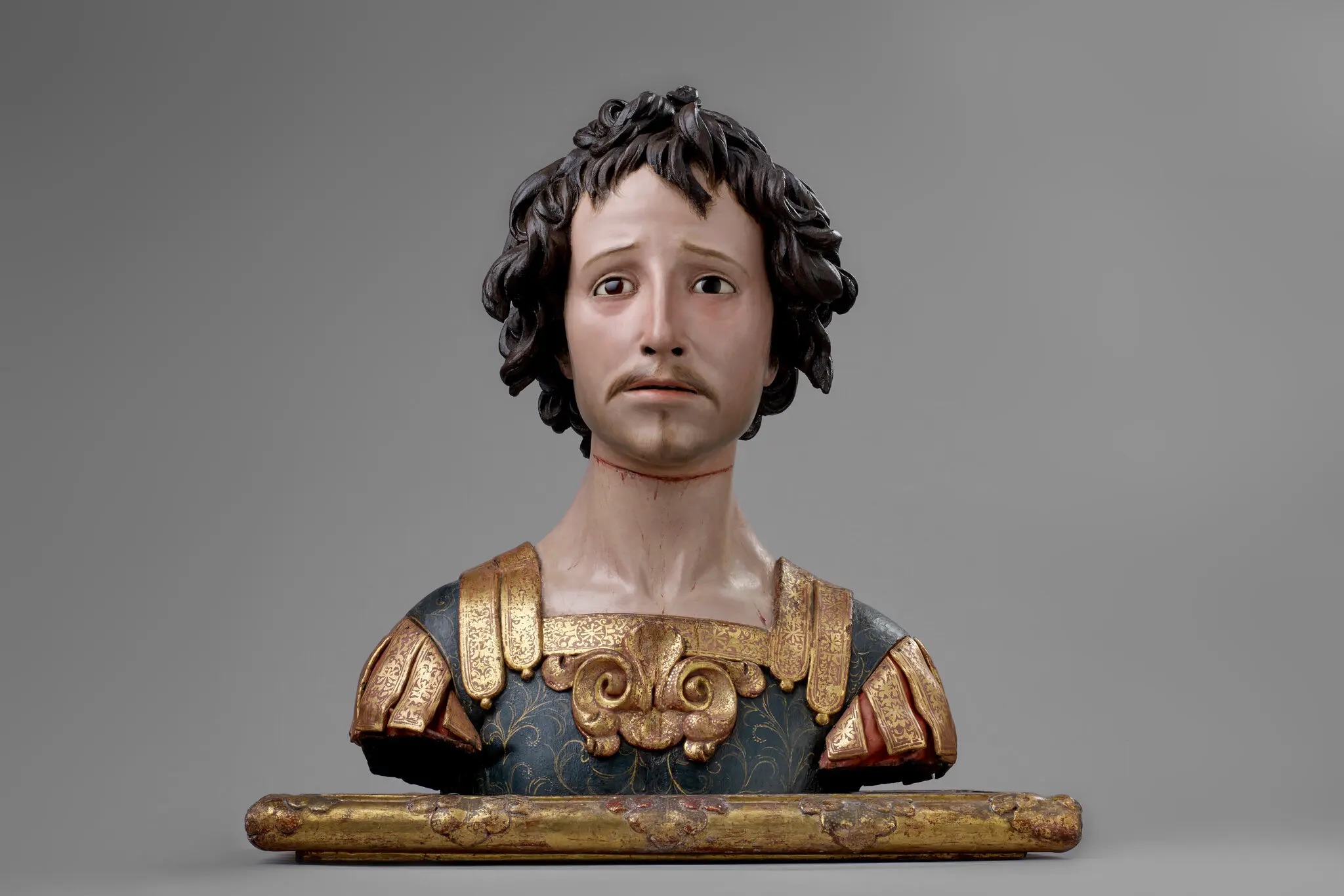
We also have a remarkable bust of Saint Acisclus, life size and unsettlingly realistic. The saint’s expression, which seems to change slightly when viewed from different angles, expresses a curiously anaemic distress at his head being cut off (here indicated only by a delicate red line).

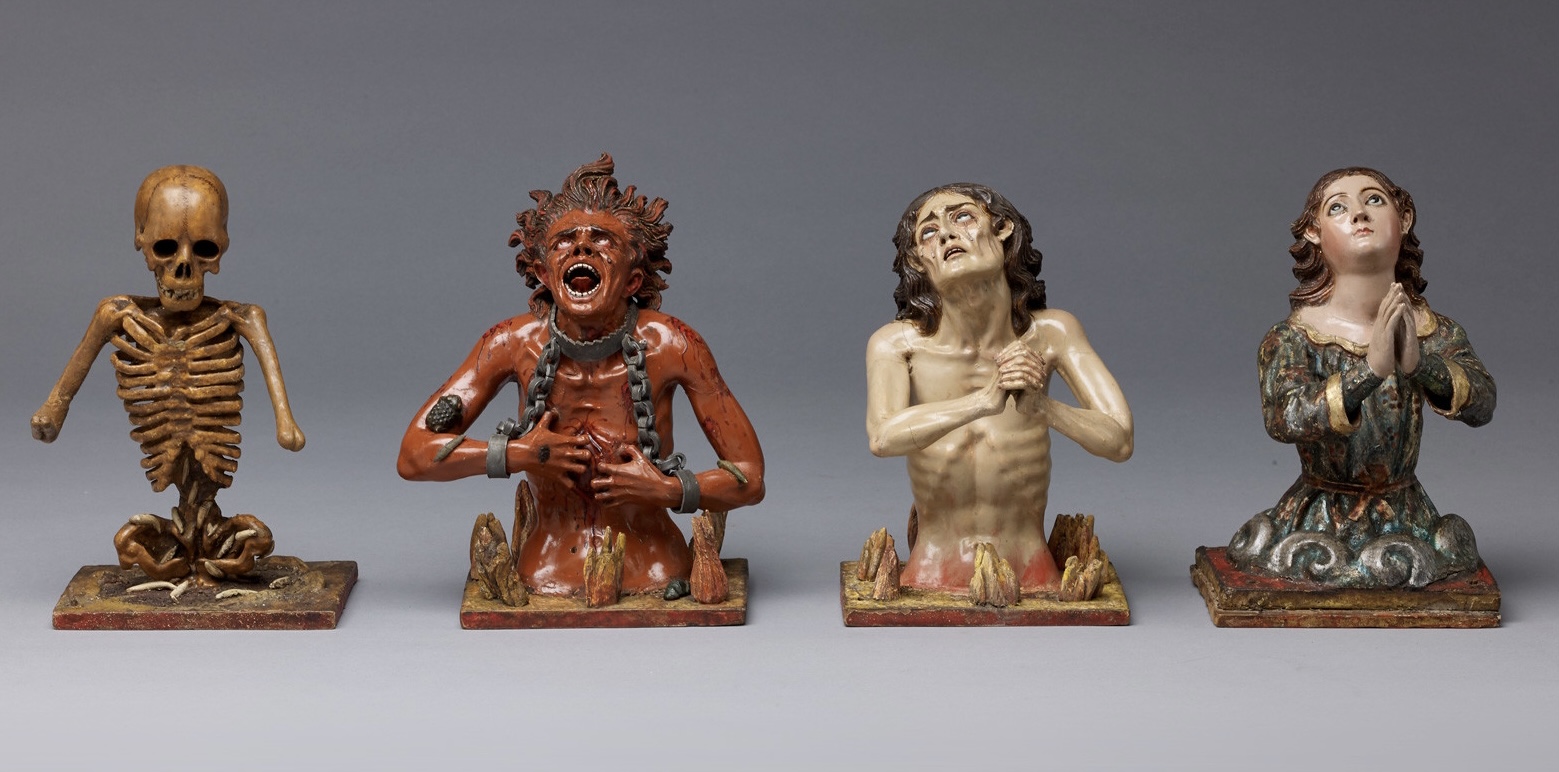
Also memorable is the set of little pieces depicting the Four Fates of Man (death, hell, purgatory and heaven). Death doesn’t quite fit here: it seems to suggest that total extinction is another option hereafter, which surely isn’t the orthodox view.

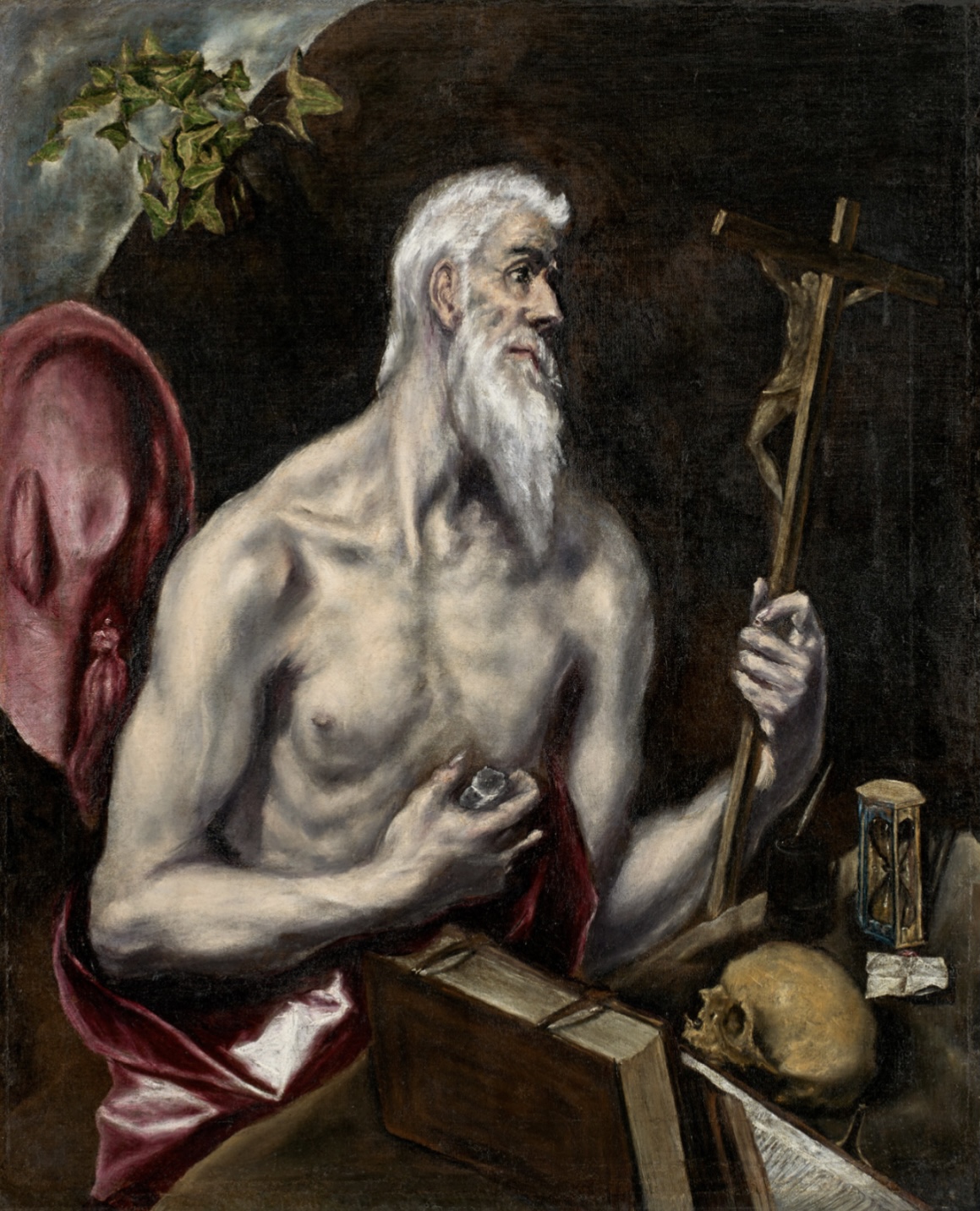
El Greco’s work is always fascinating and here we’ve got good old St Jerome, recognisable by the invariable presence of a cardinal’s hat (though he never seems to wear it). His usual friend the lion is not shown, though. You couldn’t mistake El Greco for anyone else. Did those distortions, that otherworldly sense in his paintings, really come in part from poor eyesight? People have said something similar about Turner.

Mother Goose

It’s a lot of fun.

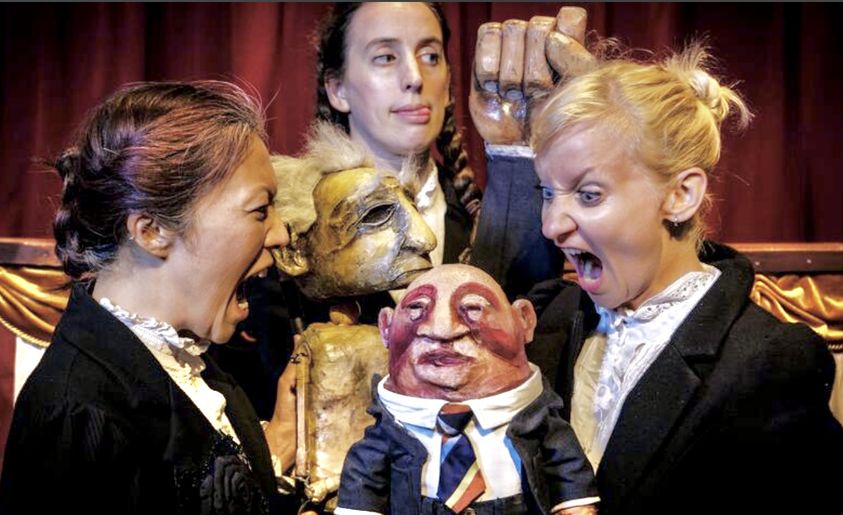
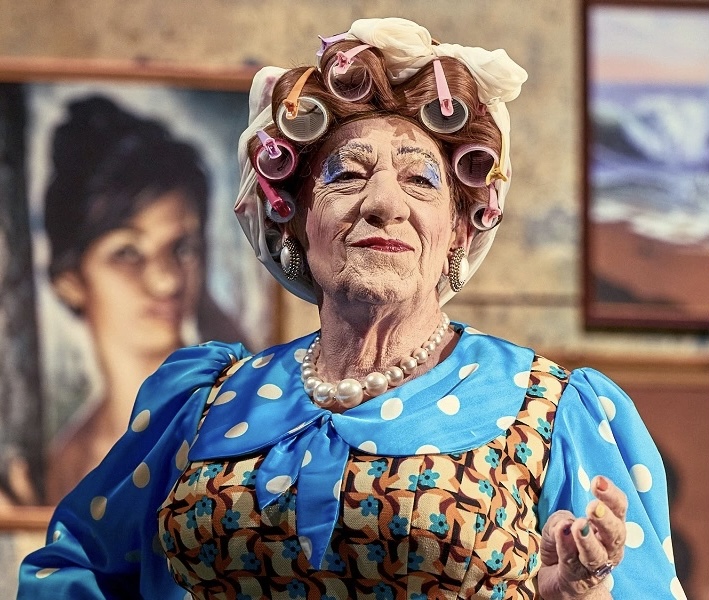
Mother Goose, starring Ian McKellen with John Bishop, is essentially a traditional pantomime, complete with absurd storyline, corny jokes, audience participation and of course, a dame.

In a pretty negative review, the Guardian said that if you were just going to see McKellen do his dame, you wouldn’t be disappointed, but that the rest of the show is underpowered. It is true that McKellen is really what the show is about: he is brilliant and it’s astonishing that at his age, he can take on a run of this length (touring till April). I think the Guardian is also right that when he briefly does a bit of Shakespeare straight, you kind of wish he would forget the panto and carry on. It is at least a welcome acknowledgement that he has played other parts besides Gandalf, a rôle we are reminded of perhaps a little too often here.

Yes, it’s true the jokes are not very sharp, especially the handful of political ones, but then this is panto, not satire. Granted, there is a sort of uneasiness about a pantomime with no children in the audience (a point they make a joke of). And I really wish they hadn’t decided to wrap things up with a rousing singalong of Sweet Caroline.

But… it’s a lot of fun.

Strange Clay

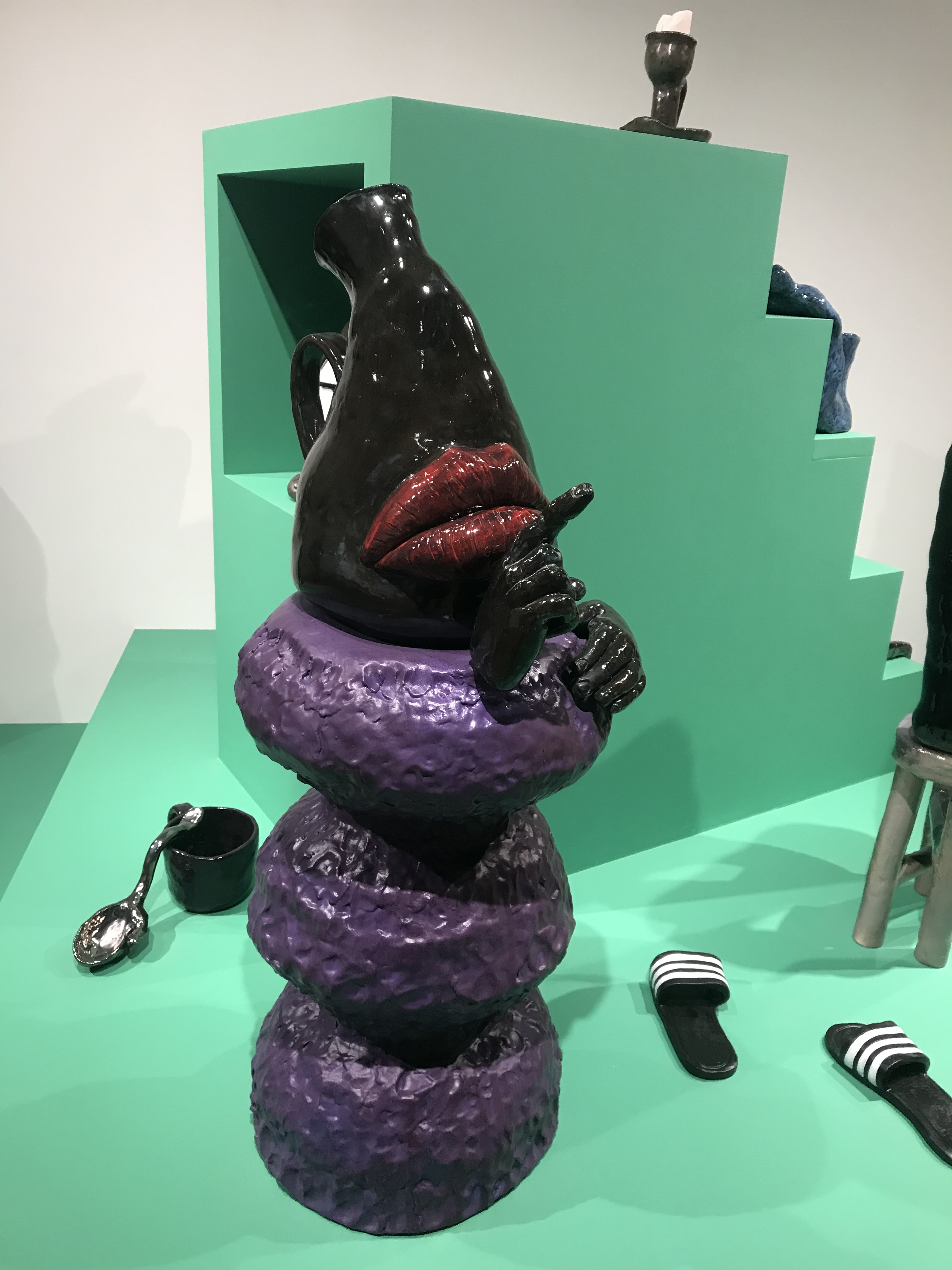
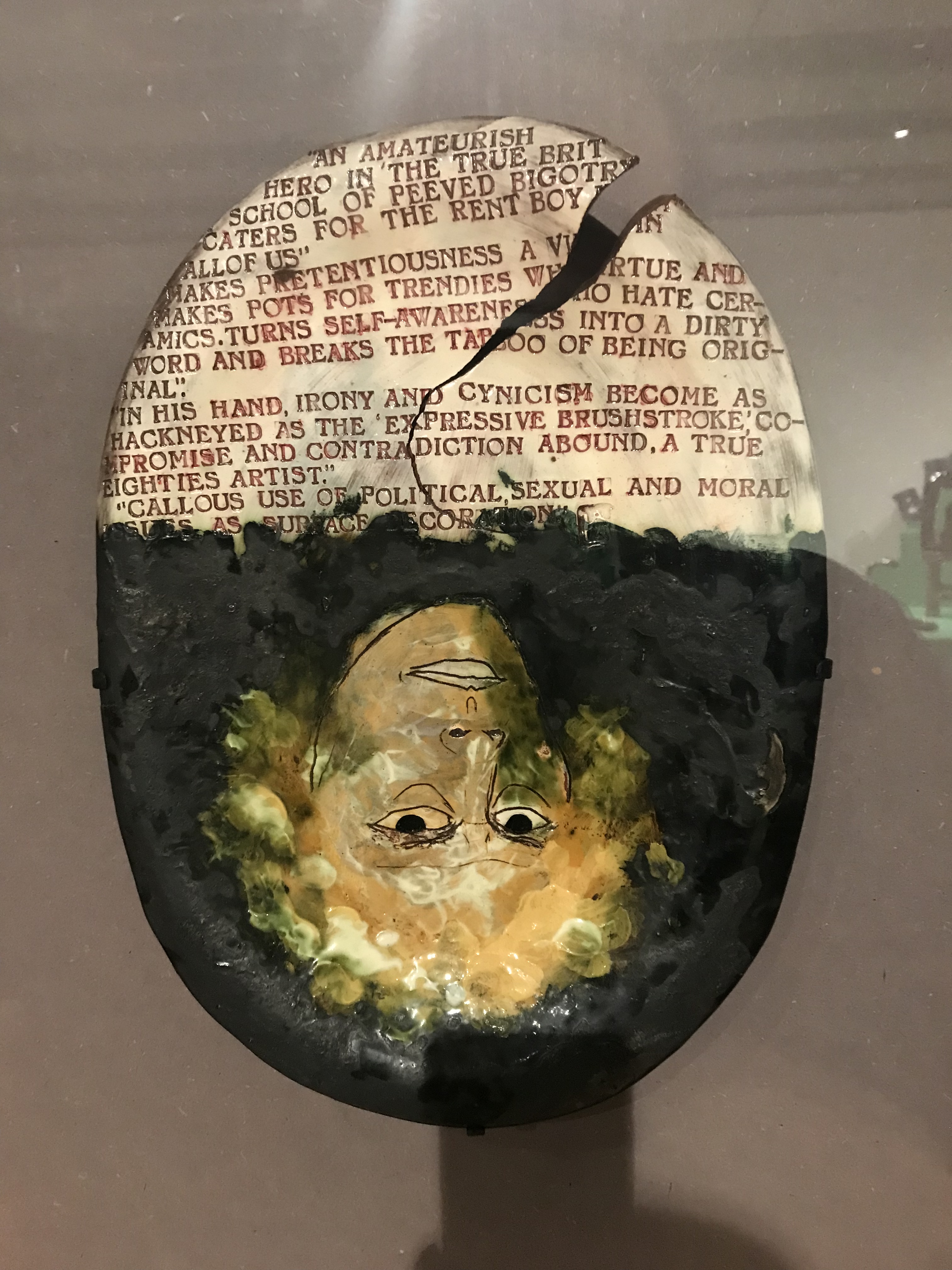
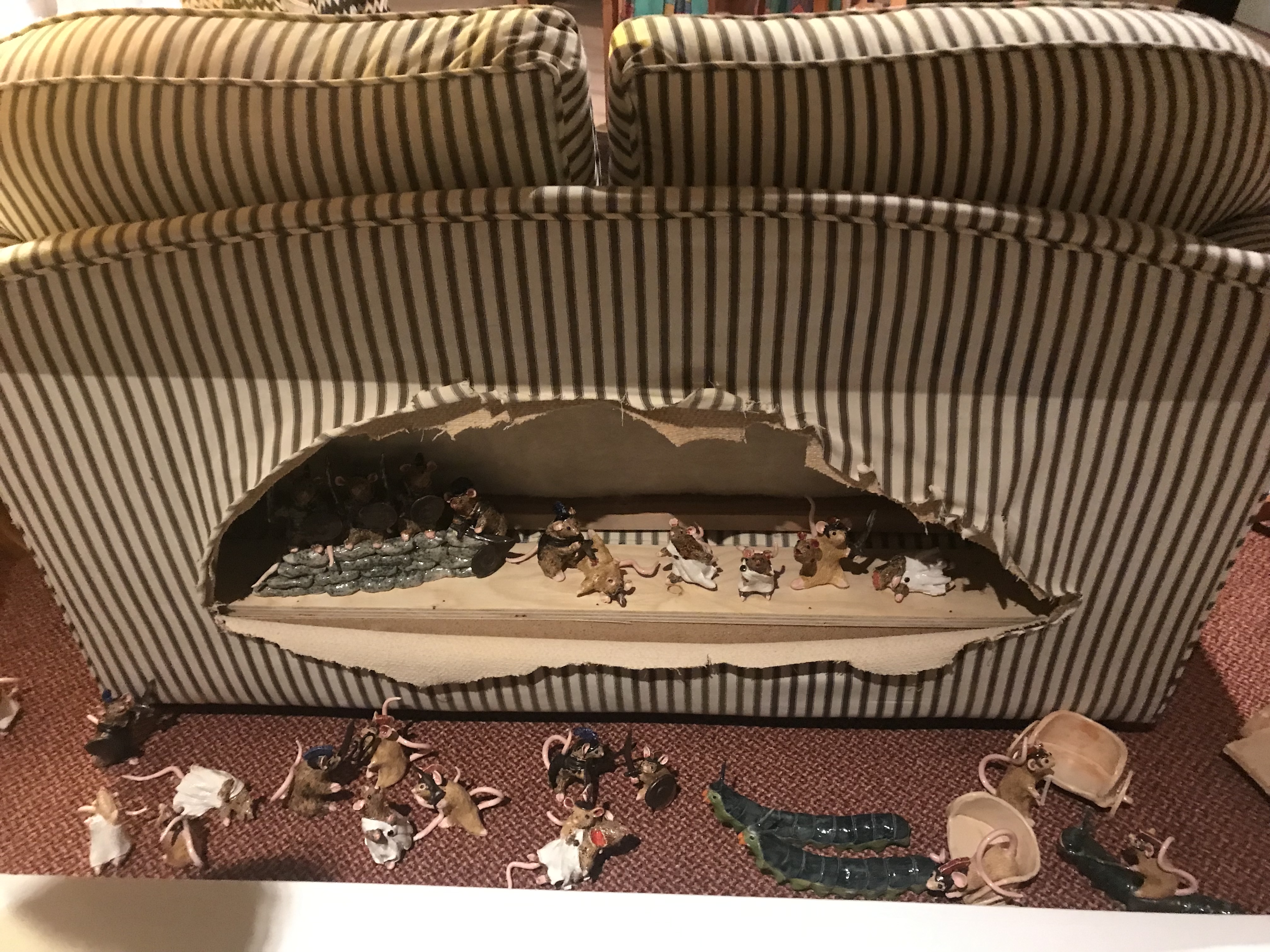
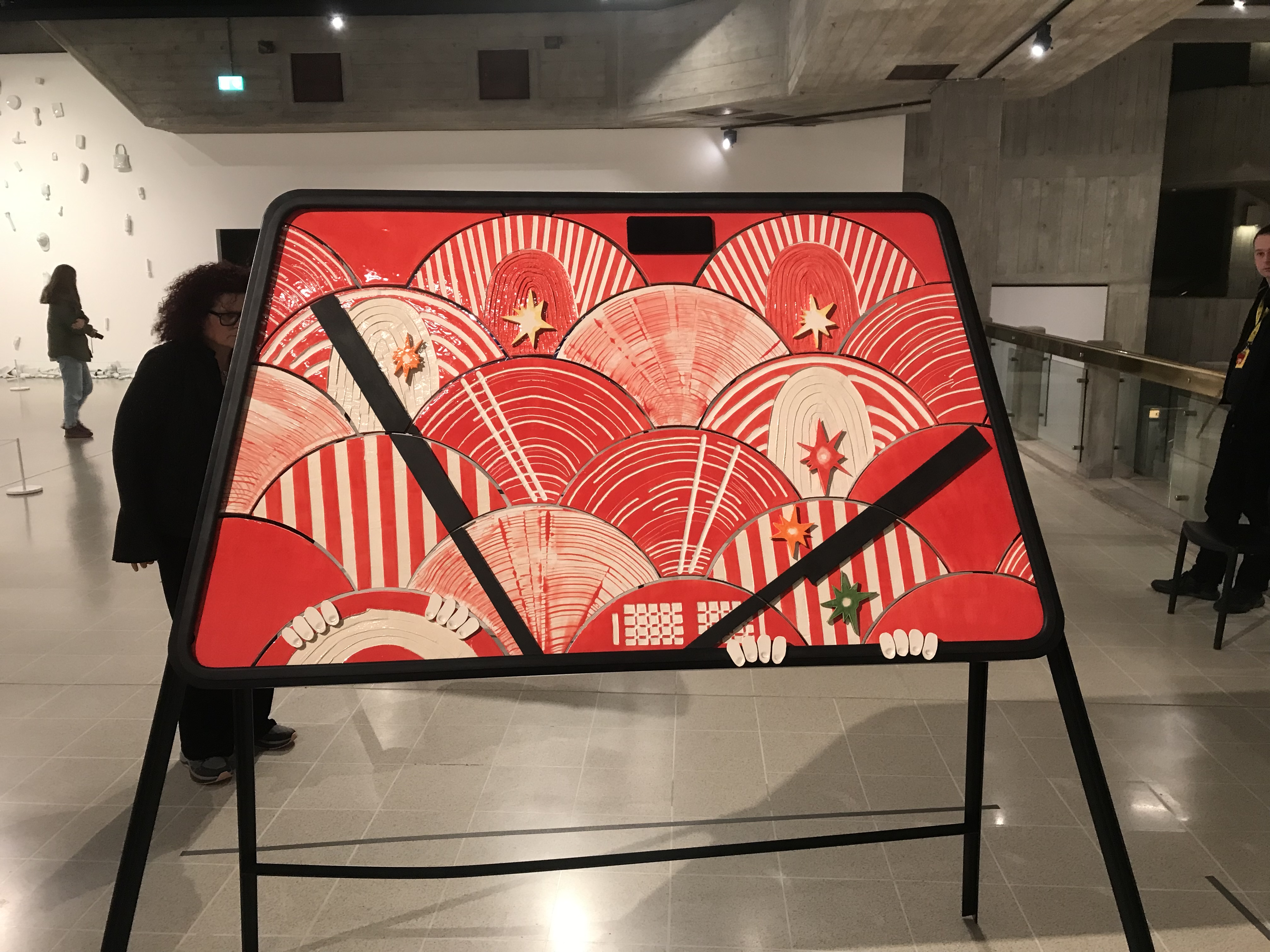
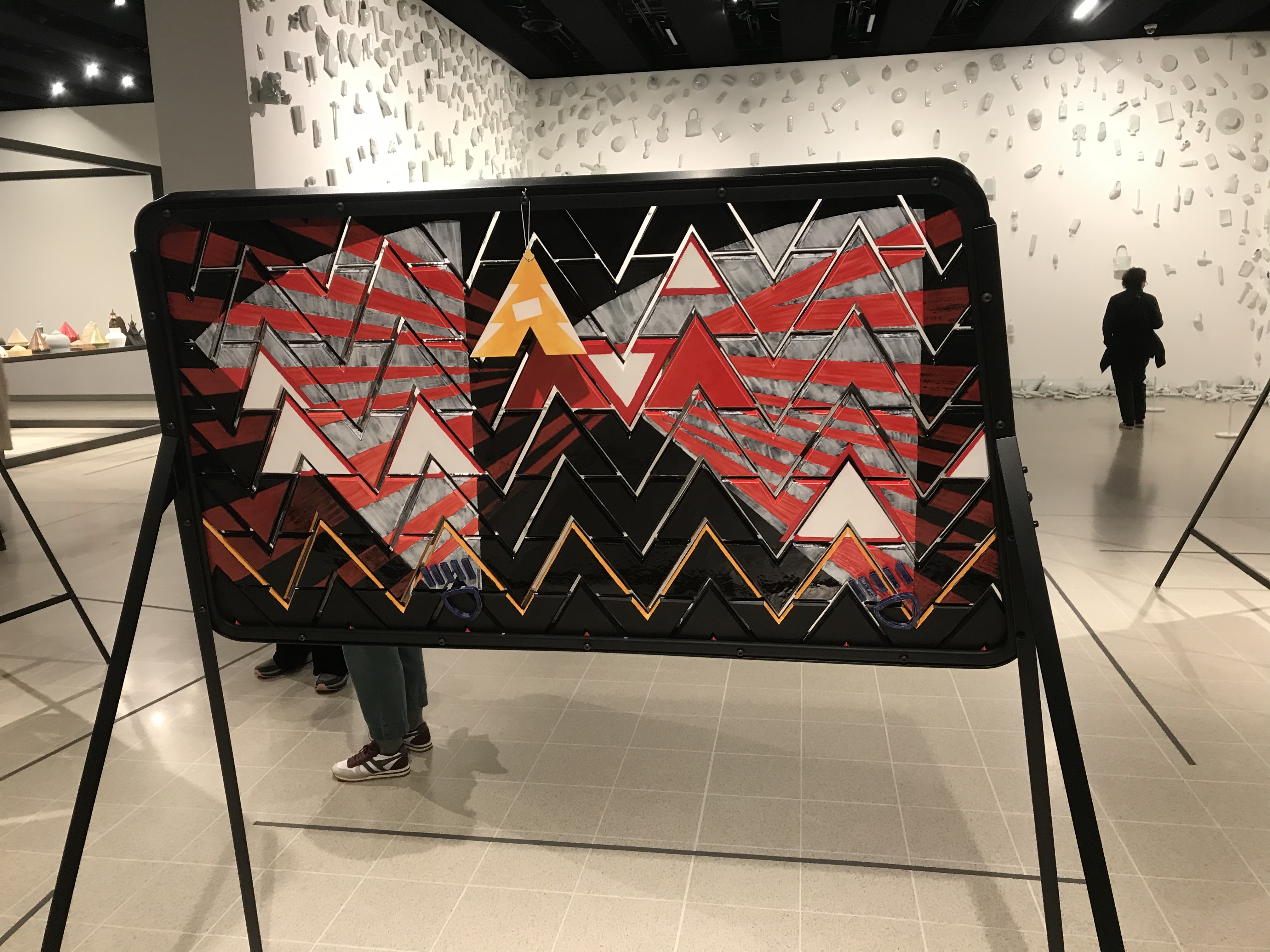
Went to Strange Clay at the Hayward Gallery. I feared this might be a bit austerely intellectual, but in fact most exhibits are attractive as well as interesting, and several are humorous to varying degrees. There is a self-portrait with critique by (Sir) Grayson Perry and a piece by Edmund de Waal, better known to me as the author of The Hare with Amber Eyes. I’m afraid the latter is the least enjoyable thing in the show: small white pots in vitrines hoisted above your head. Katharine rightly said it looked like additional light fittings… Generally though, the show is a lot of fun.

Crucible in the Rain

We went to see The Crucible at the Olivier. It’s a great production, with strong performances from all the cast. The stage was surrounded by a sheet of artificial rain which was used like a curtain – I’m not really sure why. Very effective use was made of the deeper part of the stage, which would occasionally be lit to show a little scene, someone approaching, or the accusing girls in niches like saints.

What did strike me was that although it is unquestionably deserving of its place as a classic drama, the play would get some criticism if presented to a modern writer’s workshop. It opens with a big slab of straightforward exposition, just spoken direct to the audience: all of that would probably be deleted by a current editor. One of the best episodes in the story is how Giles Corey refuses to plead and chooses to be crushed to death, knowing that this way his estate will pass to his sons, whereas if he were convicted of witchcraft it would be confiscated. Miller throws that away, having it merely described in brief. (He wishes, of course, to focus on John Proctor’s agonising over whether to provide a false confession that will save his life.)

Some of the force of the play is arguably lost because on Miller’s account there really was some witch stuff going on: some of the girls did dance naked, help conjure the dead, and drink (chicken) blood. At the close Tituba and Sarah Good are shown eagerly waiting for the Devil to come and take them. So it seems the authorities are sort of right about the crime, merely pinning the blame on the wrong people.

Finally, things are wrapped up with another slice of exposition – what happened afterwards? It dissipates some of the impact of the deaths, especially Proctor’s, if we go on to hear about remarriages and compensation.

Whatever you think of that, it’s a great play with many memorable passages, and this is a great production.

Admonitions of the Instructress

I went to see the ‘Admonitions of the Instructress to the Court Ladies’ at the British Museum, a Chinese scroll so delicate it is only on display for a few weeks. It may be as old as the fifth century, and the text is from the third. Many of the episodes depict exemplary Empresses: in this picture Lady Feng, the Emperor’s consort, bravely shields the Emperor from an escaped bear, which luckily is killed just in time by two guards, an incident which occurred in 38 BC.

The scroll originally had twelve panels: the first three are lost. There is a twelfth-century drawing which includes the missing bits: unfortunately we can see from comparing the surviving panels that the copy is not totally accurate. It probably gives a good idea of what is missing, but might also be a later reconstruction of panels that were already lost even back then. The depth of history in the thing is breathtaking.
The British Museum bought the scroll from Captain Clarence Johnson, discreetly passing over how he acquired it: it seems clear that in fact he helped himself to it during the Boxer Rebellion.

Frieze Sculpture

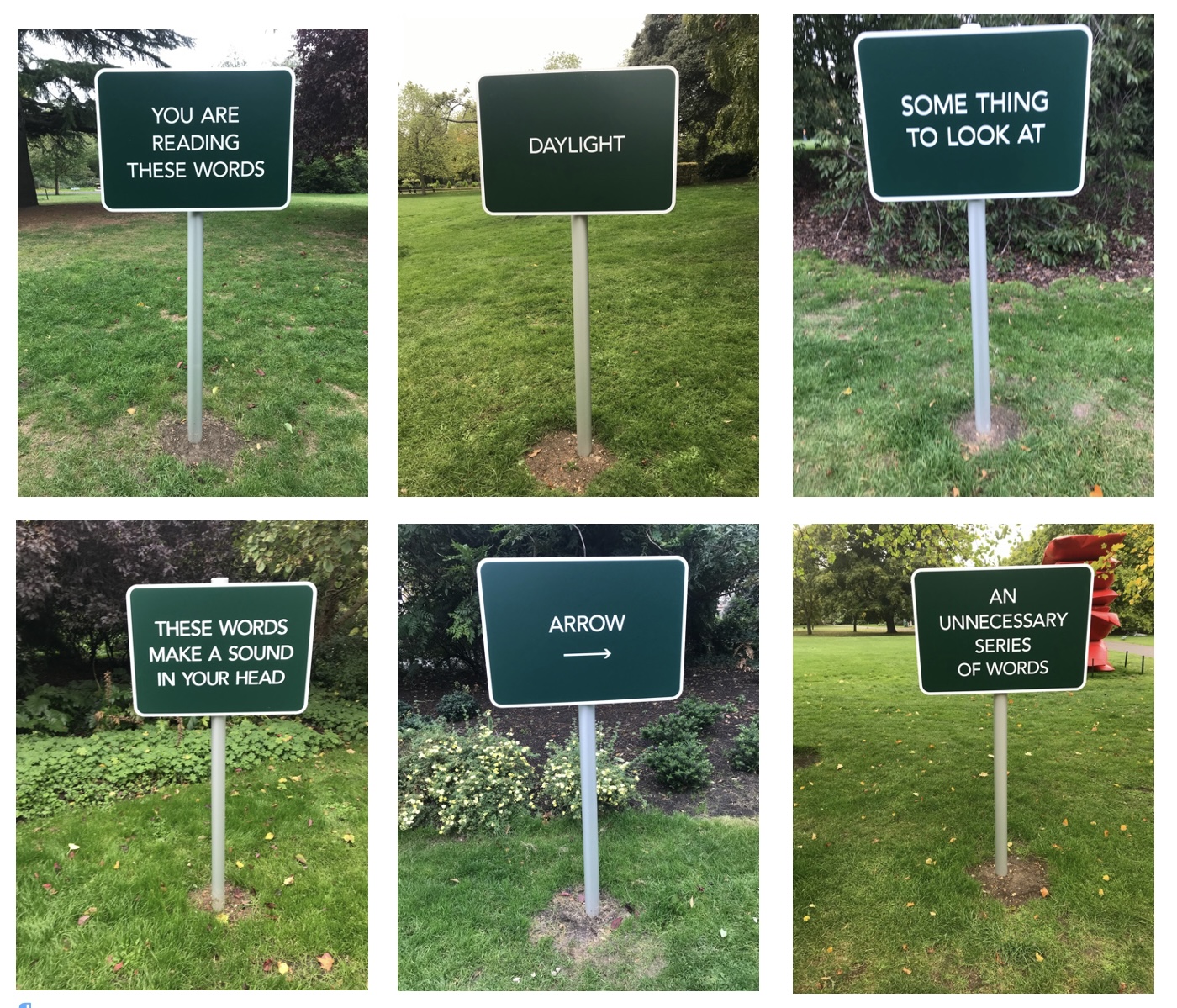
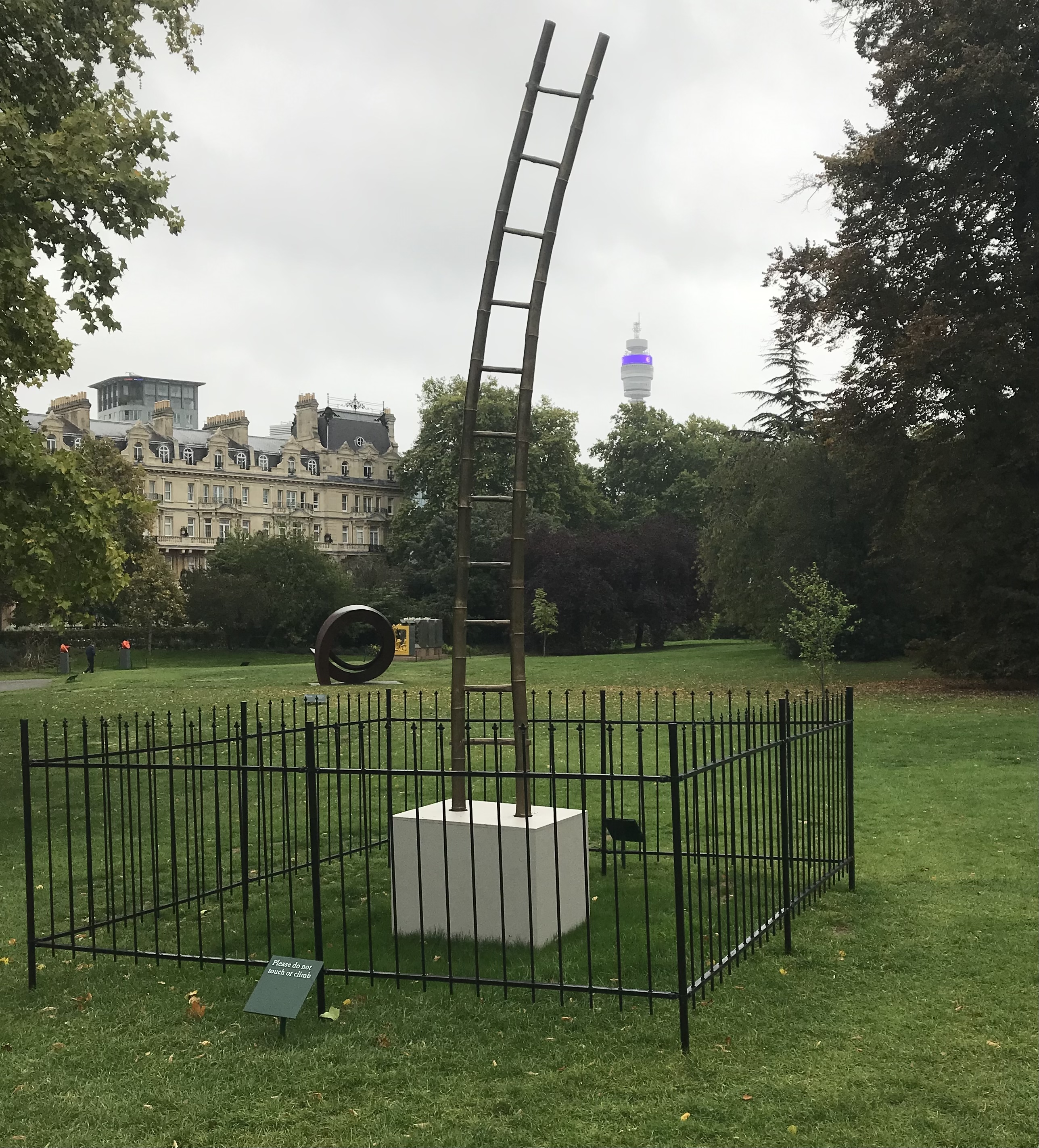
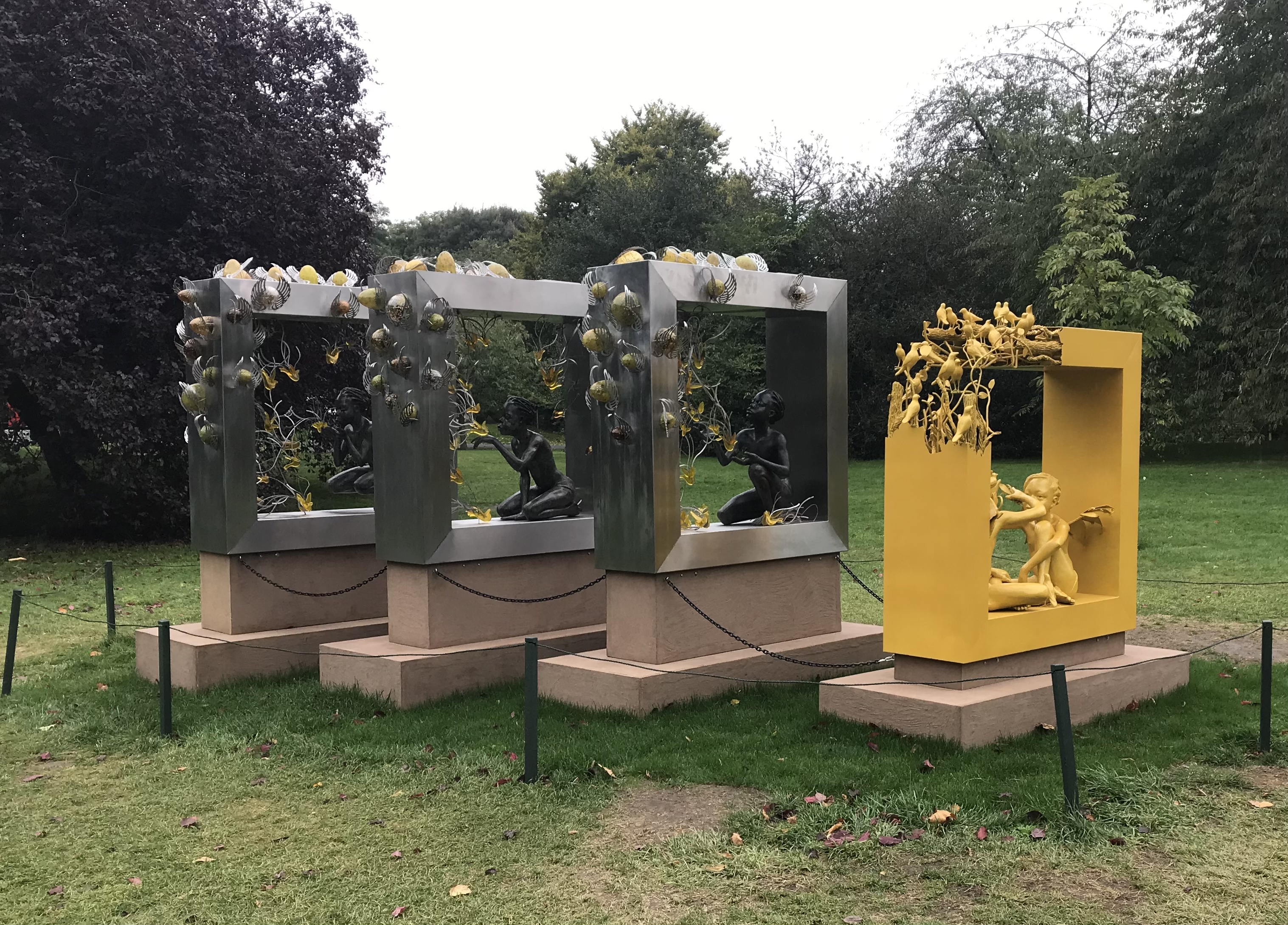
I went to see the sculpture exhibition in Regent’s Park. It’s worth a look: most of the pieces are a bit jokey (in a good way), but Sim and the Yellow Glass Birds is quite poignant. I liked the fake park signs: I wouldn’t be at all surprised to see one on the cover of a philosophical text one day.

Rime

We saw a performance of ‘The Rime of the Ancient Mariner’, with selected music by Purcell, at the Queen Elizabeth Hall. Rory Kinnear did an excellent delivery of the poem, while the music came from the Orchestra of the Age of Enlightenment, memorably including a theorbo, a kind of gigantic lute.

In some ways it was an odd combination, as the poem is obviously not contemporary with Purcell. It worked pretty well, though: perhaps it helped that Coleridge’s poem is self-consciously archaic in manner – something that made it an uncomfortable inclusion in the Lyrical Ballads when first published, as that was supposed to demonstrate poetry in ordinary language. The content of the Rime doesn’t really bear much examination, but it is full of powerful images and phrases, which explains its enduring popularity.

Eureka Day

We went to see ‘Eureka Day’ at the Old Vic. Originally produced in 2018 in the USA, it’s about a very progressive, liberal community in Berkeley attached to a school coping (or not) with an outbreak of mumps and conflicts over vaccination. Those issues have gained extra relevance since, of course. The first half is very funny, with a lot of affectionate but sharp parody of how ‘right-thinking’ people get tangled up in discussions of such matters as whether to add an entry to a drop-down menu on ethnicity to cover ‘trans-ethnic adoptee’, and an online discussion that goes badly wrong. I think many Guardian-reading members of the audience enjoyed recognising themselves and their friends (though there were gasps of horror when anti-vax points were made).

The second half gets more serious, as we hear of children seriously ill and worse. Things perhaps get a bit schematic here, with things happening to people in order to provide clear motives for their views. But it’s pretty fair (as poor Don, who keeps trying to lead discussion in positive directions says, ‘nobody in this room is a villain!’) and it remains both engaging and amusing as well as setting out the issues. Lots of nice little touches.

The cast, including Helen Hunt and Mark McKinney, are very good, and I recommend it.

Ian McEwan

We went to see Ian McEwan talk about his new book ‘Lessons’. Quite interesting. At one point, talking about the appeal of music he spoke of ’the relief from meaning’ – unexpected from a novelist! Just need to read the book now.

The Books of Jacob

Jacob Frank

The main problem with this book is obvious at first sight: it is just too big! Olga Tokarczuk is a great writer and no doubt deserved her Nobel Prize. I was looking forward to reading this one because I enjoyed her book Flights, a strange, fragmentary, but very readable and amusing meditation on travel and curiosity. The Books of Jacob also has an interesting subject: it tells the historical story of Jacob Frank, the eighteenth century leader of a Jewish cult that picked up on the legacy of Rabbi Sabbatai Tzvi. Tzvi (as Tokarczuk spells him – ‘Zevi’ is a more pronounceable version) was a self-proclaimed Messiah who converted to Islam under duress. Many of his followers, rather than giving up on him, assumed that they were to follow his lead, converting either sincerely or just outwardly. Frank’s followers, somewhat similarly, were instructed to reject the Talmud and undergo Christian baptism, though it seems, according to this account, that they secretly practised scandalous rituals of their own devoted to the principle of purification through sin. The book relates their struggles with the authorities in several countries and with unconverted Jews, the help and indulgence they sometimes got from Christians impressed by the possibility of bringing hundreds of Jews into the church; Jacob’s imprisonment in Częstochowa, his release and last years living like an aristocrat in Offenbach. It seems to be a largely accurate historical account, the main exception being the character Yente. Yente, a sick old woman, is given a charm to wear which will keep her alive until a family wedding is complete, but she swallows it, becoming an immortal spirit who watches the lives of her family thereafter. She could have been a handy way of telling the story, but in fact only gets an occasional mention.

The book is well written, but it tells the story in immense detail, never cutting out episodes or characters that seem relatively peripheral or inconsequential. Many letters are given in full, long letters between minor characters discussing, for example, whether it is better to write in Latin or the vernacular. The letters are highly plausible in terms of characterisation and history, and they were probably enjoyable to write, but they add even more length to a text which is already radically oversized (I think it should have been no more than about a quarter of its actual length). Finishing the book, I’m afraid, honestly becomes a bit of a slog.

The thing is, long books can be easily readable if they are really interesting. What I wanted to know here was what on Earth motivated these serious, thoughtful Jews to accept Jacob as divinely inspired, rejecting their own heritage and ethical standards? Some of the things they do – deliberately triggering a pogrom against their Jewish enemies by accusing them of murdering Christian children for their blood, for example – seem unforgivable. Alas, that core issue remained a mystery to me while more and more detail of events piled up.

I can’t therefore recommend the book – but have a go at Flights if you want to know what’s so great about Tokarczuk.