During our building project, the cover of our garden hose reel was lost, so I made a new one. I thought I would paint a river god on it, so I’m calling this chap Vandelius, after our local river the Wandle.
A selection of writing competitions that I might enter, with deadlines in September.
The John McGivering prize is run by the Kipling Society and entries must have some kind of link to Kipling. This year they must also be about food and drink and can be up to 2,500 words long. It costs £8 to enter and you could win £350, but time is short as the deadline is 1 September.
Terrain will take up to 5,000 words: entry is $20 and the top prize $1,000. You have until 2 September.
If you missed last month’s early deadline for Aesthetica, you can still catch the late entry deadline of 8 September, but will pay a little more – £24. The word limit is 2,000 and you can win £2,500
The Royal Society of Literature’s V.S.Pritchett prize is back, with a maximum word count of 4,000. It costs £8 to enter and the top prize is £1,000. Enter by 13 September.
Ink of Ages is looking for historical or mythological stories (no time machines, please). The word limit is 2,000: it’s free to enter and there’s no cash prize but the winner will get a whole lot of stuff apart from seeing the story published. They will send a consignment of books and various items or merchandise, and they will also produce for you a custom piece of art which might be a map, a family tree, or some other graphic. Enter by 15 September.
The Dinesh Alirajah contest this year is on the theme ‘The Unspoken’. Again, it’s free. Stories must be between 2,000 and 7,500 words and you can win £500. The deadline is 22 September.
All the rest have a deadline of 30 September.
Louise Walters is again running her quirky ‘Page 100’ contest in which you submit exactly that page from your manuscript. It costs £10 and you win a book club subscription plus some extra feedback on your work.
Hammond House has the theme ‘Time’ this year. 1,000 to 5,000 words, £10 to enter, and a prize of £1,000 (plus a mention on the local arts TV channel and a place of honour in the annual anthology).
The regular Henshaw contest, now run by Hobeck Books, looks for up to 2,000 words. £6 to enter and £200 to be won.
Christmas already? Crowvus have launched their annual Christmas Ghost story competition. Up to 4,000 words, £3 to enter, win £100.
The Iowa and John Simmons competition is for a collection of short stories running to at least 150 pages. It’s free, but there’s no prize beside publication.
Maybe you prefer money? Also for a collection, Juniper wants 55,000 to 75,000 words. $30 to enter and a prize of $1,000
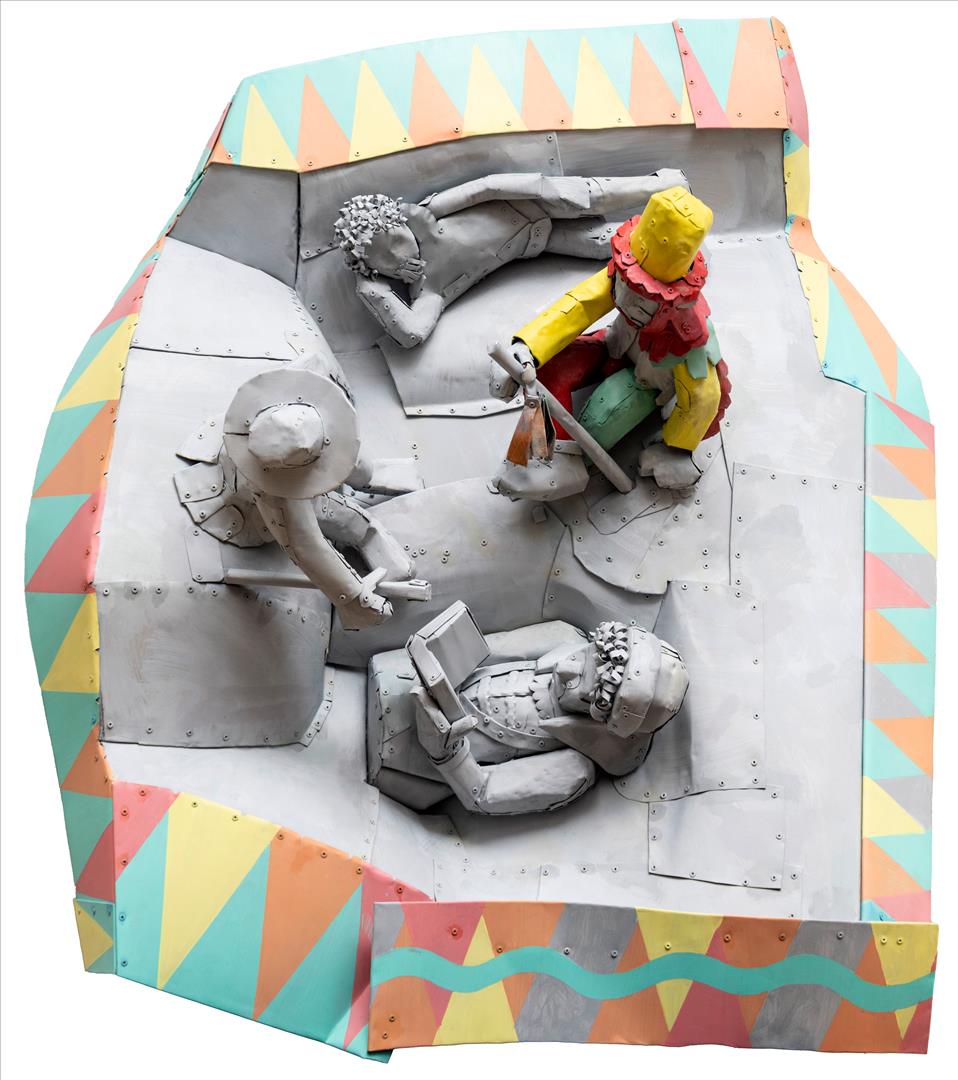
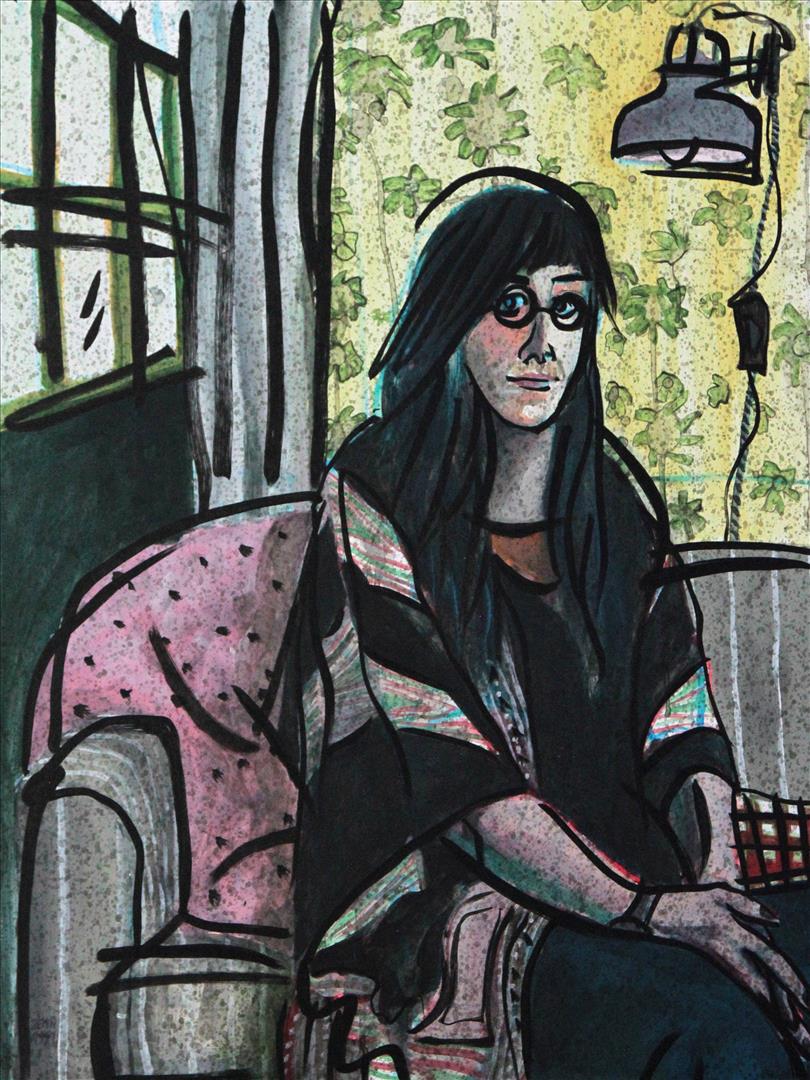
What to do about the Royal Academy Summer Exhibition? Every year members may exhibit up to three works, but there is also an open competition to which anyone can submit a work, and this is the part that captures the public imagination (my late father submitted a couple of his surreal paintings, without success). Most of the pieces are for sale, at prices ranging from less than £250 up to tens of thousands or more. The result is a wildly varied ragbag of every kind of art from the cornily lowbrow to the most opaquely avant garde, and from works of peerless skill to casual daubs. Quite a few of the works on display are jokey or entertaining novelties. The Academy likes to show as many as it can, so some small pictures are left way up the gallery wall where they cannot be seen properly. It’s all sort of fun, but it isn’t coherent or representative and not much is memorable.
No information about the artists is given beyond their name, and if I were in charge, this is what I would change. I would give a picture and short bio of each artist beside their work. This year’s pieces would be low on the wall, with the opportunity to show others by the same artist directly above, with each vertical space reserved for one artist. I think a little context like this would make the whole thing more interesting.
That would mean fewer artists on the walls, but I would compensate with a big online show, which would also be displayed on screens in one gallery.
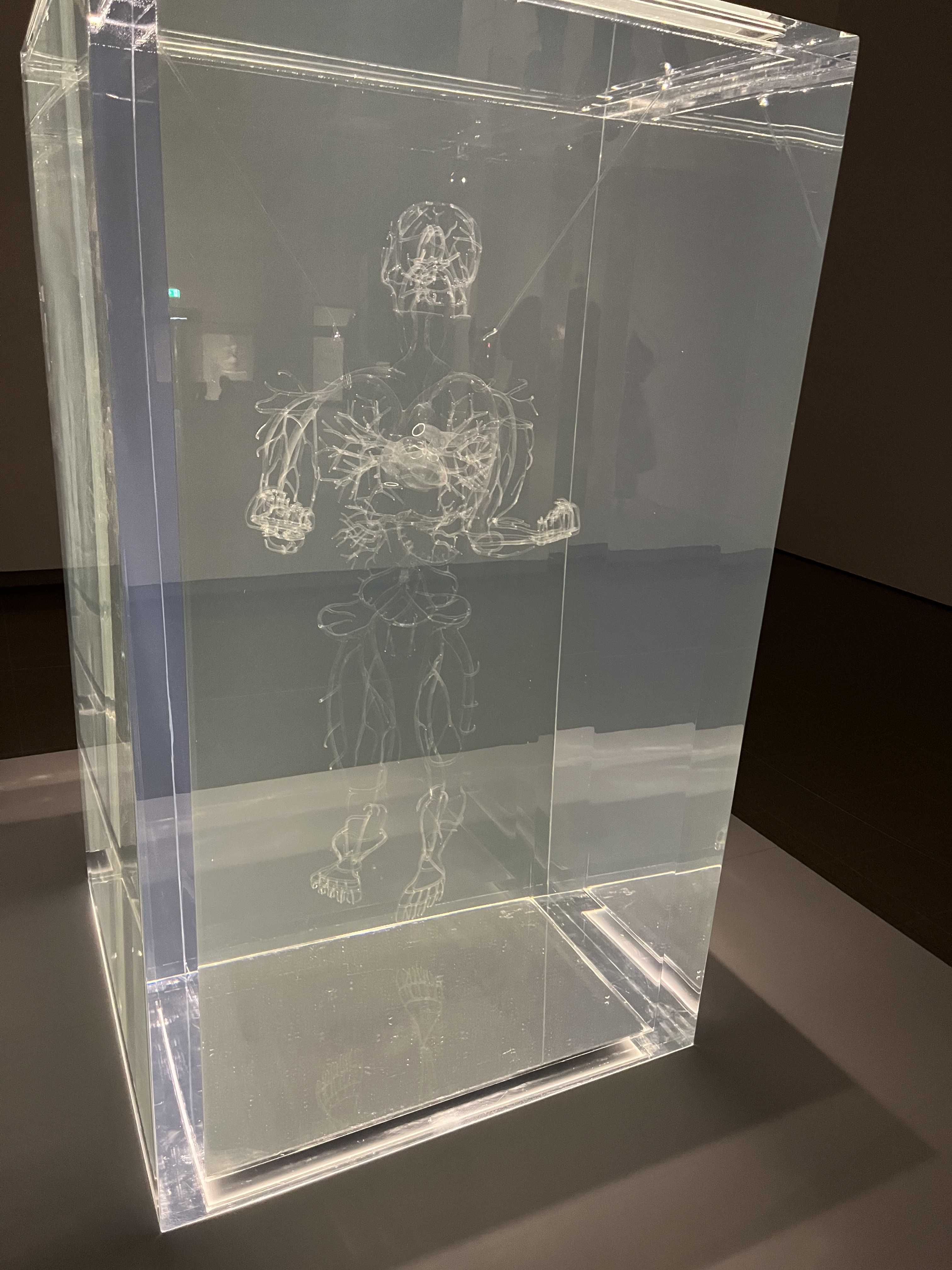
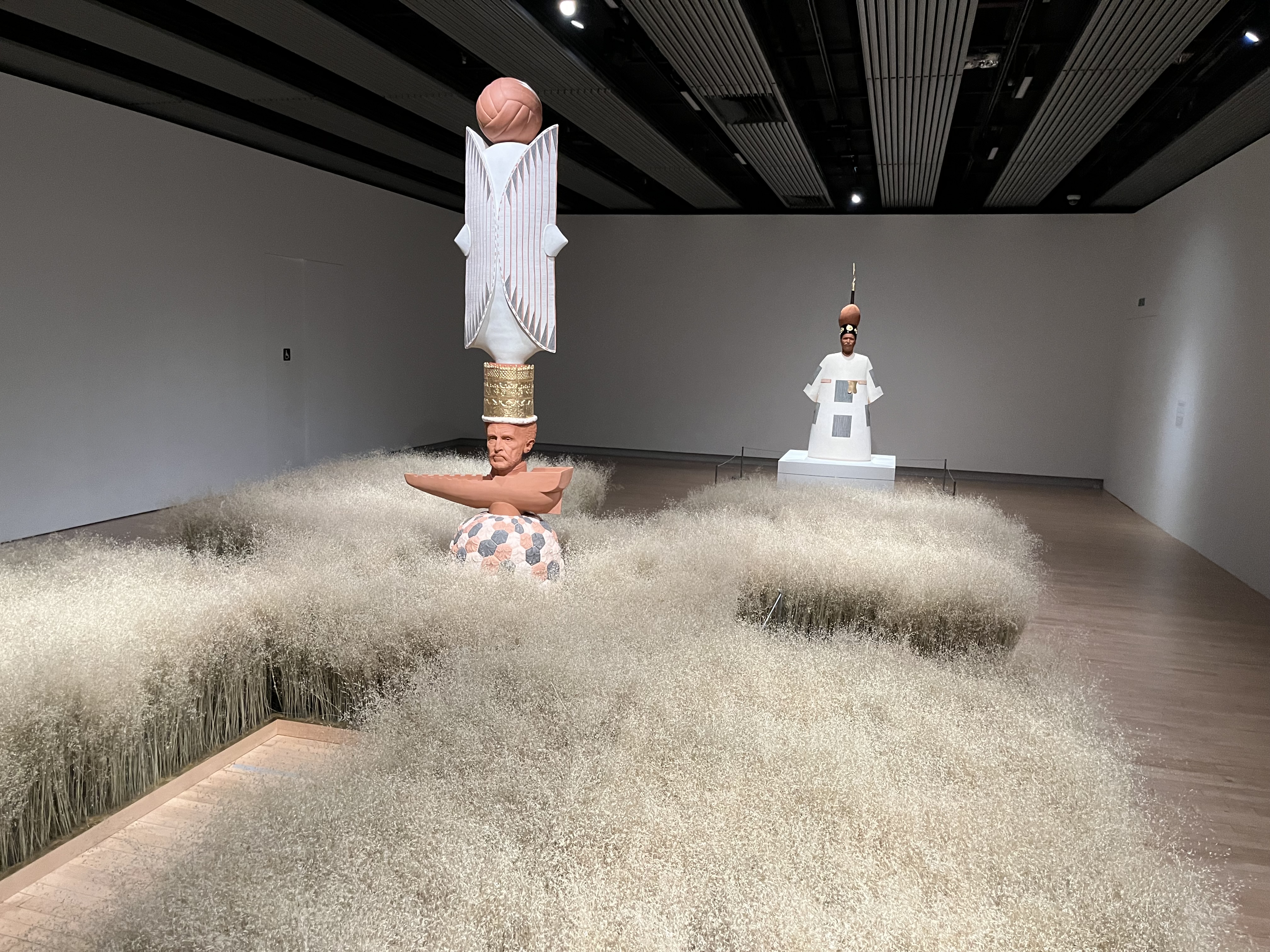
Tavares Strachan: There is Light Somewhere, at the Hayward, is striking and provokes both thought and quibbles. It features many striking pieces. Heads of black heroes, either huge and crisscrossed with cracks full of writing (which I couldn’t read), or open to reveal another head within, or fronted by an African tribal mask. Celebrations of the invisible (Strachan’s own encyclopaedia, glass statues suspended in clear oil). And pieces that relate to aspirational journeys, whether a Black Star ship amazingly on the gallery roof, black astronauts, or Strachan’s own journey to the North Pole, where he planted the flag of his native Bahamas, and shipped back a block of ice.
It seems clear that this show is about black aspiration, a search for light in the darkness and within the self. The message is encouraging, inspiriting, not downbeat, but even without that positive context most of the works are well worth seeing.
The quibbles? Some of the people in the encyclopaedia don’t seem all that invisible (Mary Woolstonecraft? Xenocrates?) while others perhaps deserve to be (minor characters from cartoons?). It’s not clear that the African people who made the masks would have liked their being used here, nor whether all the heroes would welcome wearing them. Is Septimius Severus the Roman Emperor here because he was born in Africa? But he is surely a leader of European imperialism (clue’s in his title).
But those are indeed quibbles. A memorable exhibition.
A selection of writing competitions with deadlines in August that I might enter.
Black Warrior (from the University of Alabama) wants stories up to 6,000 words, by 2 August. Entry is $20 and they say there is a cash prize, but not how much. Let’s hope it’s more than $20.
Aurora (from the East Midlands) is back, looking for stories up to 2,000 words: entry is £9 and you can win £500 plus membership of the Society of Authors. Deadline 7 August.
Gival wants between 5,000 and 15,000 words: $25 to enter and top prize $1,000. Deadline 9 August.
Juxtaprose will take as few as 500 words or as many as 7,000: it’s $15 to enter, you could win $1,000 and the deadline is 11 August.
Book Pipeline’s standard deadline is 20 August (pay more for a later entry). They have ten different categories: for literary pieces the word count can be between 40,000 and 120,000. It’s $45 to enter and there’s a prize of $2,500 for each category.
The Westerwood competition from the Scottish Association of Writers looks for 2,000 to 3,000 words: £7 entry and a (rather modest?) £100 prize. Enter by 24 August.
The Masters Review summer competition is for stories up to 6,000 words long: $20 entry and $3,000 prize. Deadline 25 August.
OTP look for 1,000 to 5,000 words: entry is free and if successful you’ll be paid their standard fee. Stories must be on the theme ‘Expertise’ and be submitted by 30 August.
All the rest have that psychologically compelling end-of-the-month deadline (31 August)
Publishing Lab want full-length works, either novels or collections. $28 entry and they will give the winner a contract and $10,000 advance.
Aesthetica look for up to 2,000 words: £18 to enter and you could win £2,500, an Arvon course and other goodies.
NAWG want stories between 500 and 2,000 words: a £5 entry fee gets you the chance of a £200 prize.
If you get anywhere with any of these, do let me know!
We had some roof tiles (Acme brand, of course, suitable for dropping on the head of Wile E Coyote) left over from our recent building project. I thought I might try painting some with the kind of flower design that is the traditional decoration for narrow boats. I drew out the design, traced it onto the tile, and filled in with gesso to provide a decent surface to paint on. Once painted I used a stencil to spray varnish on the painted area. It all worked OK, but I think the fact that I was copying meant I didn’t quite get the free, stylised look, and the colours are a bit light. Still, I quite like them!












 Seen and Done