Seurat

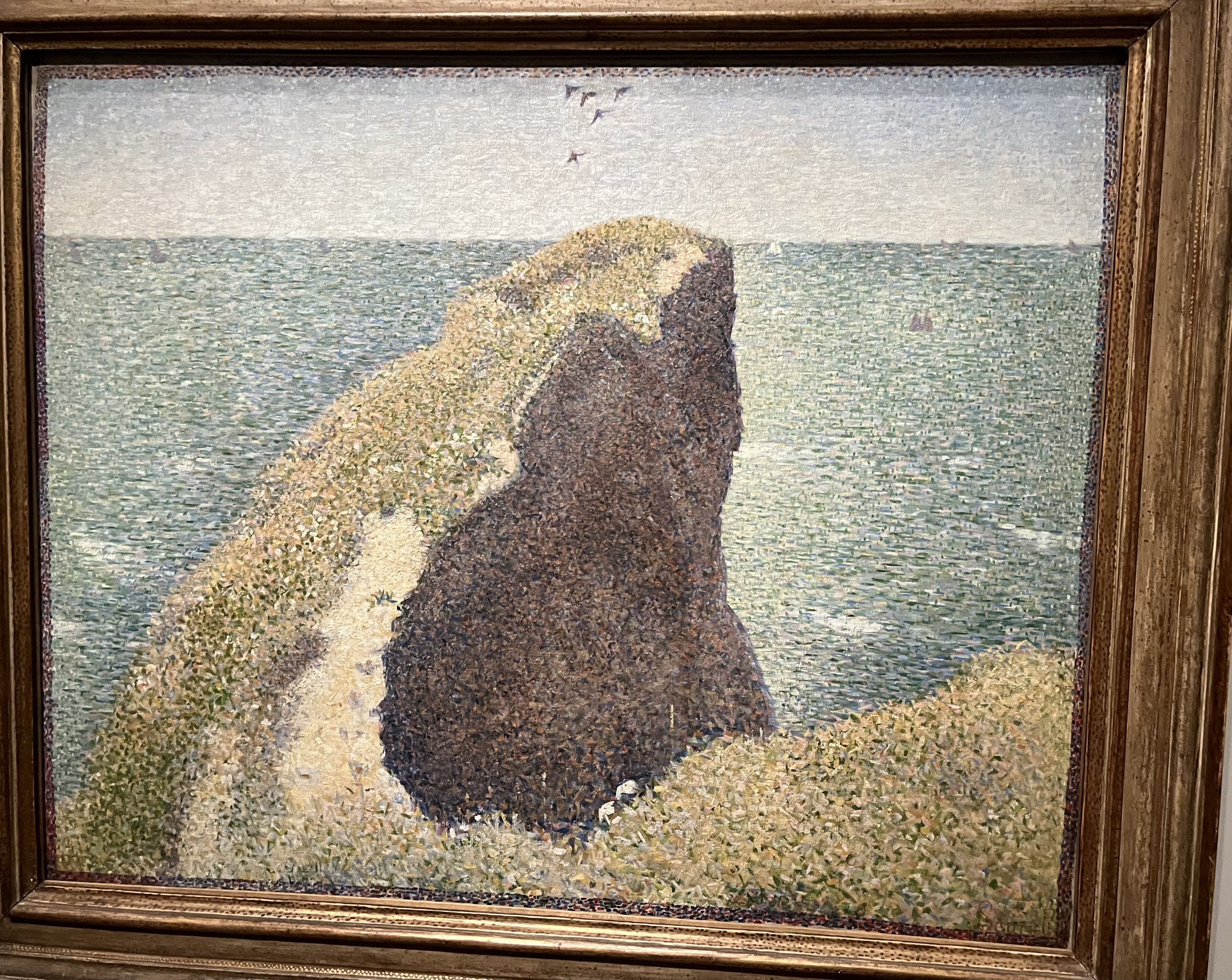
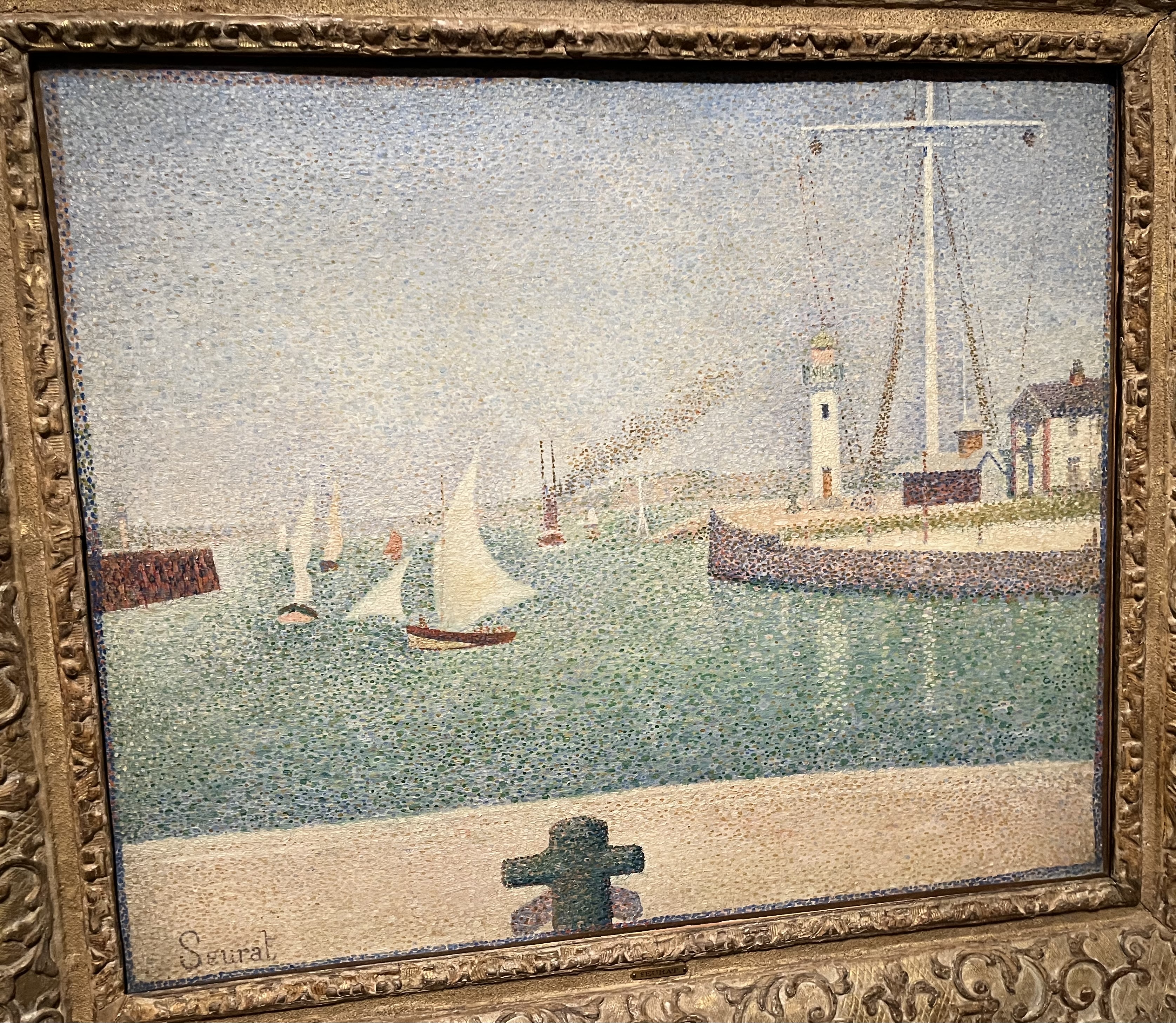
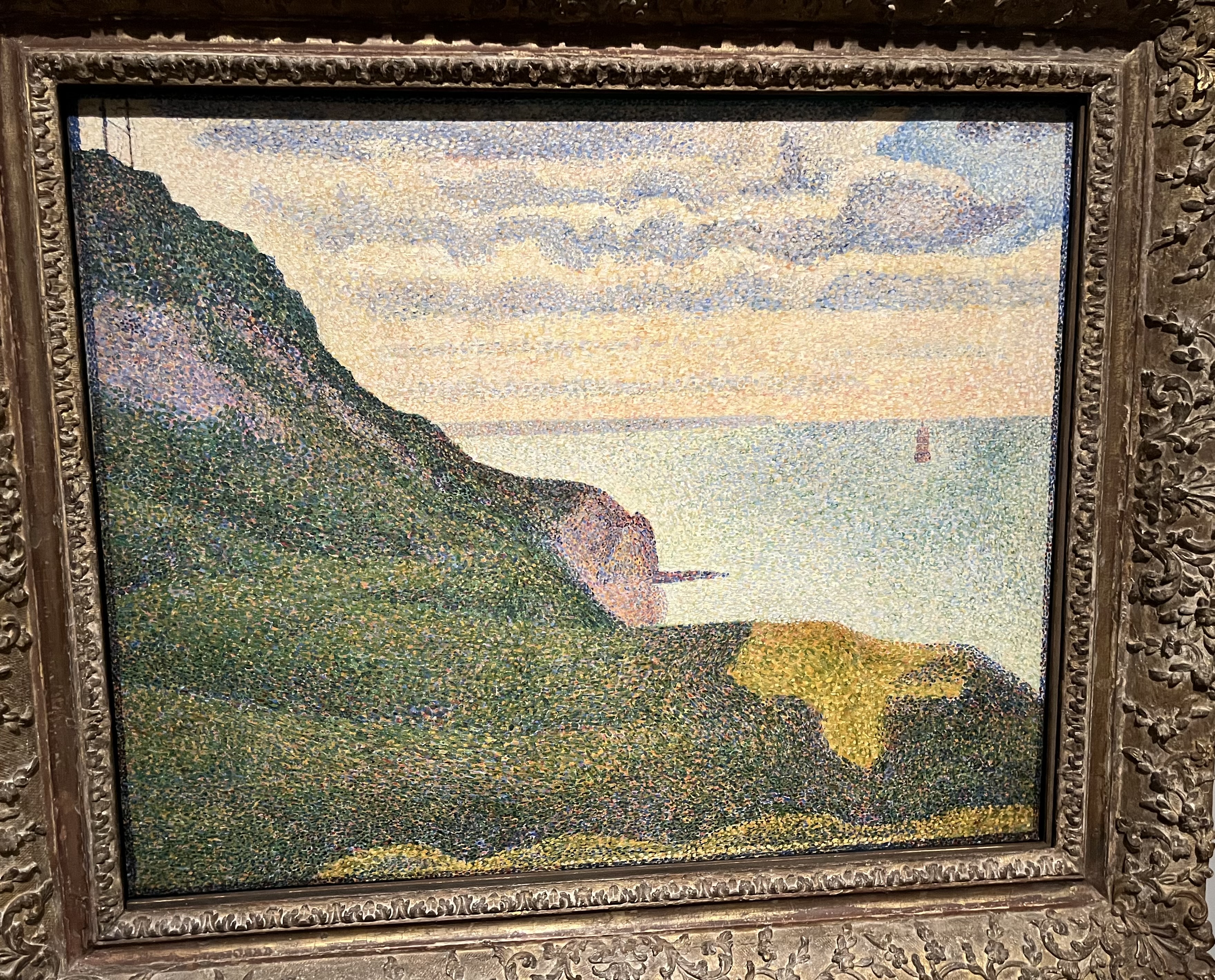
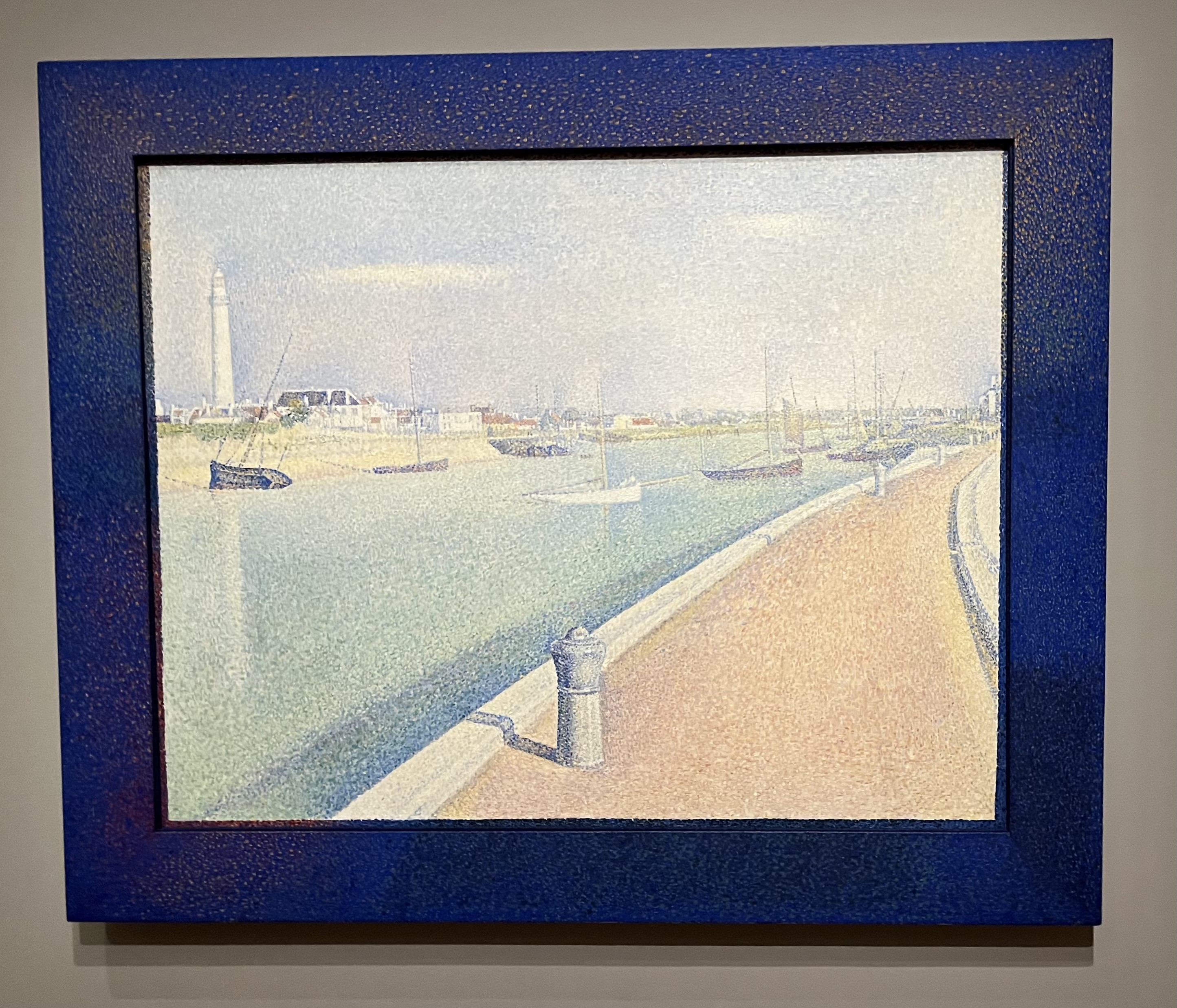
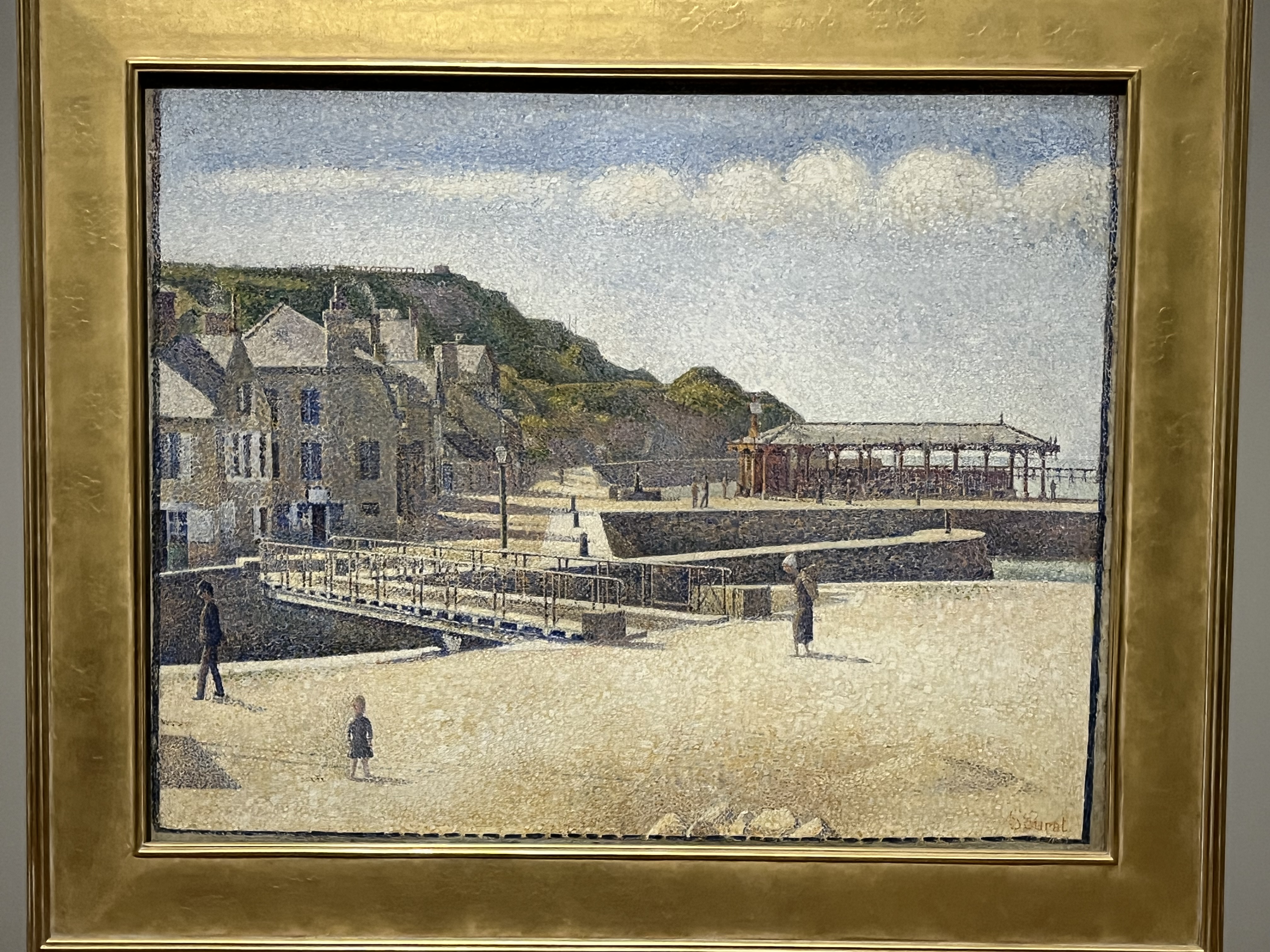
We went to the Seurat exhibition at the Courtauld. It is a small, focused show, featuring a series of paintings he did of ports and landscapes along the Channel coast, including some preparatory sketches. This gives a good opportunity to make comparisons and see the development of his technique.

Seurat of course was the leading exponent of pointillism, in which the picture is built up from hundreds of dots of unmixed colour. One aspect of the method that I hadn’t appreciated is that dots of the opposite colour are always included, so for example in a blue area there will be some dots of orange. This is meant to give a special vibrancy to the colour. Often it really does, lending a unique luminosity to the paintings, but I thought in other cases it was less effective. Seen from a distance those less successful works look very much like straight, accurately realistic pictures.

We’ve seen Seurat’s pictures before, and in fact the Courtauld itself has several on display that are not part of the current show. But the consistency of subject and the interesting sketches here make it an illuminating exhibition.
Drawing the Italian Renaissance

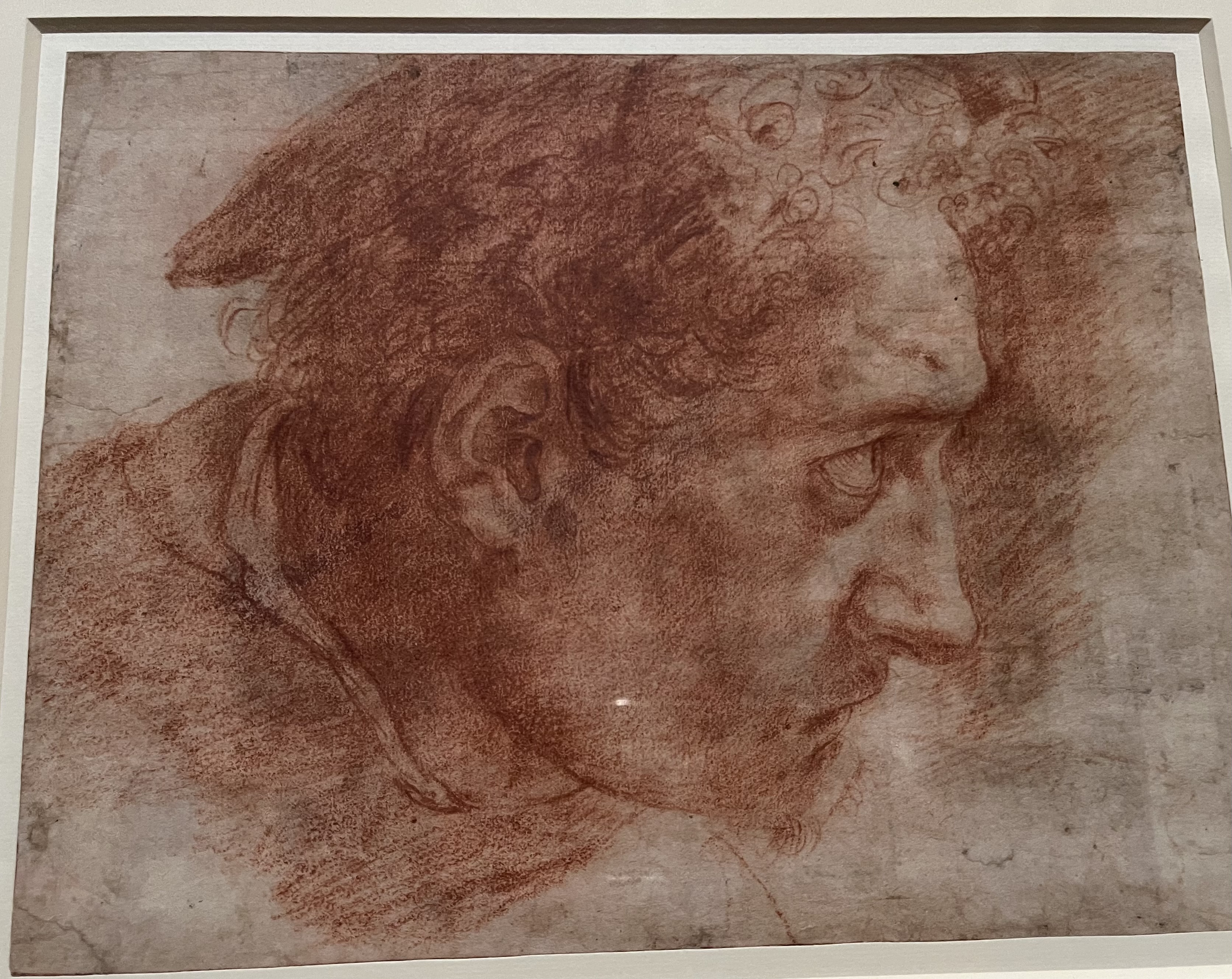
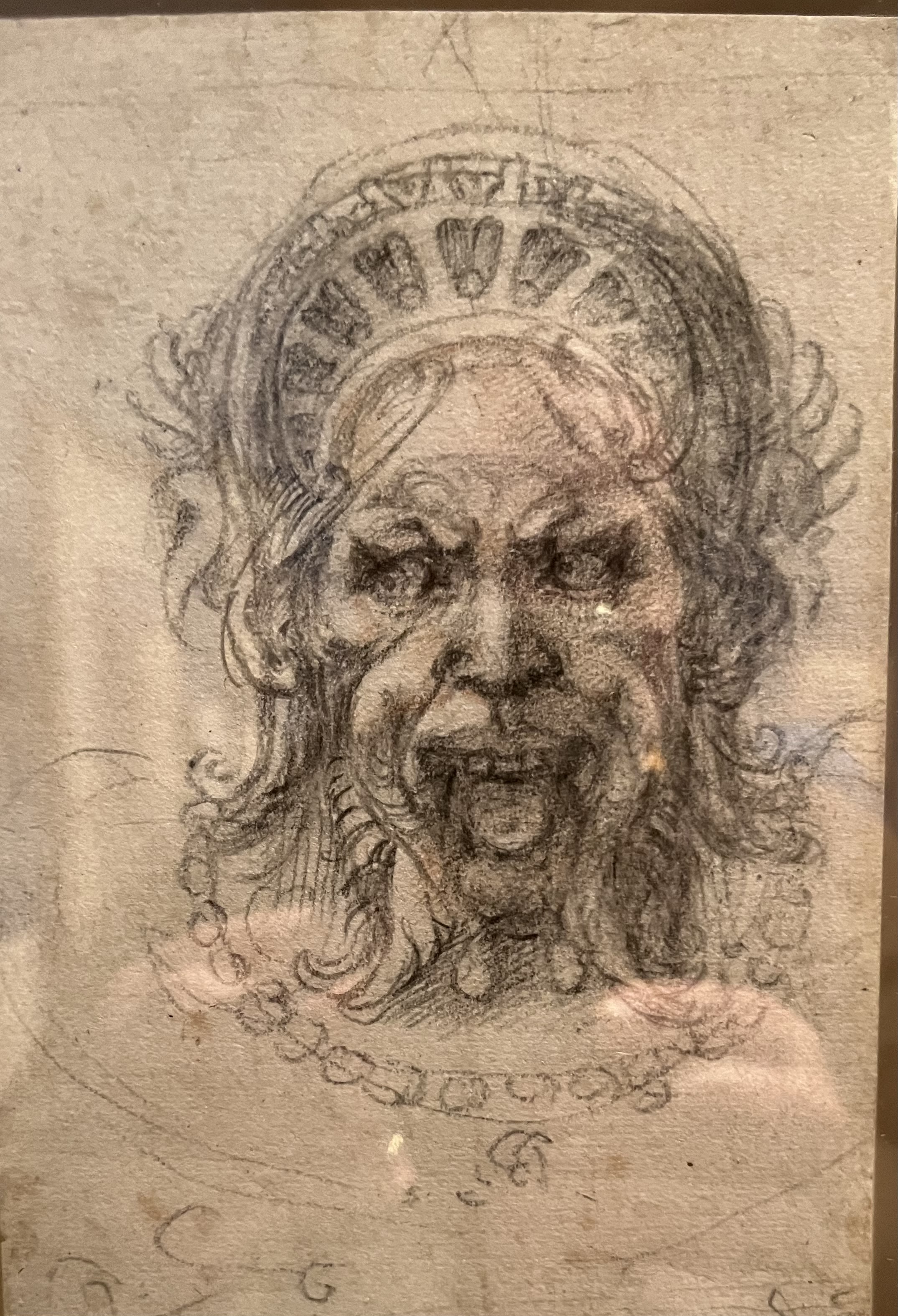
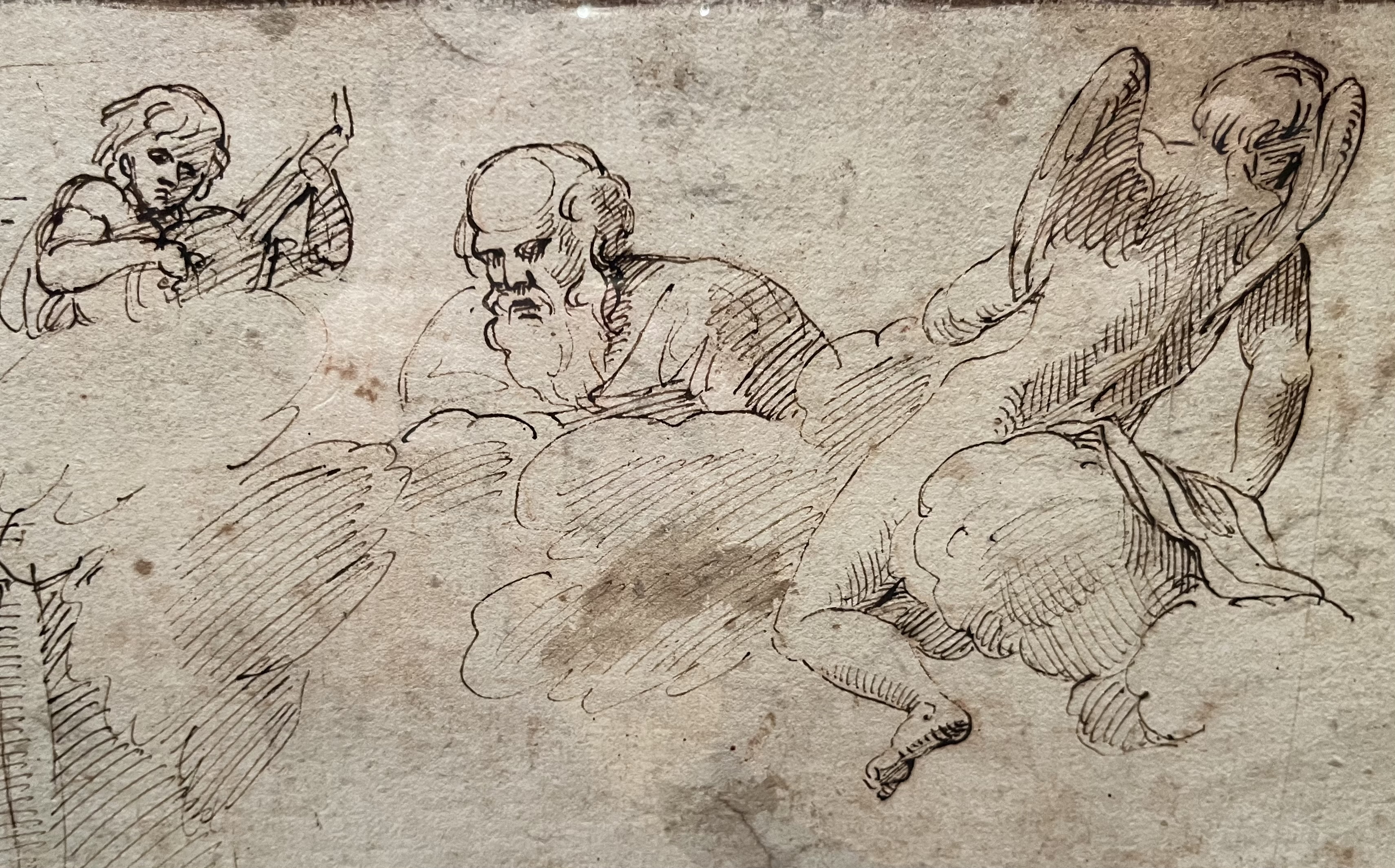
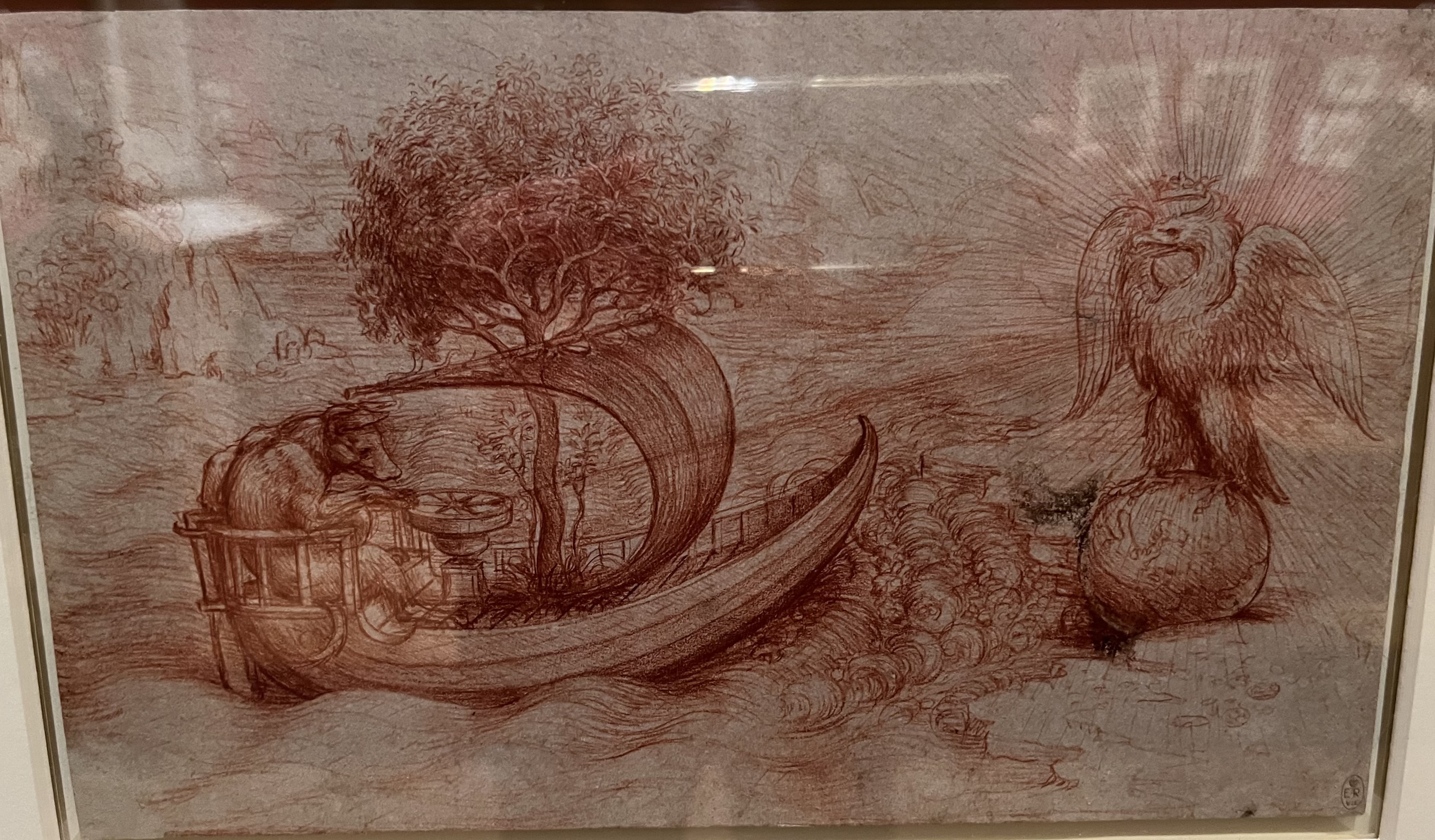
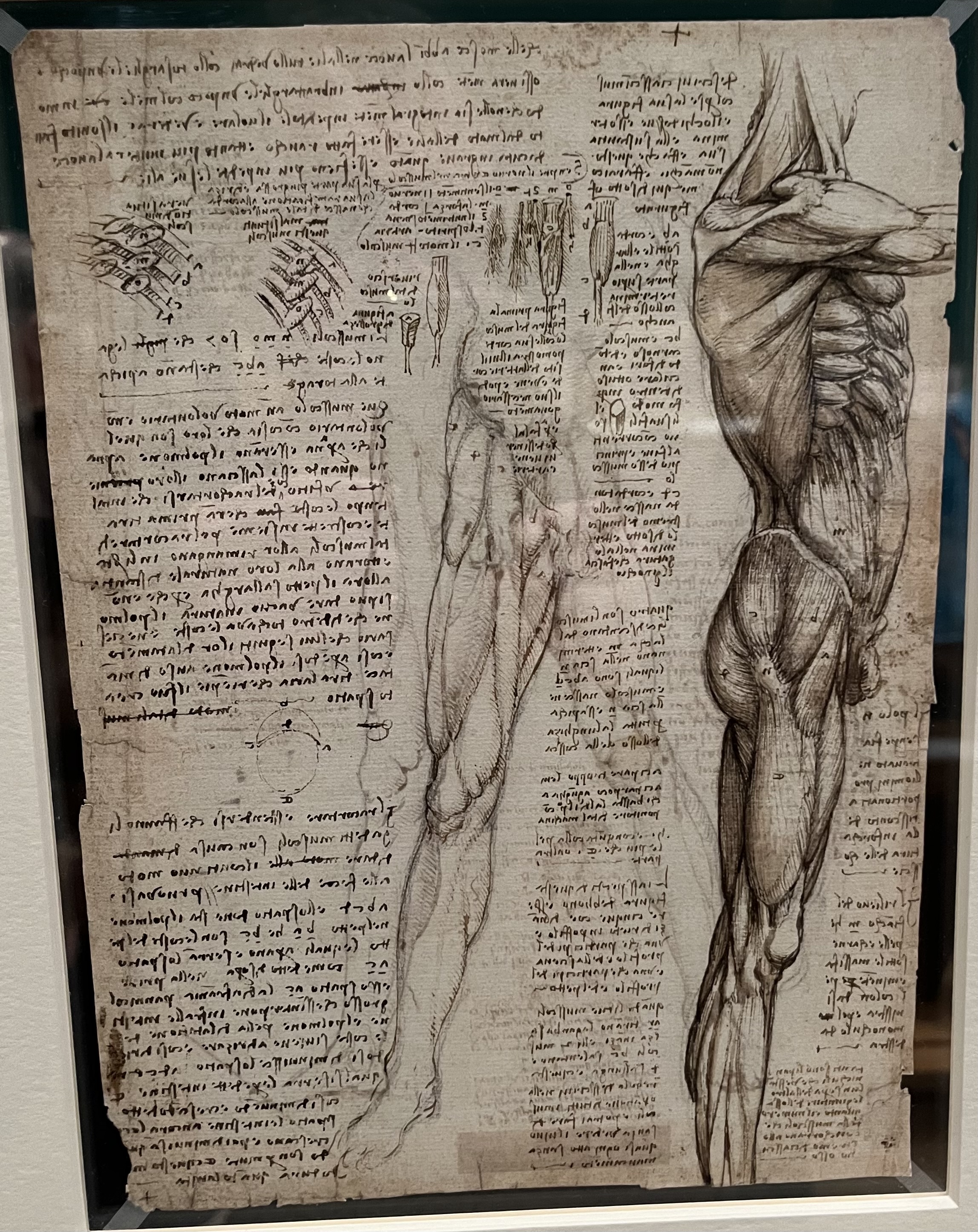
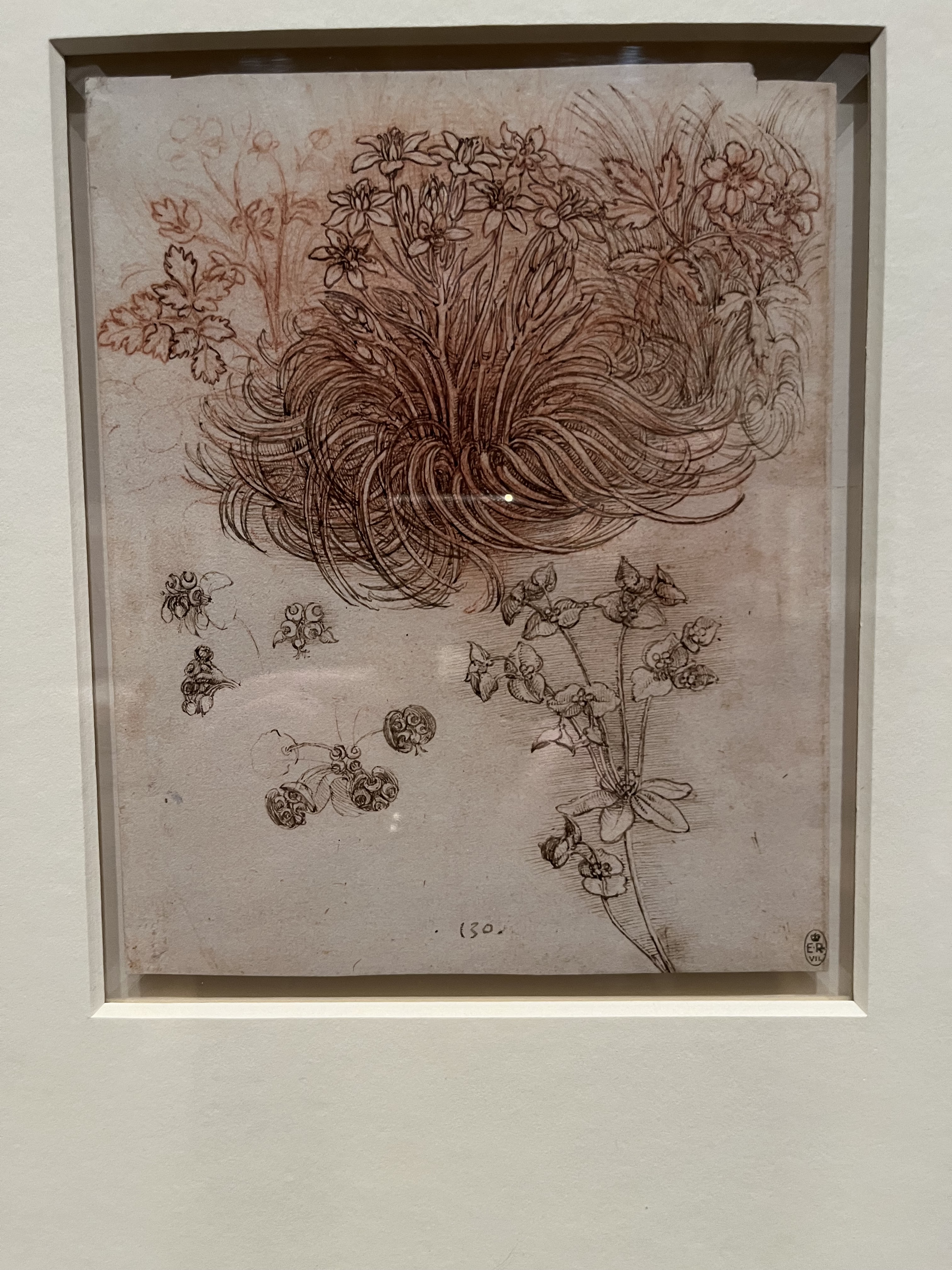
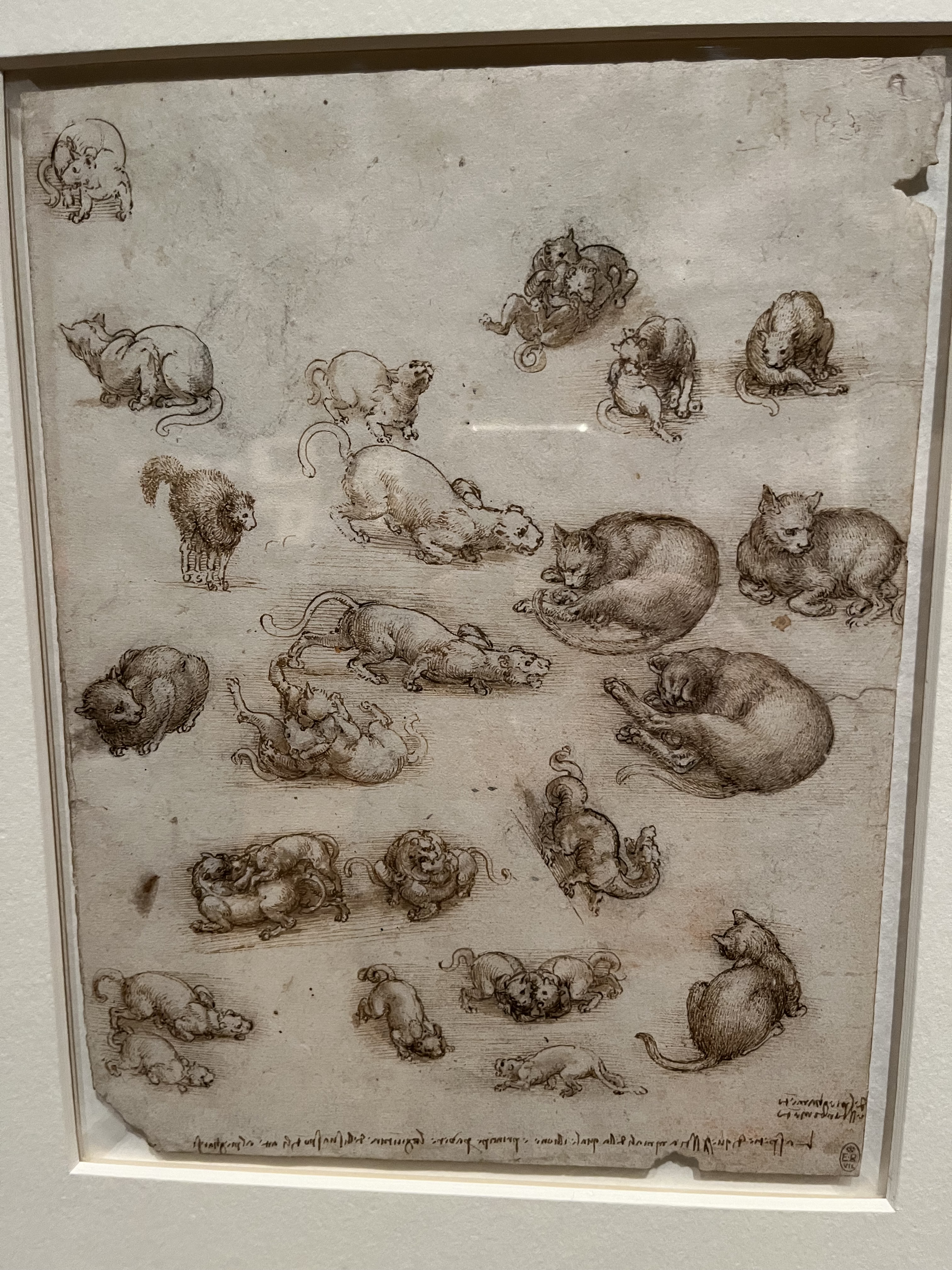
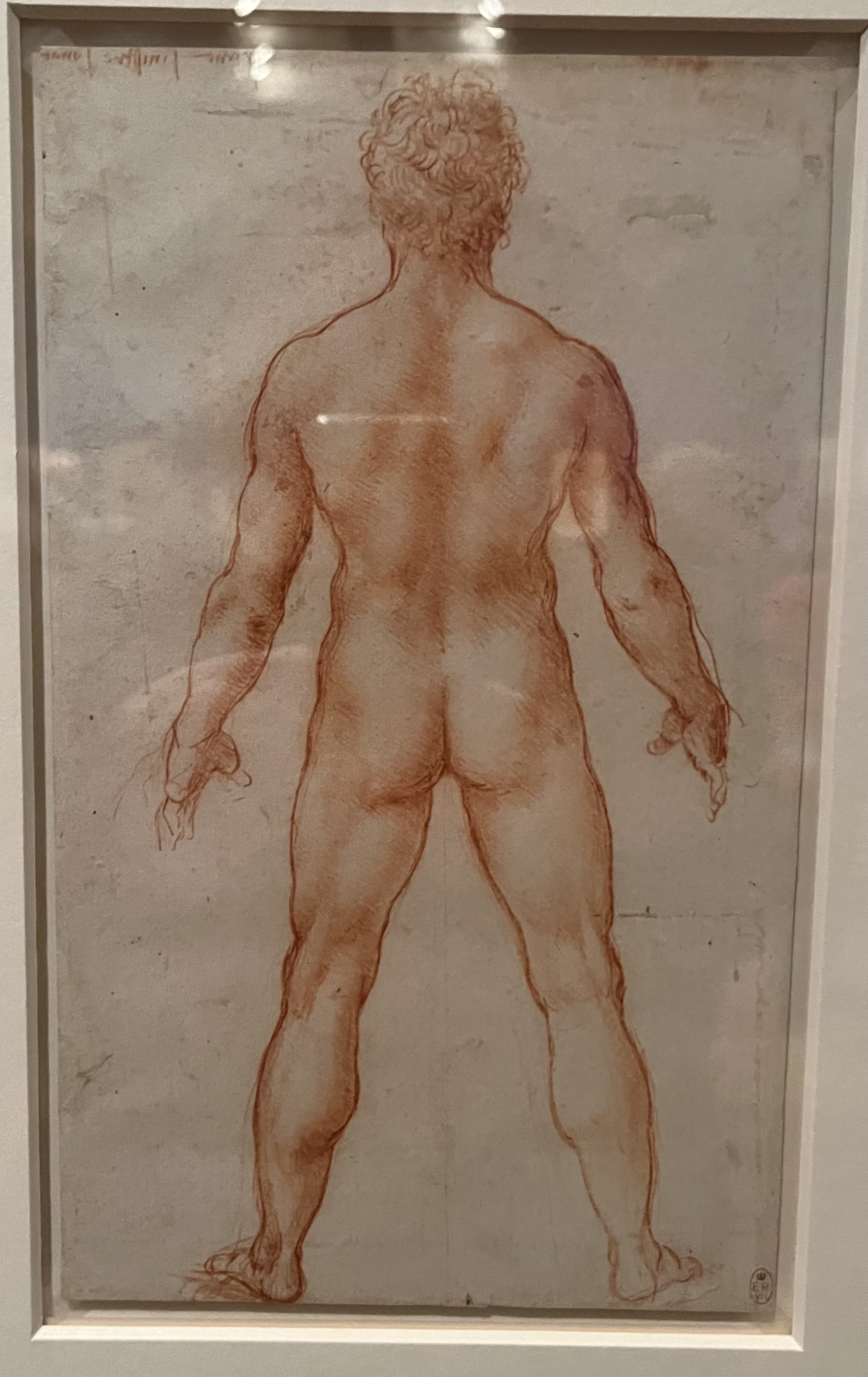
A remarkable exhibition of Renaissance drawings at the King’s Gallery. It features stunning works by Leonardo, Michaelangelo and Raphael as well as many other artists – in fact I thought the most memorable drawing of all was an amazingly vivid head of St Thomas by Caravaggio (not that one, the less well-known Polidori da Caravaggio, no relation).

It is astonishing what fine shading with chalk, ink and charcoal is achieved in some of these drawings, up to a smooth, perfect modulation that verges on photographic: but others are bold sketches which were only working drawings. Quite a few have the pinpricks which were used to guide copies: a few have the tiny black dots which resulted from blowing fine black powder through these holes.

The gallery provides paper and pencils for you to have a go yourself if you’re brave and/or talented enough. Not me!

There is Light Somewhere

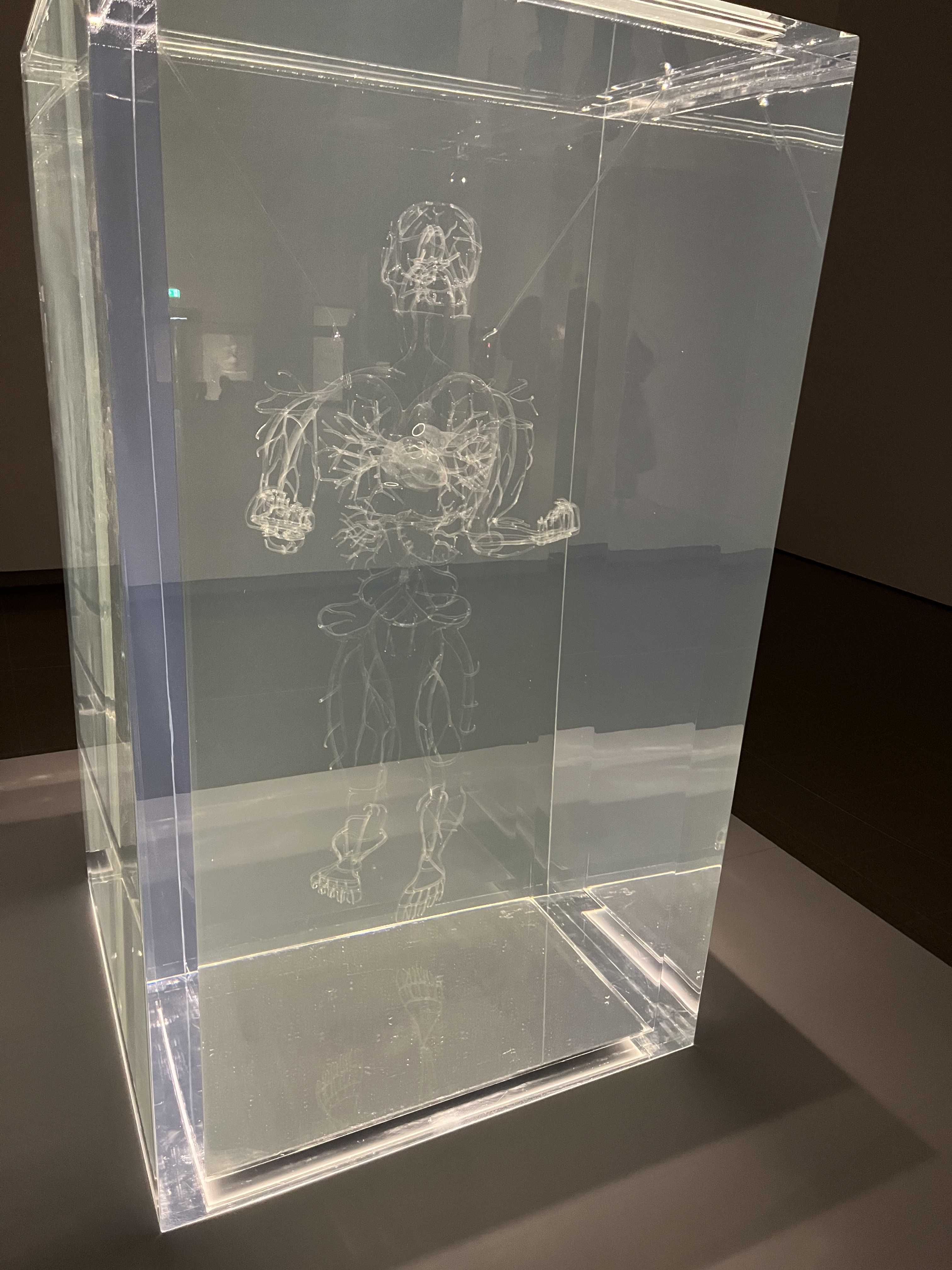
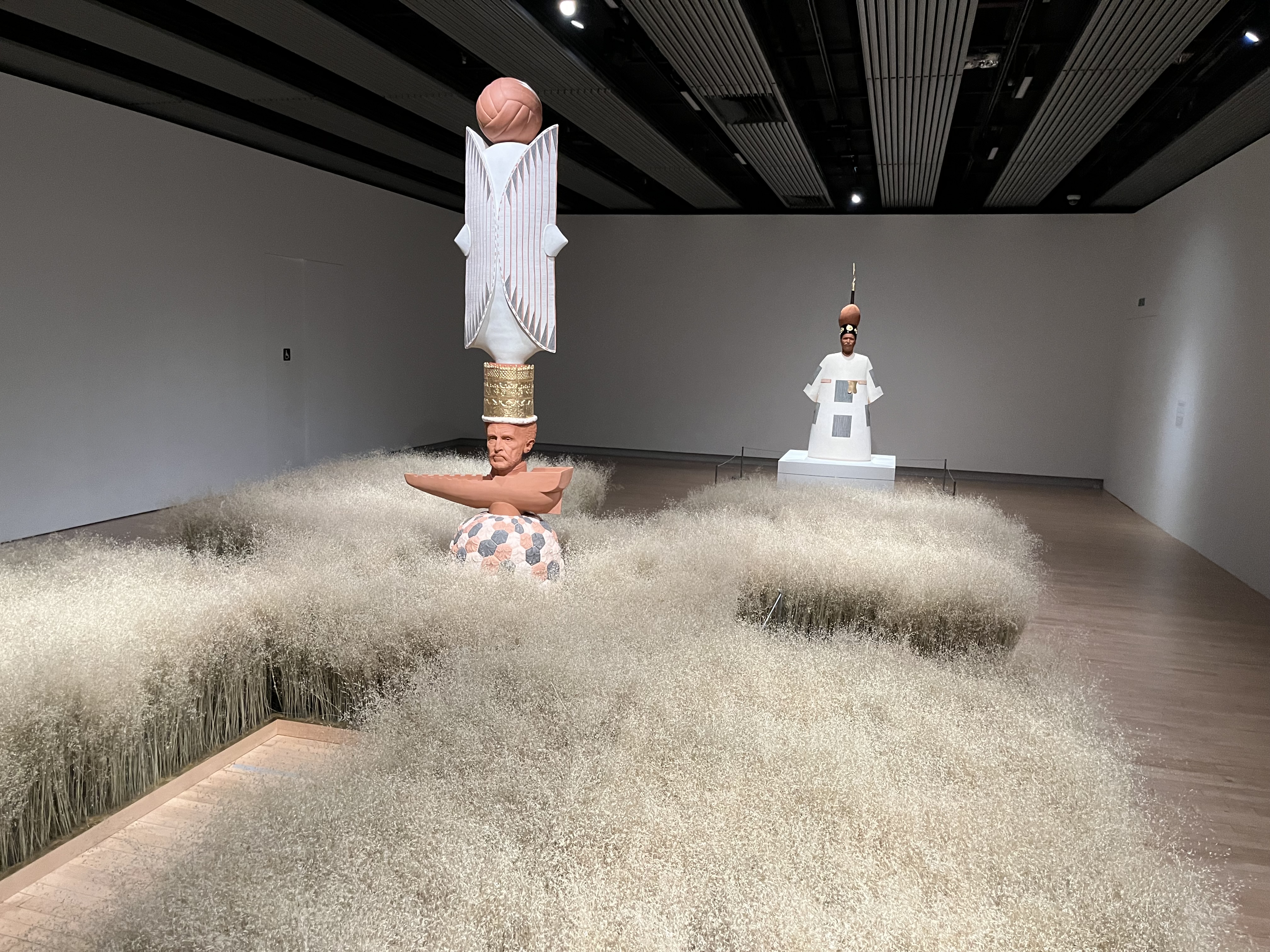
Tavares Strachan: There is Light Somewhere, at the Hayward, is striking and provokes both thought and quibbles. It features many striking pieces. Heads of black heroes, either huge and crisscrossed with cracks full of writing (which I couldn’t read), or open to reveal another head within, or fronted by an African tribal mask. Celebrations of the invisible (Strachan’s own encyclopaedia, glass statues suspended in clear oil). And pieces that relate to aspirational journeys, whether a Black Star ship amazingly on the gallery roof, black astronauts, or Strachan’s own journey to the North Pole, where he planted the flag of his native Bahamas, and shipped back a block of ice.

It seems clear that this show is about black aspiration, a search for light in the darkness and within the self. The message is encouraging, inspiriting, not downbeat, but even without that positive context most of the works are well worth seeing.

The quibbles? Some of the people in the encyclopaedia don’t seem all that invisible (Mary Woolstonecraft? Xenocrates?) while others perhaps deserve to be (minor characters from cartoons?). It’s not clear that the African people who made the masks would have liked their being used here, nor whether all the heroes would welcome wearing them. Is Septimius Severus the Roman Emperor here because he was born in Africa? But he is surely a leader of European imperialism (clue’s in his title).

But those are indeed quibbles. A memorable exhibition.