We finally went to the British Museum’s highly-praised exhibition about life as a Roman soldier. It is illuminating, giving an insight into what was in many ways the heart and epitome of the Empire. Clearly on display here are some of the well-known features that made the Roman army so successful. It recruited anyone who met the height requirement without bothering about where they came from: it taught them basic Latin and sent them all over the place, turning them into loyal, well-off citizens who would settle and stabilise the provinces. There were only so many Greeks or Egyptians, but anyone could become Roman and enjoy the substantial opportunities that went with it.


The exhibition makes considerable use of soldier’s gravestones. One interesting thing about them is that they were often paid for by the dead soldier’s slaves, set free on his death. This reinforces the sense I picked up from the Pompeii exhibition, that Roman house slaves were often treated almost like family: better than the free servants at Downton Abbey.
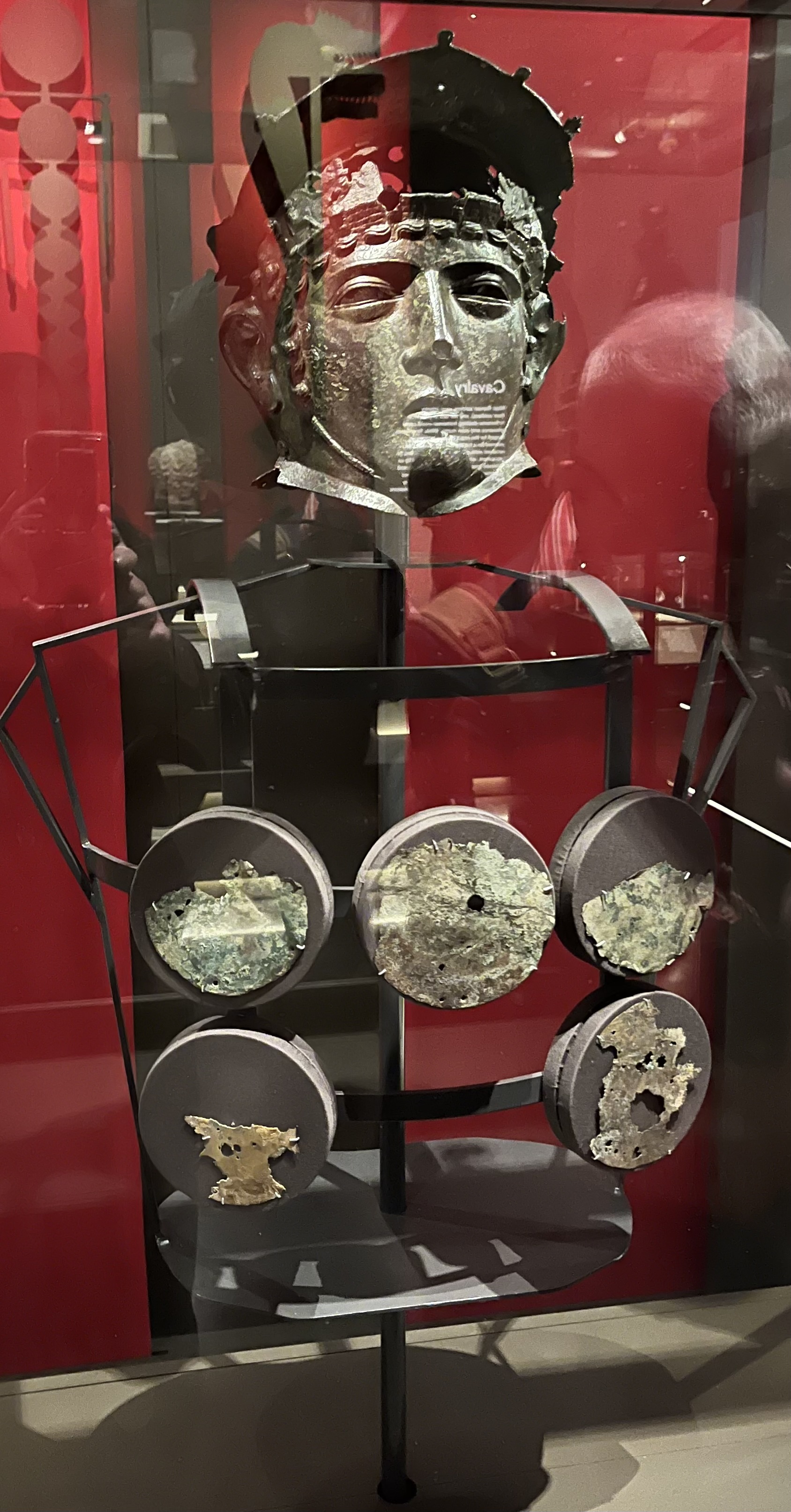
The exhibition includes many unique and remarkable items, including the only surviving legionary’s shield and some extraordinary cavalry parade helmets which include masks, one of which was supposed to make the rider look like an Amazon. The suit fashioned from a crocodile’s body is probably more weird than representative, though you can see why the curator couldn’t resist it.
It’s a very child-friendly exhibition: so many large cartoons and features with Rattus the cartoon character you almost begin to wonder whether adults are welcome.
Discover more from Seen and Done
Subscribe to get the latest posts sent to your email.
 Seen and Done