Escher
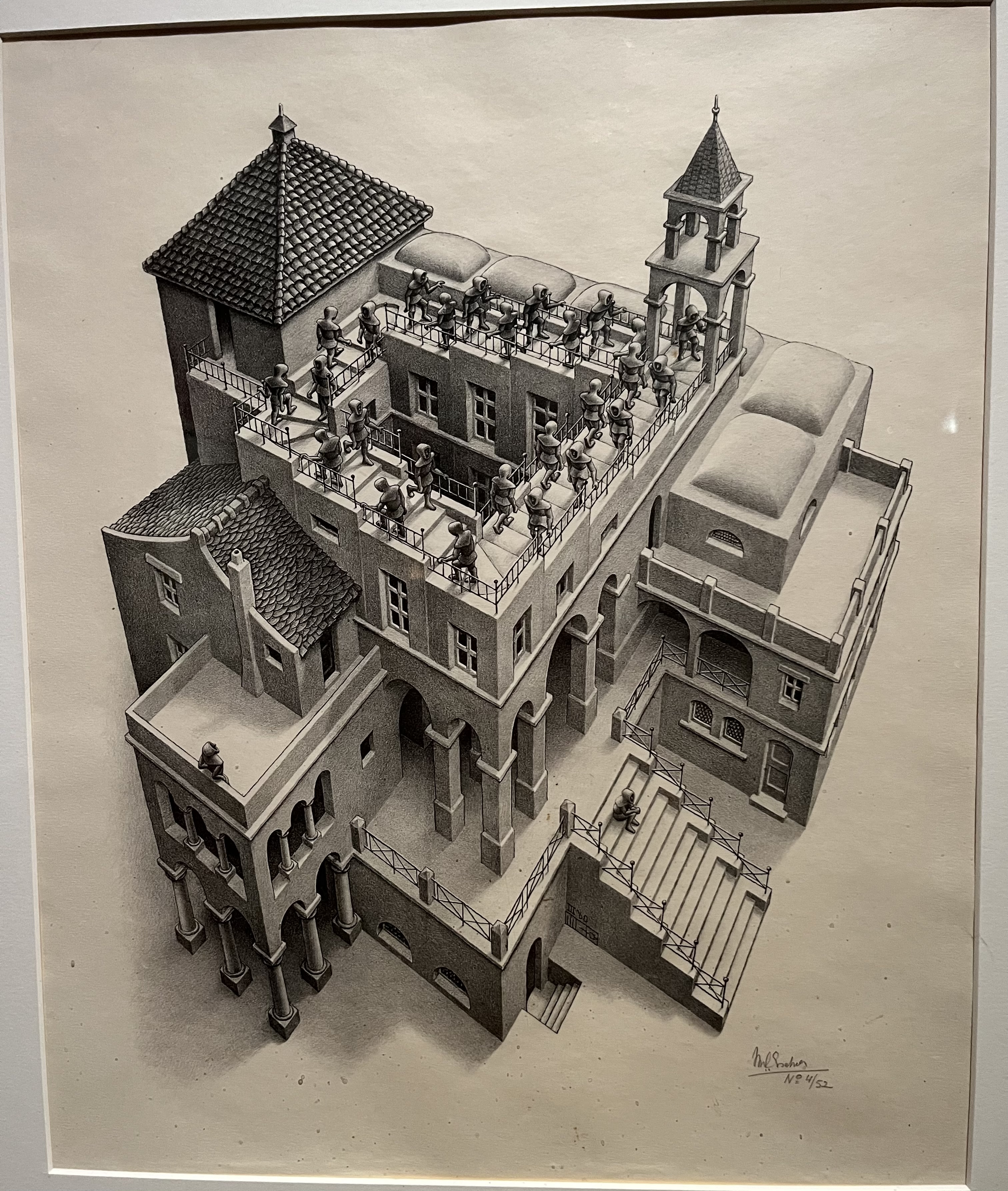
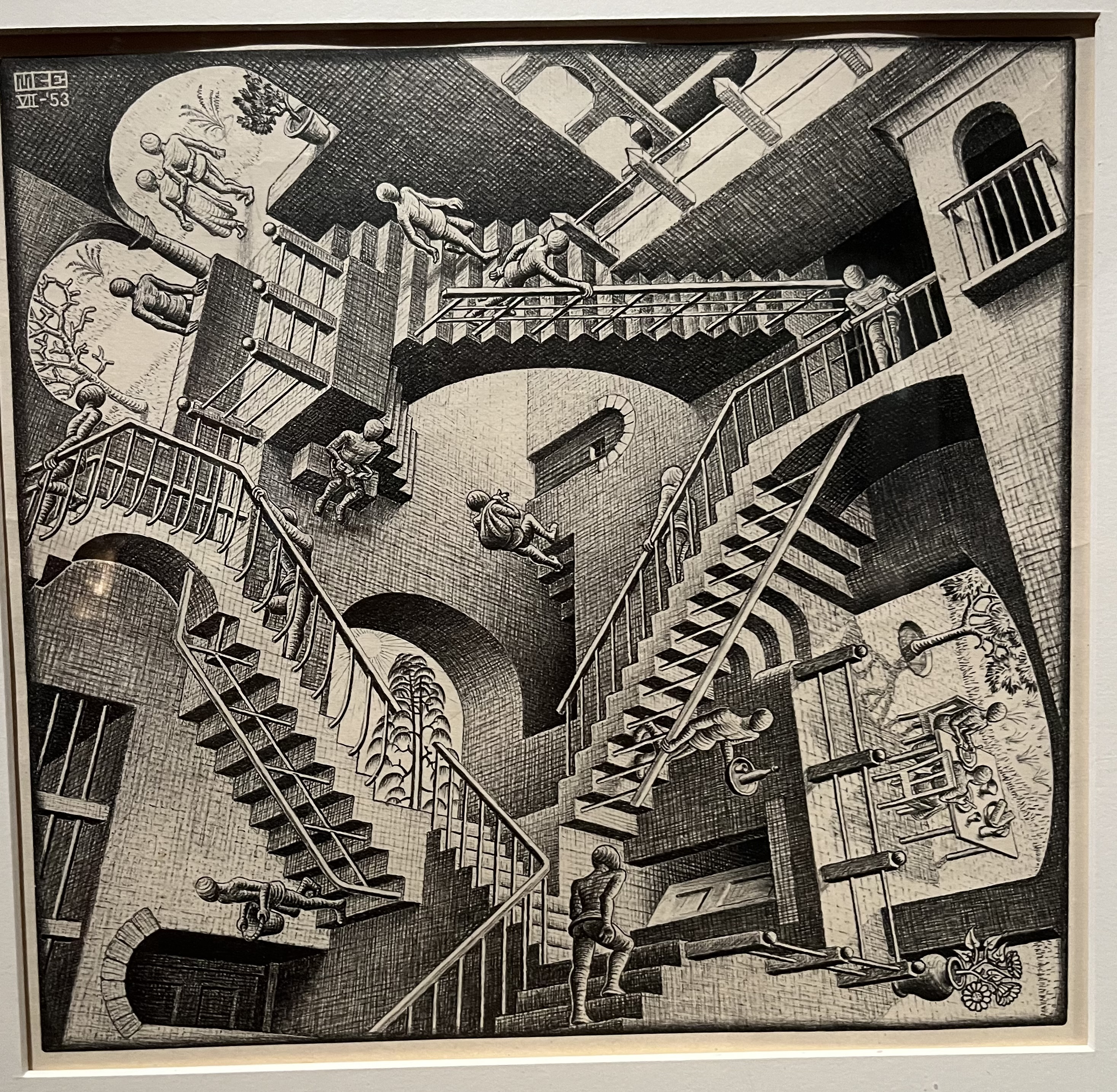
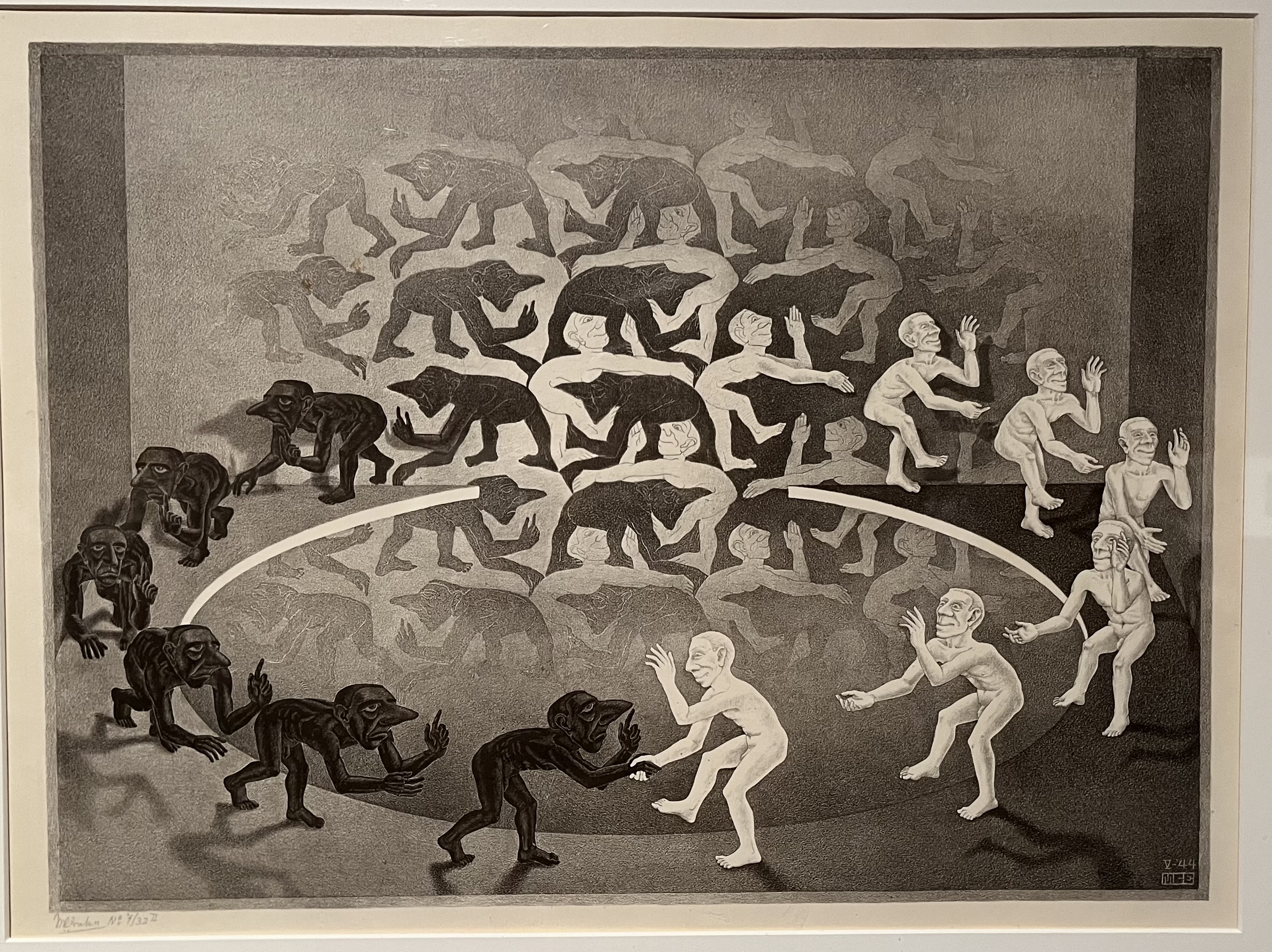
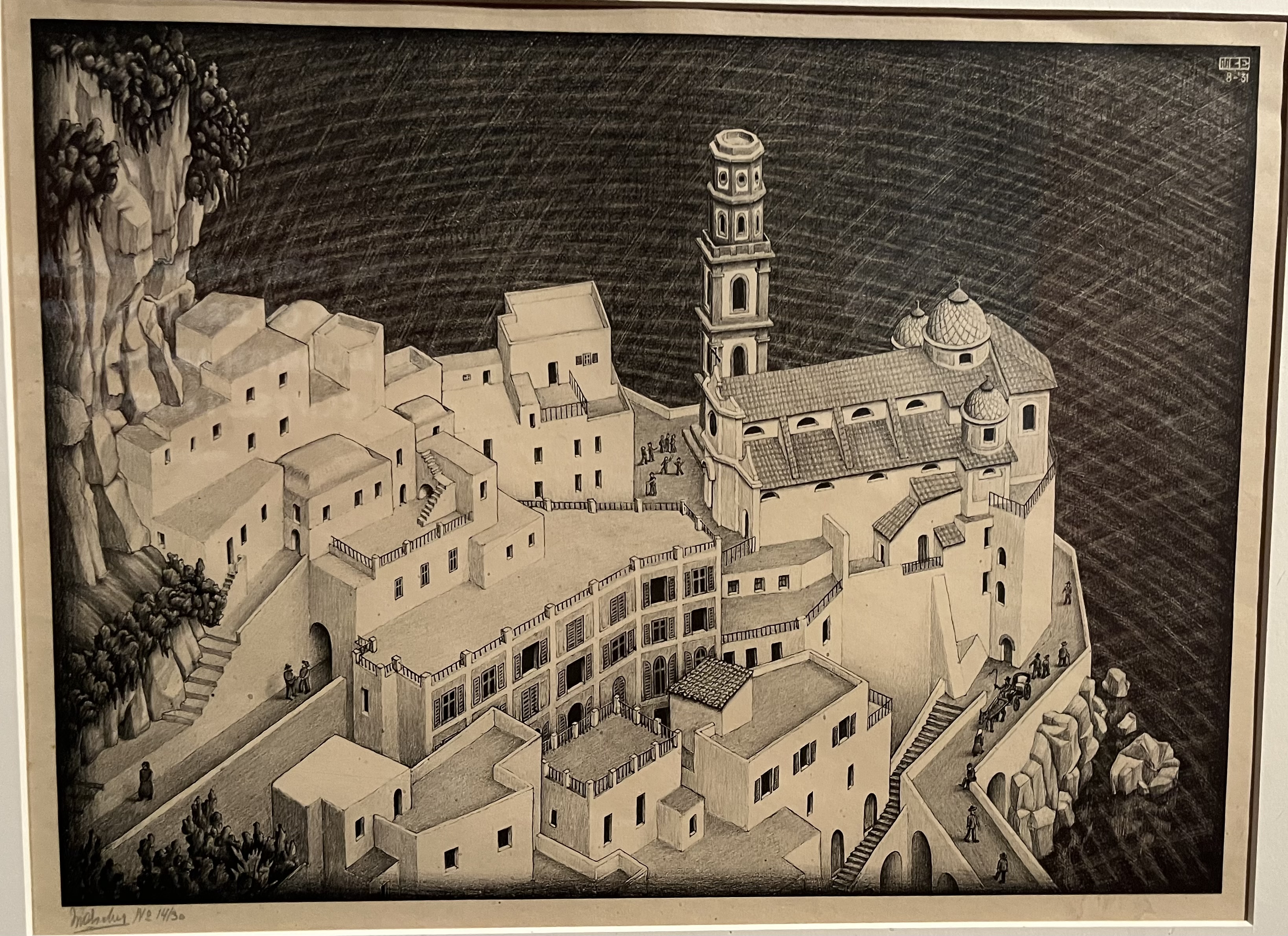
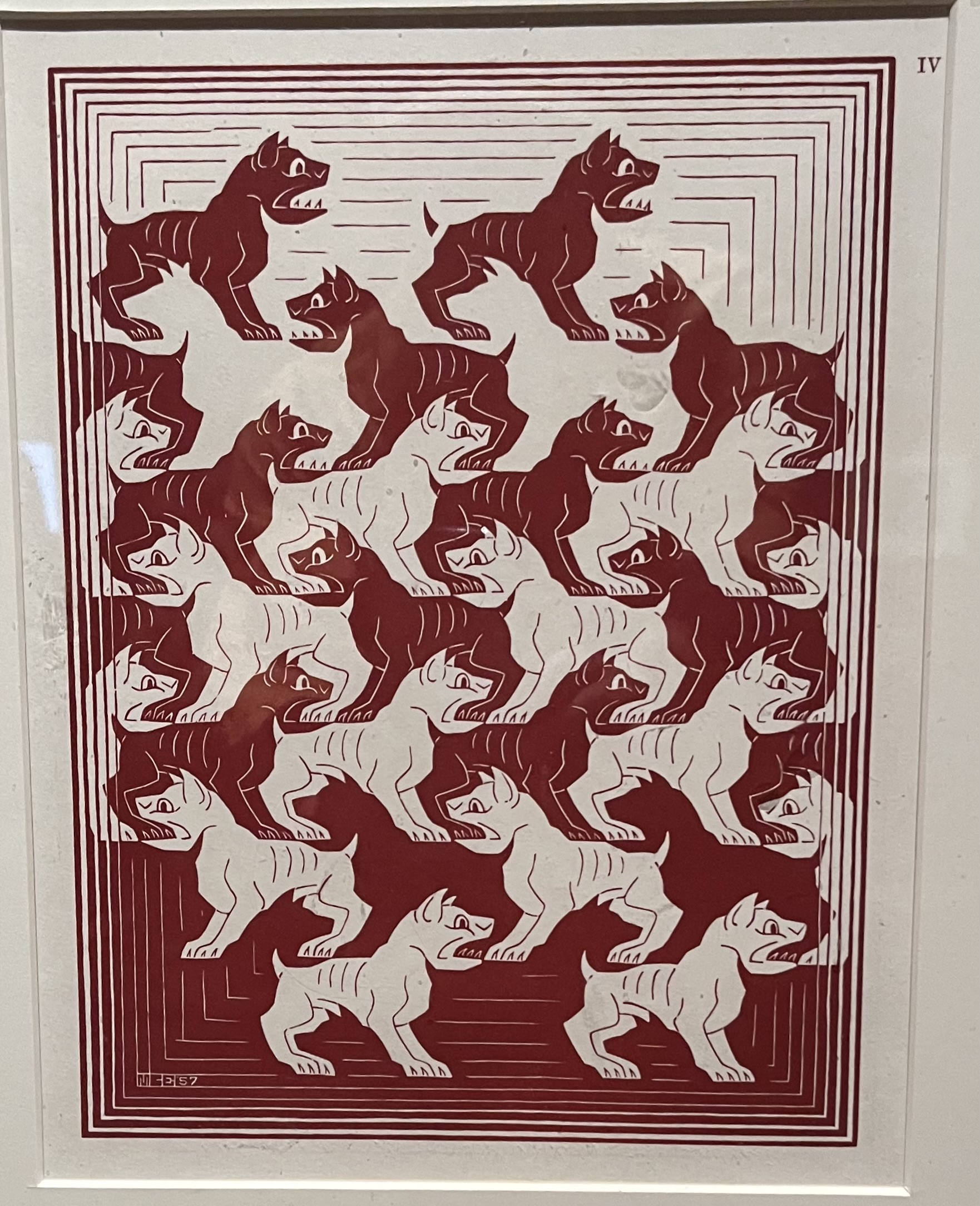
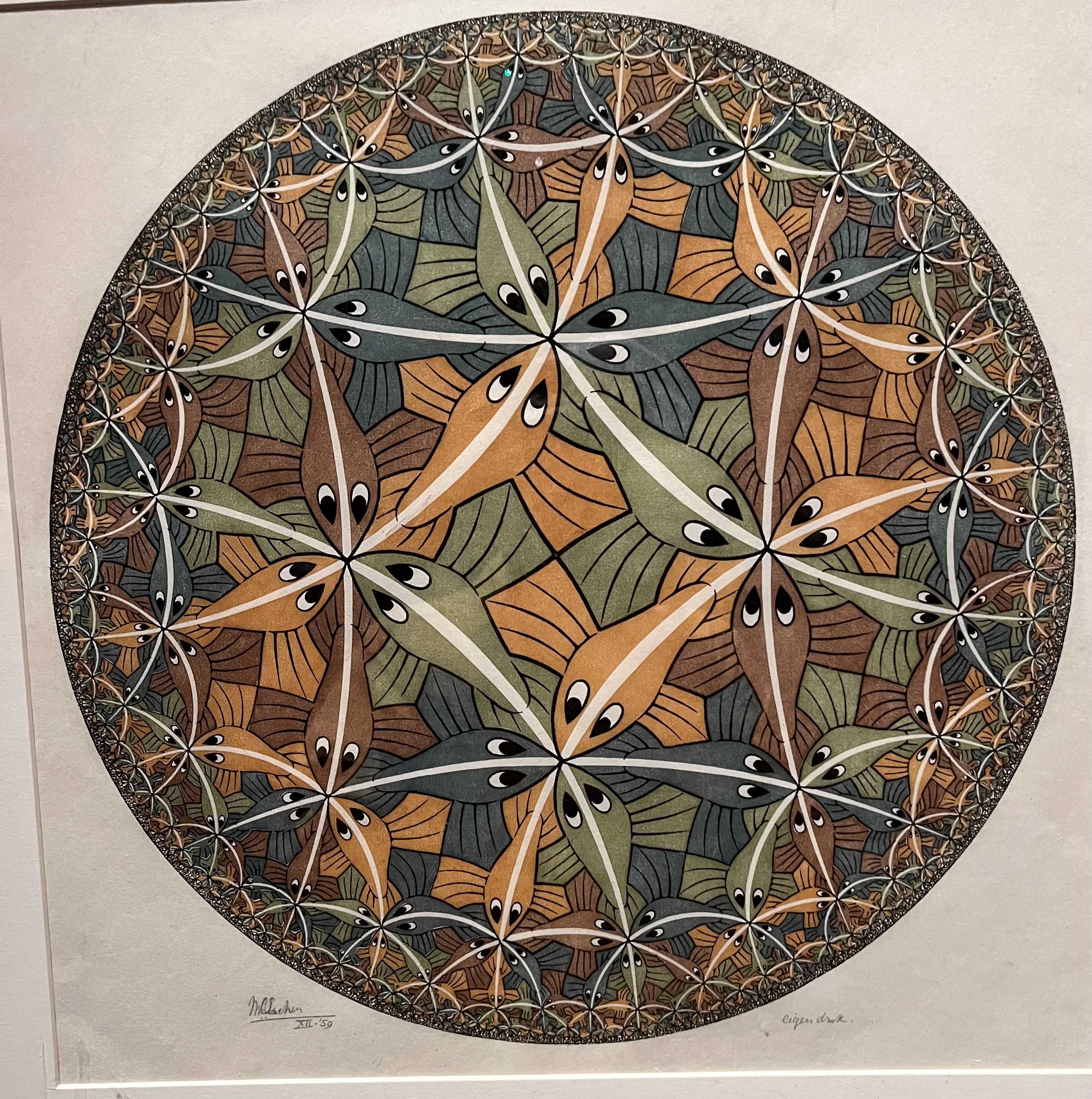
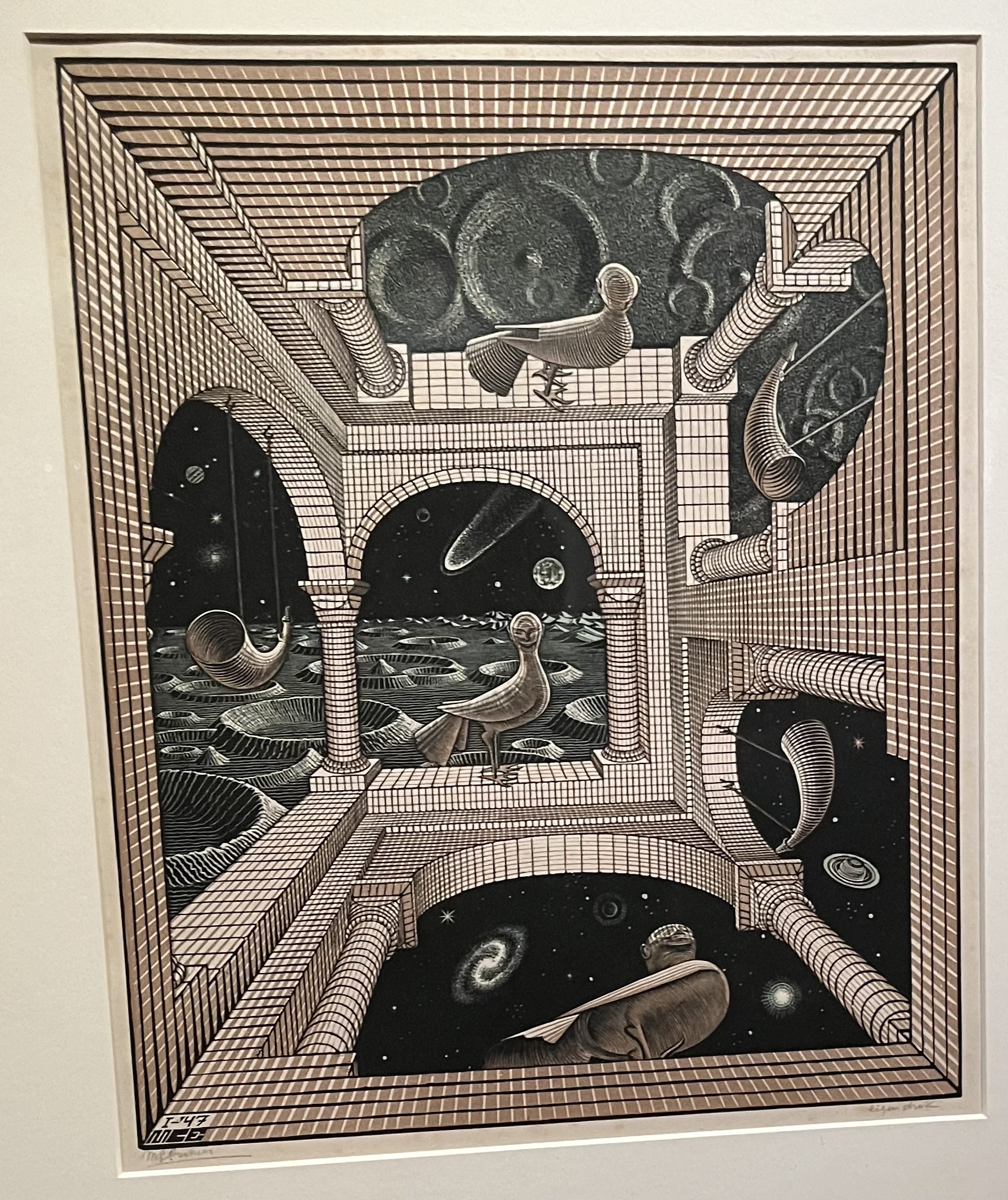
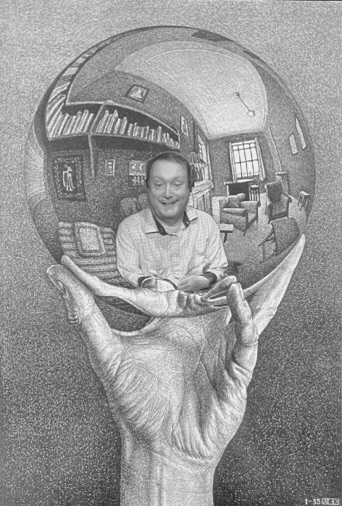
I went to the exhibition in Somerset House. It’s really a show of two halves. First, they have an extensive collection of original lithographs, including all the greatest hits. If you have a favourite Escher picture it’s here. I found myself tempted to take pictures of every one, thereby producing a poor copy of the Escher book I’ve owned for fifty years.
Although Escher made his own lithographs, and typically only about 20-30 copies of each work, you don’t get here the strong sense of the artist’s own hand that you would with a Rembrandt painting or a Goya print. It’s almost as if Escher was striving for pure objectivity. There are some pictures, especially early ones, where he seems to be aiming for a sense of romance or sentiment, but it is entirely absent from these almost spookily clean and empty buildings.
In the end, or perhaps always, he went for mathematical rather than emotional depth, and brilliantly achieved it. The exhibition notes rightly say his work is highly esteemed by scientists who see it as a bridge between maths and art. I’m not sure how strongly artists share this feeling.
The other half of the show is some gimmicky fun stuff: a hall of mirrors, a size illusion room, and a couple of ‘insert yourself into the picture’ things. I did succumb to one of those. Escher was rather serious, though, and I don’t think he would have liked this. The exhibition includes some Escher-influenced album covers, but not the incredibly rude and curt response he sent in answer to a flattering personal letter from Mick Jagger. The exhibition mentions that the hippy movement appropriated Escher images, creating day-glo versions with new trippy titles, and says that Escher hated them. But the exhibition still includes a small room full of them.
So you could say there’s something here for serious Escher fans and for those who want something the kids can enjoy. I’m glad I went but have a slight feeling I would have done nearly as well by spending an hour with that old book.


 Seen and Done