Cyrano

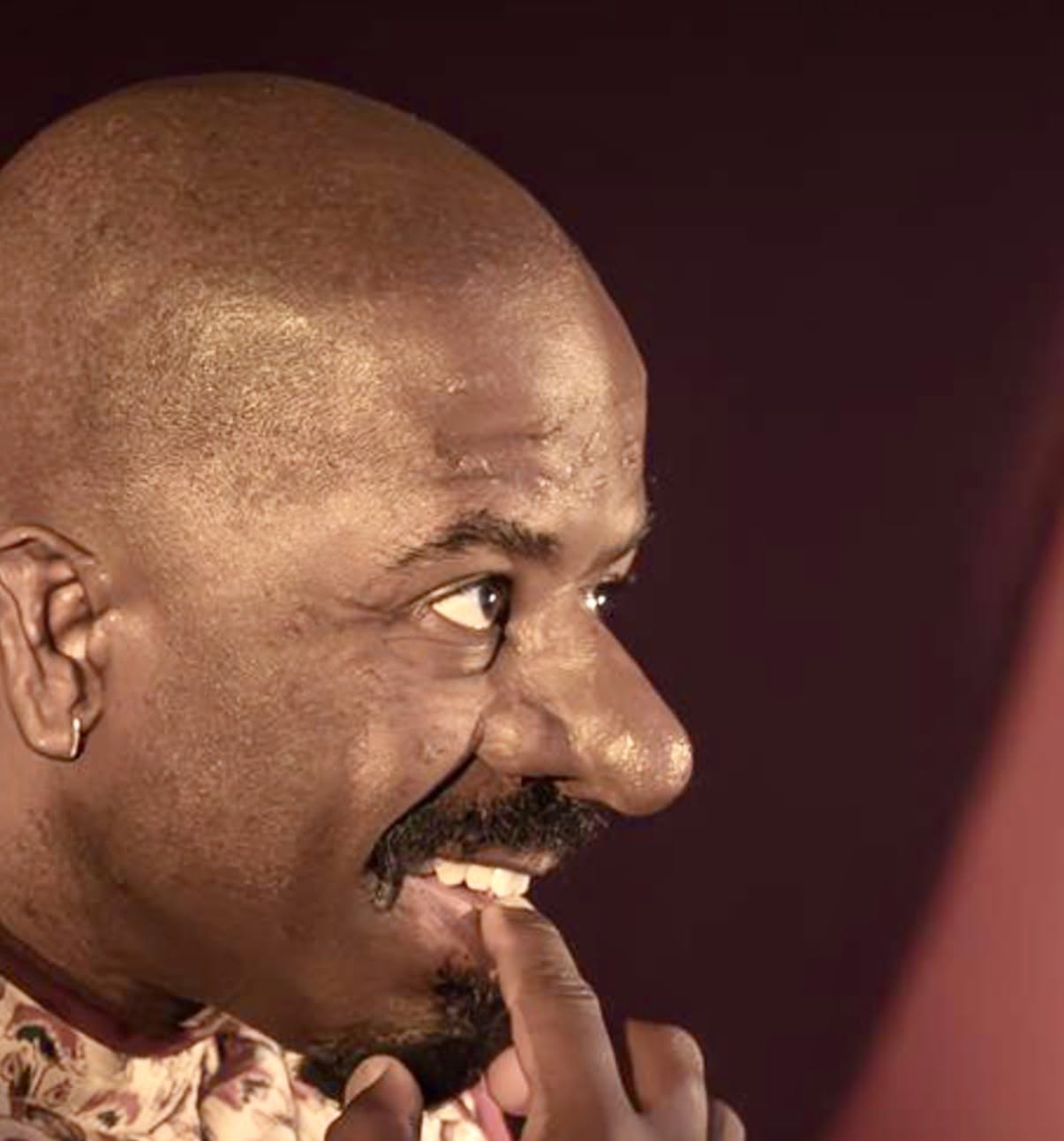
We went to see Cyrano de Bergerac at the Noel Coward Theatre. It was pretty good: the adaptation is lively and Adrian Lester is a really good, convincing Cyrano. The last time I saw this play was 36 years ago with Edward Petherbridge, who definitely emphasised the poet in Cyrano, whereas Lester leans more to the warrior, but he’s balanced and reflects the character well. If I can risk sounding like a old git, I appreciated his delivery: I think some contemporary actors, used to TV and film, don’t really know how to project into a live theatre, but Lester’s voice and diction are exemplary, crystal clear to the back of the auditorium.

The play, to be honest, is a bit old-fashioned. The first scenes are unnecessarily confusing: the last act could be cut almost entirely. There are some creaking old dramatic devices at work: the people who are always interrupted just before they speak the words that would change everything: a character who gets a fatal wound and then walks and talks for another forty minutes before suddenly doing an elaborate, prolonged death. The big problem is with the credibility of the character’s motives. Roxane knows Cyrano all her life, but never suspects she might fancy him until she discovers he wrote all those words, when she instantly realises she loves him. She declares explicitly that she loves the man who wrote those words ‘in spite of his face’ even while she still thinks it was handsome Christian, sounding more as if she were a character in a logic puzzle than a real person.

And what about Cyrano? His refusal to declare his love, his committed support of Christian? Roxane is allowed here to briefly suggest his behaviour is manipulative, but a modern audience, with darker and more sophisticated ideas than the Victorians, can’t help wondering whether Cyrano’s behaviour is perverse in a deeper sense, with him getting a certain secret pleasure out of the idea of his beloved in the arms of another. Still, the number of times the story has been borrowed and updated shows it is an appealing archetype.

Anyway, I recommend this production.

Woman In Mind

We went to see the new production of Woman In Mind, the Alan Ayckbourn classic, staring Sheridan Smith as Susan and with Romesh Ranganathan as Bill Windsor. It’s a great show and I recommend it: funnily enough my only reservations are about the play itself. There are some spoilers in what follows.

The story is in essence about a woman losing her mind. In the early stages her delusional and at first ideal life contrasts with the depressing reality, as she switches between the two. I would have liked a neat resolution to all this, but we don’t get one: instead the delusions get stronger, less controllable and less pleasant and eventually swallow her up.

I said one side of the story is the depressing reality of her life, but in fact our faith in the reality of even the ‘real’ parts is gradually undermined (or at least, mine was). Bill Windsor seems to move across gradually from sensible reality to florid delusion. Muriel the sister-in-law seems like a caricature, too completely awful to be a real person. The behaviour of Susan’s son is not depressing in normal ways but bizarre, and seems to revolve around her, even if in a most negative way. So perhaps in the end we are to realise that the entire play is the record of a set of growing delusions that reflect reality only in a distorted way. That can still be interesting, but I think a little less than a play that does engage with real life effectively.

February 2021 Competitions

Here are the writing competitions with February deadlines I’m considering. Not quite so many this month, which should give me a chance to catch up.
  • Accenti is apparently a Canadian magazine with an Italian emphasis. Your piece can be on any topic. I sort of wonder whether it might need an Italian link, though it should definitely be in English. Non-fiction is allowed, but not poetry, plays, or essays. They’re looking for up to 2,000 words, the entry fee is $30 and the top prize $1,000. The deadline is 1 Feb.
  • The Papatango play competition is back in a new form this year; normally the winner gets a full production and tour, but That Thing has made it difficult and for one year only they’re asking for an audio play, of 25 to 50 minutes (about the same number of pages. Entry is free and they provide substantial feedback to all entrants, which is a pretty good deal. There’ll be three winners this year with a top prize of £2,000 as well as audio production for all three. The deadline is 7 Feb.
  • Another welcome freebie is the Artists and Writers Prize (yes, associated with the indispensable Yearbook). The top prize is an Arvon residential course, with publication on the website. These courses have a good reputation, but if you don’t want to go on one (as I don’t) the glory alone might not justify entering. Stories of up to 2,000 words are called for, and the deadline is 12 Feb.
  • The Mary McCarthy Prize from Sarabande Books requires a manuscript of 150-200 pages, and an entry fee of $29. The winner gets $2,000 plus publication. The website gives a deadline of 15 Feb, but the Submittable page seems to say 21 Feb.
  • My mind is slightly blown by the Puchi award. La Casa Encendida and Fulgencio Pimentel are looking for any kind of book project (comics, non-fiction, finished, unfinished, long, short, whatever), so long as it’s amazing. It can also be in any language, though at least a couple of pages and the supporting documents need to be in English. The prize is €8,000 plus publication and the deadline is 18 Feb.
  • The Grace Paley Prize is part of the AWP award series; there’s an entry fee of $30 and a prize of $5,500 for stories of 150 to 300 pages; submit by 28 Feb.
  • Finally, with the same deadline, the Scottish Arts Club wants stories of up to 2,000 words, with an entry fee of £10 and a top prize of £1,000. You do not have to be Scottish, though if you are, you’re eligible for another award.
The very best of luck – if you win any of these, please let me know!