Mangala
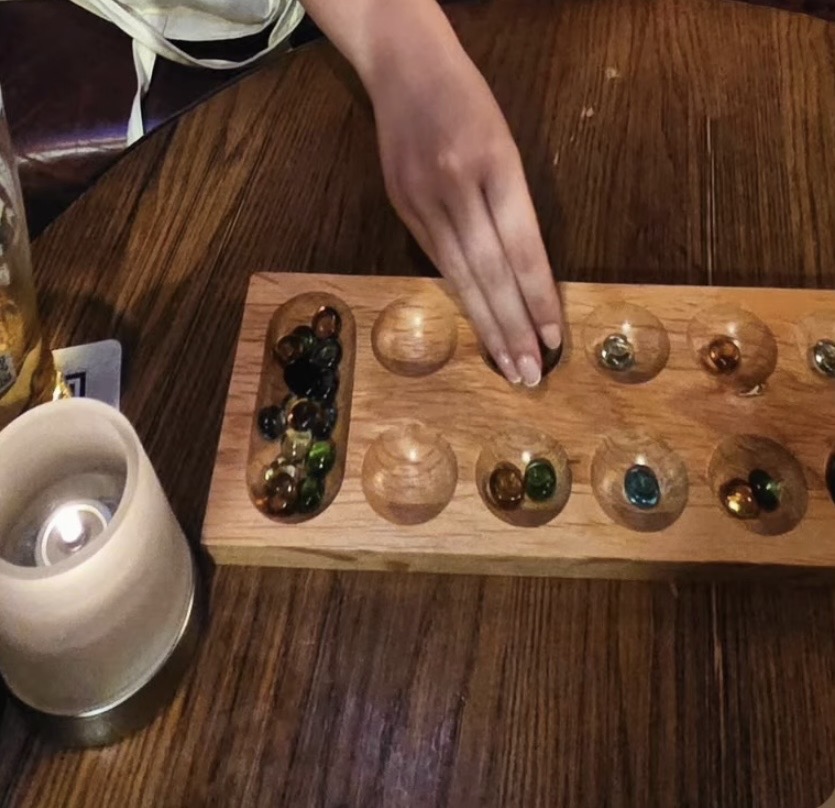
The Sixth World Nomad Games will take place in Kyrgyzstan from August 31 to September 6, and my daughter Sarah will be representing Great Britain at the game of Mangala. My wife Katharine is going along in support but will not be competing.
The opening ceremony of the games will be held in the capital city of Bishkek, while the main sports competitions and cultural events will be hosted around the Issyk-Kul region (primarily Cholpon-Ata). Participants from around 100 countries are expected, competing in traditional heritage sports.
Competitions include:
- Kok-Boru, or Kok-Par, essentially polo with a goat carcass;
- Er Enish (horseback wrestling), Alysh (belt wrestling), and Mas-wrestling(stick-pulling contest) as well as tug-of-war, this year played in rounds of 1v1, 5v5 and the standard 8v8. There are also dozens of other forms of wrestling that were invented by, typically only entered by, and always won by the Kazakhs and the Kyrgs.
- Traditional Archery, Horse Archery
- Eagle Hunting and falconry.
- Taigan Zarysh (sighthound racing)
- Heer Shalga, (Breaking of the Vertebral Bone) sounds extremely violent, but it’s really a contest of breaking animal bones by hand.
Then we have the intellectual sports, including Mangala, Oware and Toguz Korgool (originally played with sheep dung). Straddled halfway between the intellectual sports and sports requiring aim is Ordo.
These sports are the highlights of a programme that also celebrates nomadic cultural traditions and scientific achievements, so will be accompanied by musical performances, dramas, talent shows and a museum compromising of dozens of yurts, each hosting exhibitions for unique parts of Central Asias Geography and history.
I’m following the GB teams Traditional Intellectual Sport Teams Instagram.